Plate and hole pattern
Plate thickness, hole size, hole position, and cut direction are confirmed by drawing or sample.
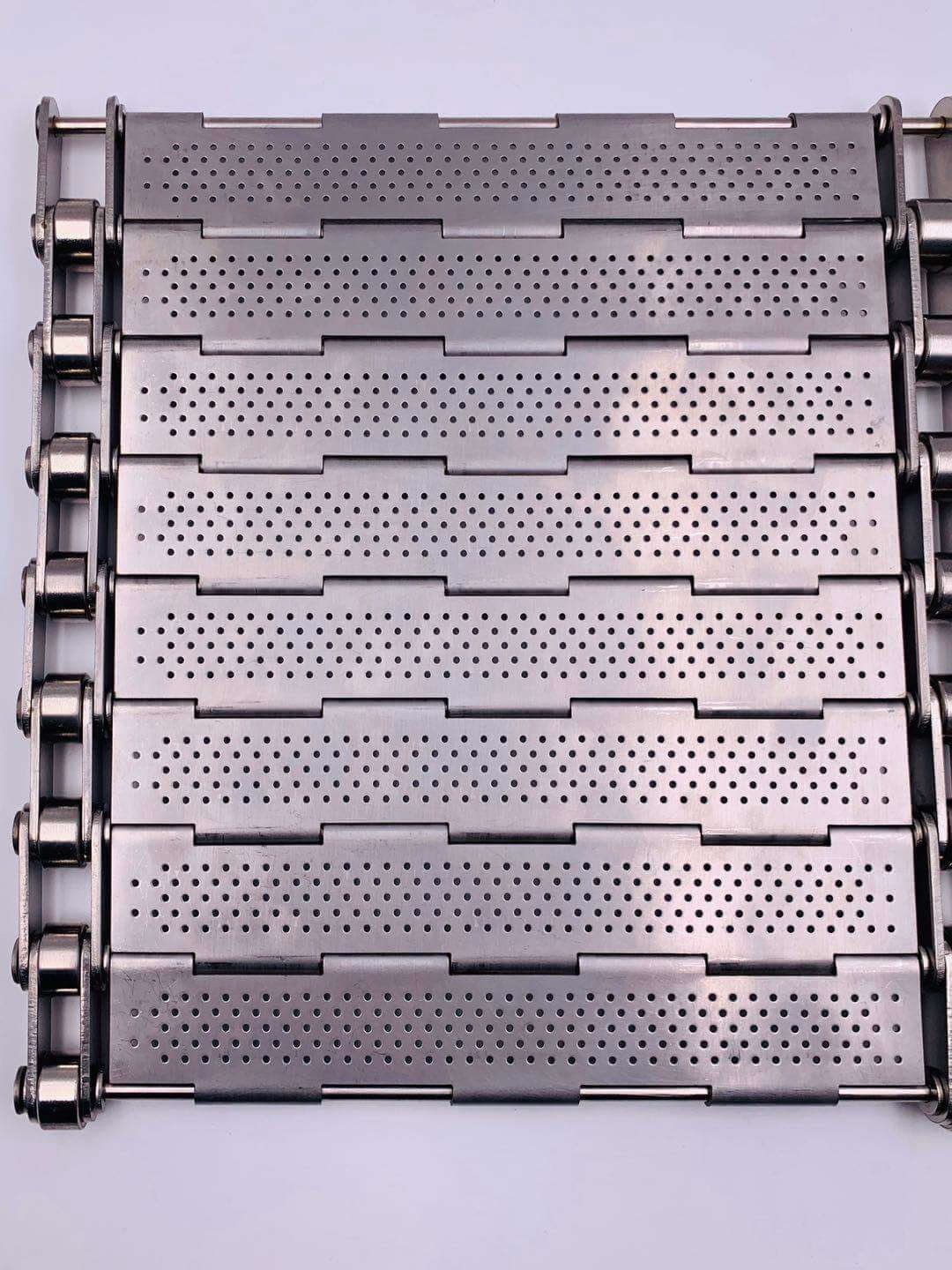
plate link belt
Built around plate thickness, punched-hole layout, rod pitch, chain pitch, side guards, and burr-free release checks before production and shipment.
Application
Heavy product transfer, washing, drying, draining, cooling, and positive-drive conveyor routes
Review Focus
Plate thickness / hole pattern / rod pitch / chain pitch / side guard / edge finish
Project Route
New line supply, replacement review, trial sample, or drawing-controlled custom production
engineering review before price
Plate link belts are not only a plate surface. Plate thickness, hole pattern, rod fit, chain pitch, side guards, flights, and edge finish decide whether the belt can run, load, clean, and ship correctly.
Plate thickness, hole size, hole position, and cut direction are confirmed by drawing or sample.
Rod diameter, rod pitch, chain pitch, and roller contact are checked as one drive route.
Guard height, flight spacing, and incline behavior are reviewed before production.
Flatness, burrs, oil removal, front/back cleaning, packing, and accessory count are documented.
product structure
Review plate geometry, rod connection, chain interface, side guards, and edge finish together before selecting a configuration.

Confirm: plate thickness / rod route / product load
A closed or semi-open plate surface for heavy product support where chain pitch, rod route, and plate flatness must be reviewed together.

Confirm: hole diameter / hole layout / open area
Hole pattern and open area can be matched to drainage, airflow, washing, cooling, or product-release requirements.

Confirm: guard height / flight spacing / direction
Side guards and transverse flights are reviewed by product height, incline angle, loading position, and conveyor geometry.

Confirm: rod diameter / chain pitch / sprocket fit
Rod diameter, rod pitch, chain pitch, roller diameter, and sprocket contact need one release route before production.

Confirm: edge finish / washer / no-burr route
Split pin, washer, rod end, and side edge finish are checked where burrs, sharp points, or loose components could affect release.

Confirm: accessory count / spare parts / packing list
Accessory parts, rods, edge hardware, and sprocket-related components can be packed and documented with the belt.
real production data
These ranges come from actual production records. Final values should still be confirmed by drawing, old belt evidence, conveyor layout, and load condition.
Missing some data? Send the drawing, photos, and dimensions you have; JBL Mesh Belt will identify the remaining Plate Link Belt review points.
Start Plate Link Inquiryverification videos
The current positions are organized for plate flatness, hole layout, rod fit, side guard welding, sprocket engagement, and packing release videos.
Evidence showing plate surface flatness, scratch condition, and front/back cleaning before release.
Hole diameter, hole layout, cutting direction, and drawing-controlled plate orientation review.
Rod diameter, plate hole fit, rod spacing, and sample assembly matching before mass production.
Side guard, transverse flight, weld finish, and no-burr release evidence.
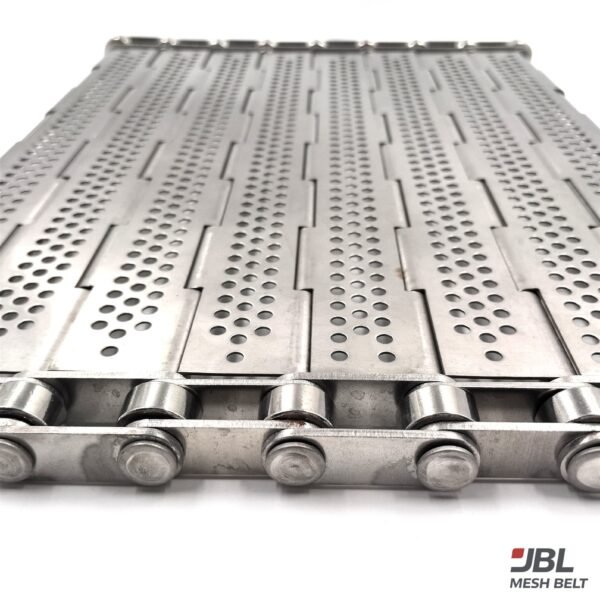
Chain pitch, roller contact, sprocket tooth fit, and running route confirmation.

Waterproof protection, closed export plywood case, accessory list, net/gross weight, and volume records.
risk review
Heavy-load belt problems can start with burrs, plate deformation, wrong hole direction, rod mismatch, side-guard interference, or shipment deformation.
checkpoint
Cut edges, punched holes, side edges, and rod ends can create sharp points if release checks are skipped.
checkpoint
Thin or wide plates can deform if thickness, support route, or packing pressure is not reviewed.
checkpoint
Hole layout, cut direction, and left-right orientation must follow drawing or old belt evidence.
checkpoint
Rod diameter, rod pitch, chain pitch, and roller diameter must match the drive system.
checkpoint
Guard height, flight spacing, and incline route can create product or frame interference.
checkpoint
Long-distance sea or rail shipment needs rigid export packing and protected belt edges.
replacement inputs
A few clear photos and key measurements can start the engineering review before the formal datasheet is ready.
neutral export packing
Plate link belts can be protected with bubble wrap, waterproof film, 15 mm export plywood case, corner protection, and recorded packing photos for sea or railway shipment.
Bubble wrap and waterproof film can be used to protect plate surface and edges before case loading.

15 mm export plywood case and corner protection are reviewed for sea or railway shipment.
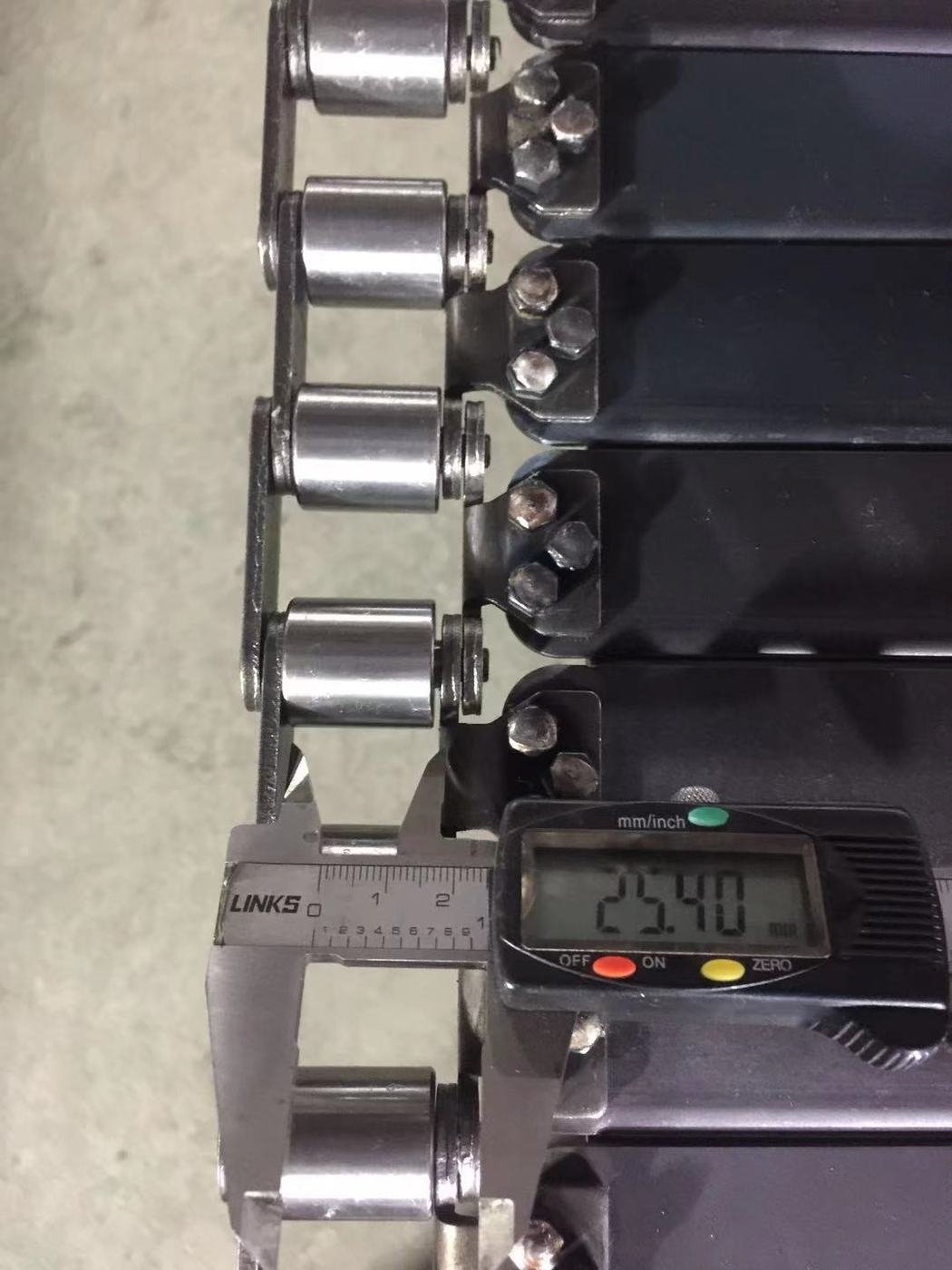
Spare rods, pins, washers, and project parts can be counted and documented before shipment.
download / review pack
Use these document types to prepare your project review. Each file is tied to a buyer task: confirming hole layout, side guards, old-belt dimensions, flatness review, or shipment evidence.
Ask for the current specifications and inspection documents relevant to your project. Confirm the applicable document revision with JBL Mesh Belt before using it for production.
plate link belt faq
Send the product size and load, impact points, required support or open area, temperature and conveyor path. JBL Mesh Belt reviews the plate surface, rod and edge structure; the final selection follows the project review and confirmed drawing.
Share any known width, plate pitch and thickness, hole layout, rod size, chain or edge route, side guards, flights, material and operating conditions. JBL Mesh Belt checks these values together, and final dimensions follow the confirmed drawing or sample review.
Provide chain and sprocket photos, pitch, tooth count, bore, keyway, shaft position and visible wear. JBL Mesh Belt reviews plate pitch, rod connection, chain centers and tooth engagement before the drive interface is confirmed.
Send surface, underside, edge, rod, damaged-area and installed-line photos, measured dimensions and a plate or belt sample when available. JBL Mesh Belt compares the old belt and equipment interface, then records the agreed replacement route in the confirmed project drawing.
Share transfer and support details, side clearances, joining method, plate orientation, wash process, residue and drying requirements. JBL Mesh Belt reviews flatness, guide contact, burr-sensitive areas and cleanability; final instructions follow the confirmed project configuration.
Send the application, load and operating conditions, available plate, rod, edge and drive dimensions, accessory needs, quantity, delivery target and required records. JBL Mesh Belt identifies missing points and quotes against the confirmed project scope.
All listed dimensions and configuration options can be customized for the project, subject to engineering review and the confirmed drawing.
related resources
Plate-link buyers usually need more than a product page. These articles help with heavy-load review, shipment protection, and better intake material before quotation.
Resource article
Open article
Resource article
Open article
Resource article
Open article
Plate link belt orders need more than a plate size. JBL Mesh Belt reviews plate thickness, hole layout, rod route, chain pitch, side guards, product load, and packing route before release.
You do not need a complete specification to start. Send the available drawing, old belt photo, sprocket photo, system photo, or running video first. The JBL Mesh Belt team will reply with the missing review points.
These SOP points are converted from JBL Mesh Belt order-control, QC, packing, and delivery documents into buyer-facing checkpoints.
Product weight, impact route, washing or drying condition, open area, and plate thickness are checked before the production route is confirmed.
Hole diameter, hole layout, rod diameter, rod pitch, chain pitch, roller diameter, and sprocket route are matched against drawing or old belt evidence.
Side guard height, flight spacing, washer, split pin, rod end, and no-burr edge finish are treated as release points, not decoration.
Flatness review, surface cleaning, accessory count, packing list, case protection, and release photos support project traceability.
For project review, send load details, hole-layout drawings, rod and chain measurements, and available packing requirements.
// start Plate Link Belt project review
Drawings, old belt photos, samples, and conveyor evidence are enough to start the review.
Reference specifications
| Parameter | Reference options |
|---|---|
| Material | SUS304 / SUS316 / mild steel |
| Plate pitch | 25.4 / 31.75 / 38.1 / 50.8 / 63.5 mm |
| Plate thickness | 1.0 / 1.2 / 1.5 / 2.0 / 2.5 mm |
| Rod diameter | 5 / 6 / 8 / 10 mm |
| Chain pitch | 25.4 / 31.75 / 38.1 / 50.8 / 76.2 mm |
| Perforation | None / hole diameter 5–8 mm |
| Belt width | 300–4000 mm (11.81–157.48 in); custom |
| Belt length | Custom, specified in m or ft |
| Edge treatment | Washer welded / cotter pin |
| Accessories | None / raised points / flights / side plates |
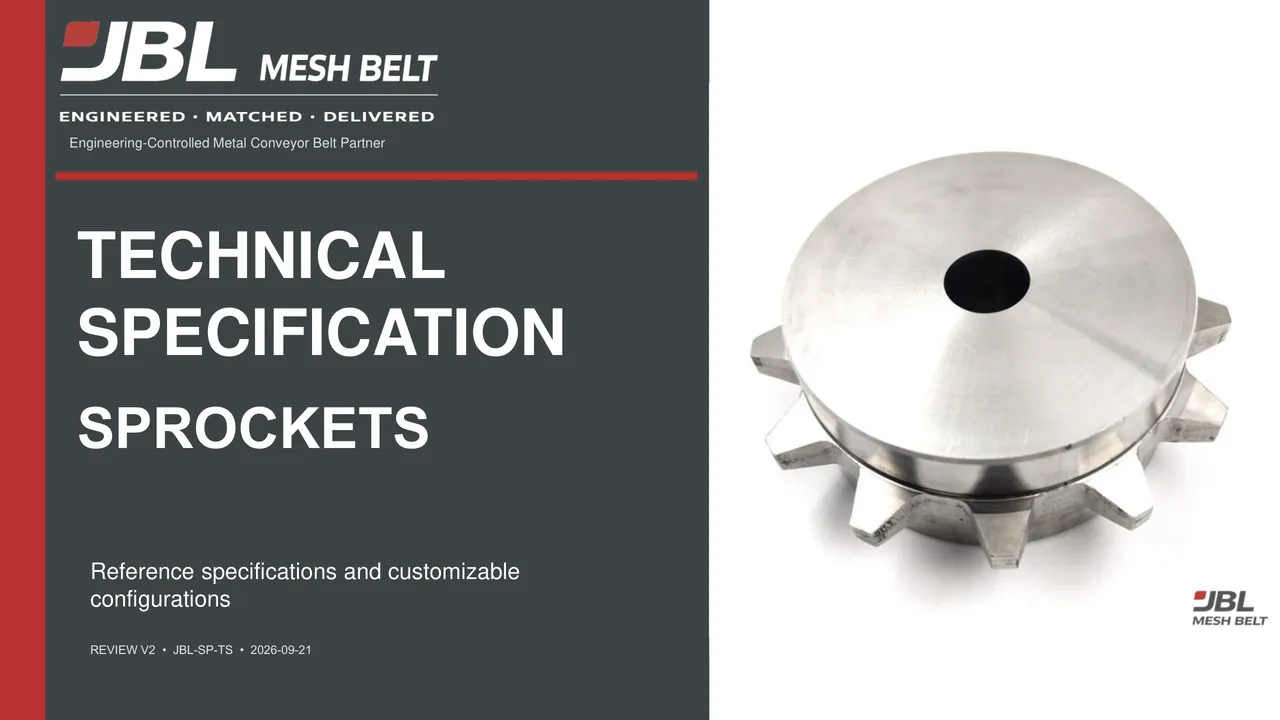
| Sprockets | Optional; material, tooth count, bore and keyway per drawing |
Reference options from the 2026-10-02 public specification, pages 2 and 5. The perforation pattern and the relation between drawing rod pitch and plate pitch are confirmed per project. Final dimensions and combinations follow the confirmed project drawing. Source: Plate Link Belt Technical Specification, page 5 ↗
Read the documents for this belt
Plate Link Belt: specification and production & quality control process, page by page
Opens in a new tab · no download · no sign-up
Document Library
Compare pitch, wire, edge, surface and sprocket options with your equipment before you send a drawing or old-belt photos. 13 technical specifications and 11 production and quality control documents for JBL metal conveyor belts and sprockets, page by page on your phone or computer.
Engineering review
Not sure which specification fits your line?
Send your drawing or old-belt photos on WhatsApp. We compare them with the specification and tell you what still needs to be measured.