Drive Matching
Side Drive POM Sprockets
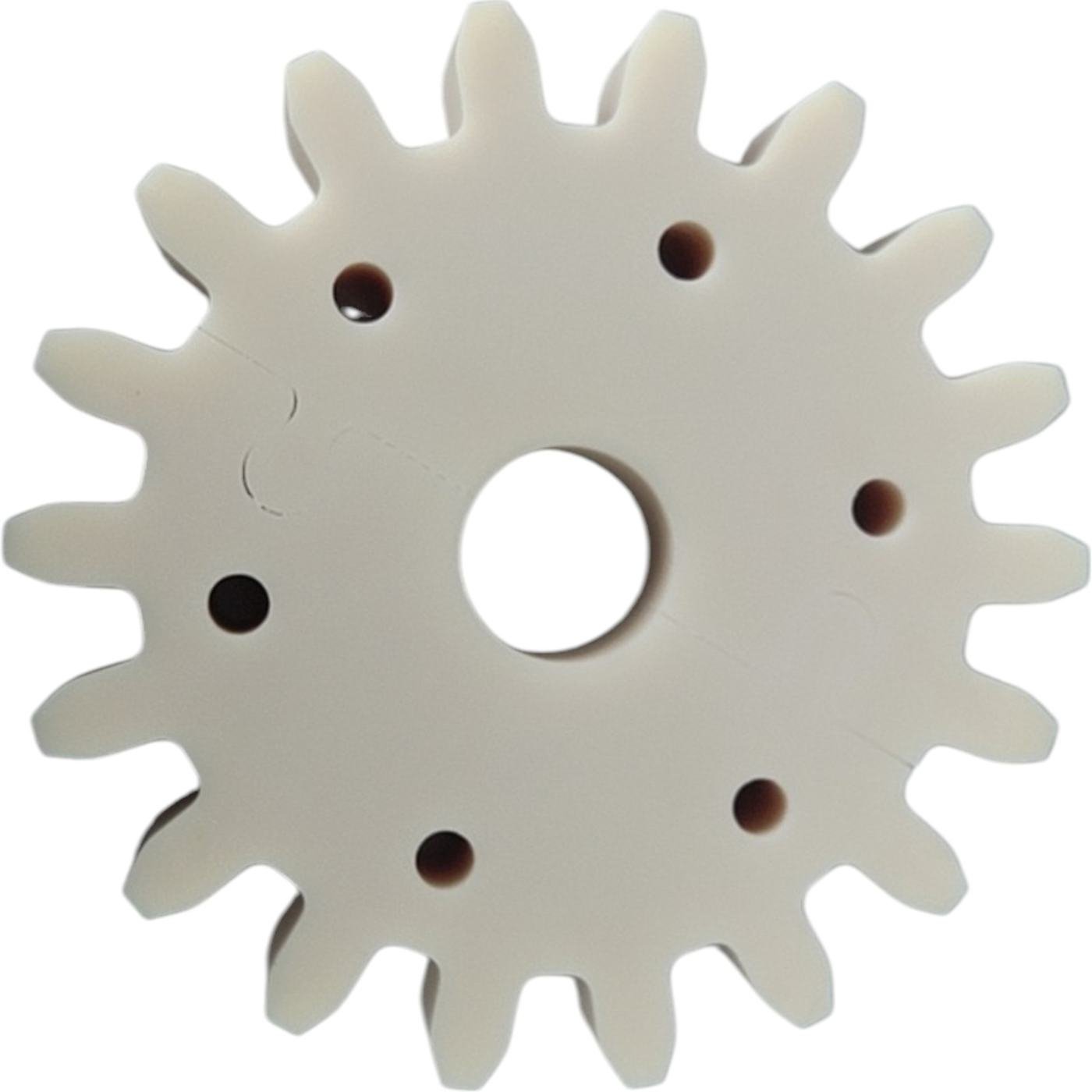
POM side-drive sprockets support low-friction engagement for product-contact, low-noise, and washdown-sensitive conveyor routes.
Check: pitch / tooth profile / belt width / product-contact route
matched sprockets / drive components
A correct belt can still run badly when pitch, tooth profile, bore, keyway, or old sprocket wear is ignored. JBL Mesh Belt reviews sprockets as part of the working conveyor system.
Review Object
Tooth profile, pitch, bore, keyway, material, wear strip, and installed drive contact
Matched Belts
Side driven, spiral freezer, flat wire, eye link, chain driven, plate link, and replacement belts
Release Evidence
Photos, drawings, running videos, old sprocket wear records, accessory list, and packing list
sprocket routes
Send more than a sprocket photo before quotation: include the belt family, pitch route, shaft fit, and installed-line behavior.
Drive Matching
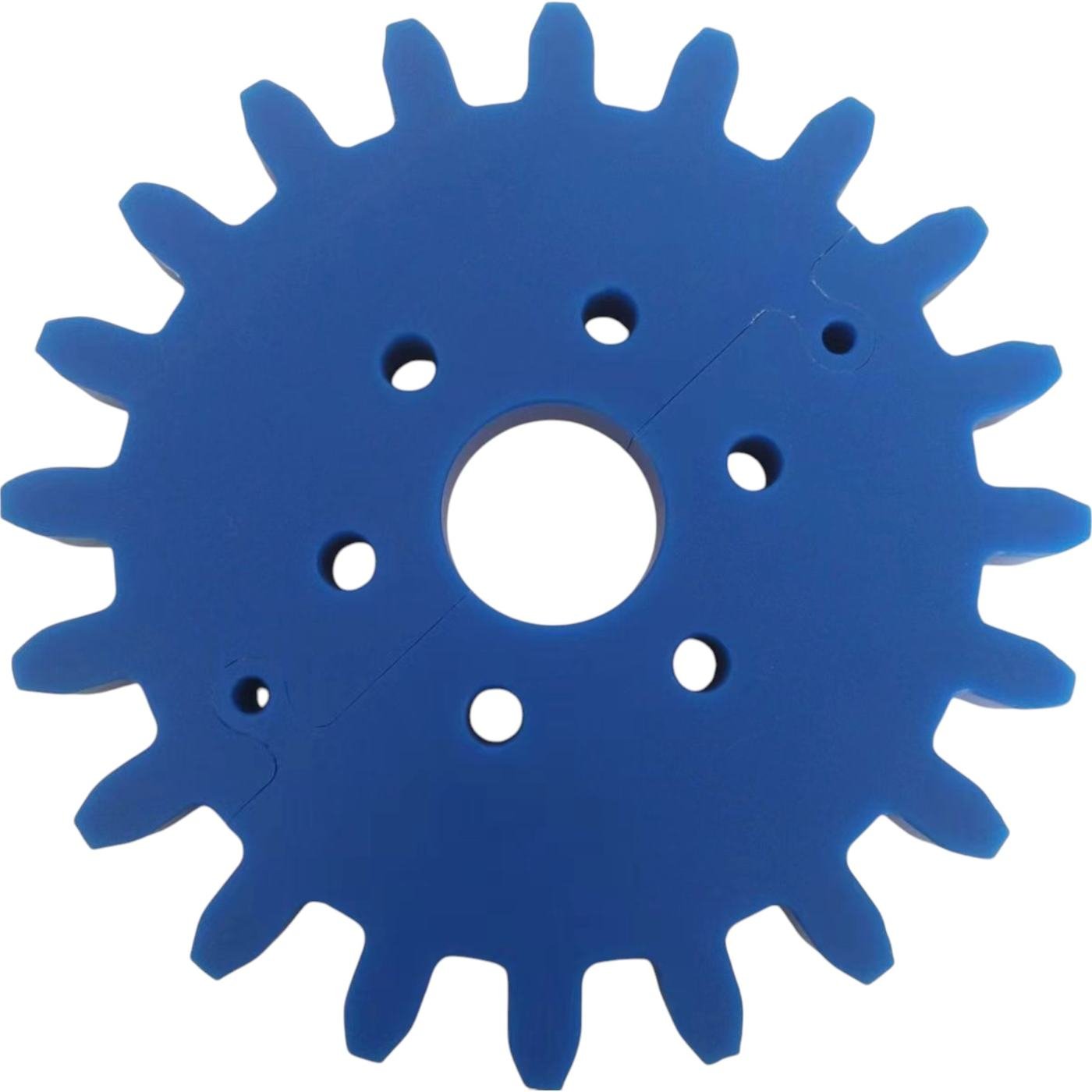
POM side-drive sprockets support low-friction engagement for product-contact, low-noise, and washdown-sensitive conveyor routes.
Check: pitch / tooth profile / belt width / product-contact route
Drive Matching
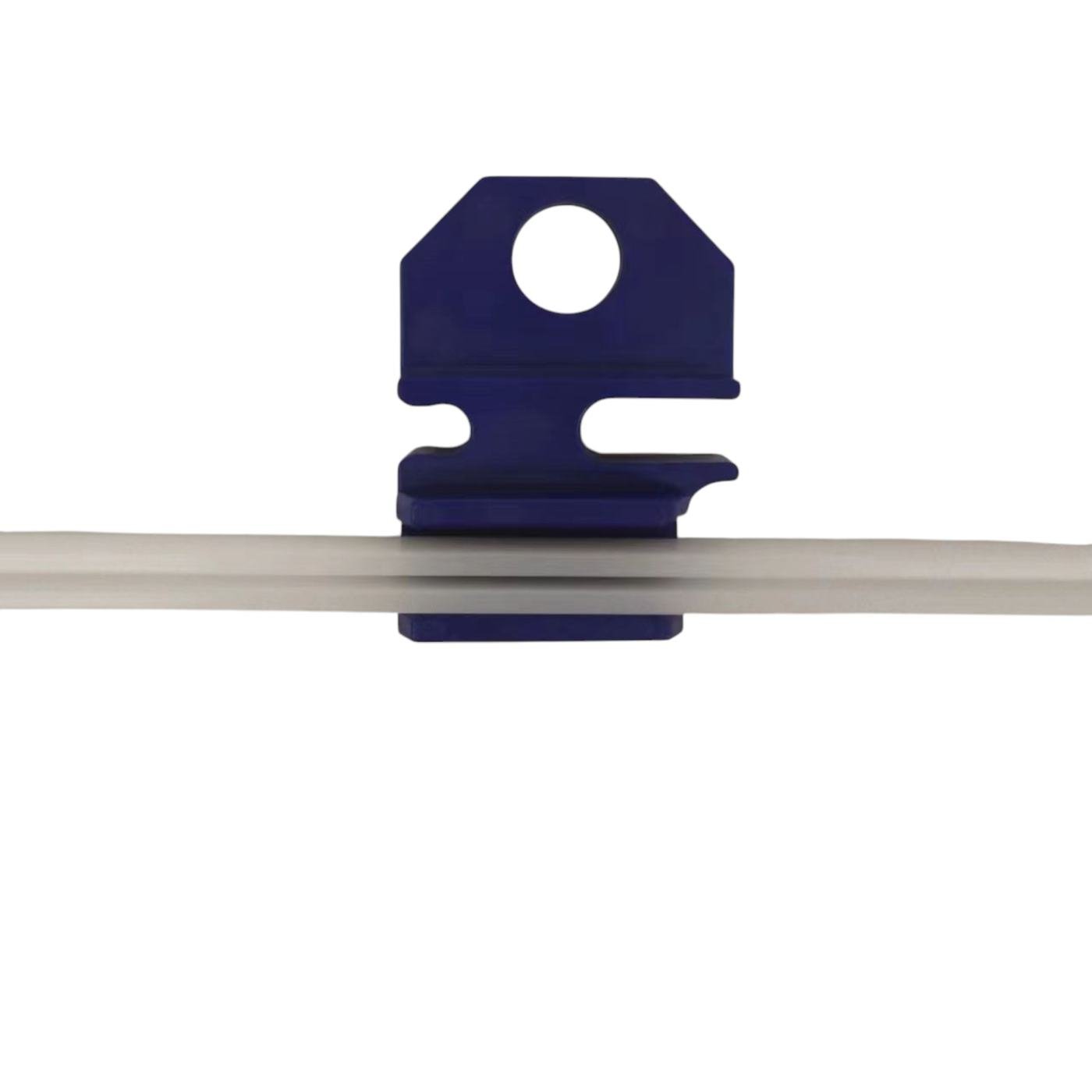
Deburred entry surfaces help reduce belt wear, running noise, and drive-side damage in side-driven conveyor systems.
Check: deburred entry / tooth face / wear path
Drive Matching
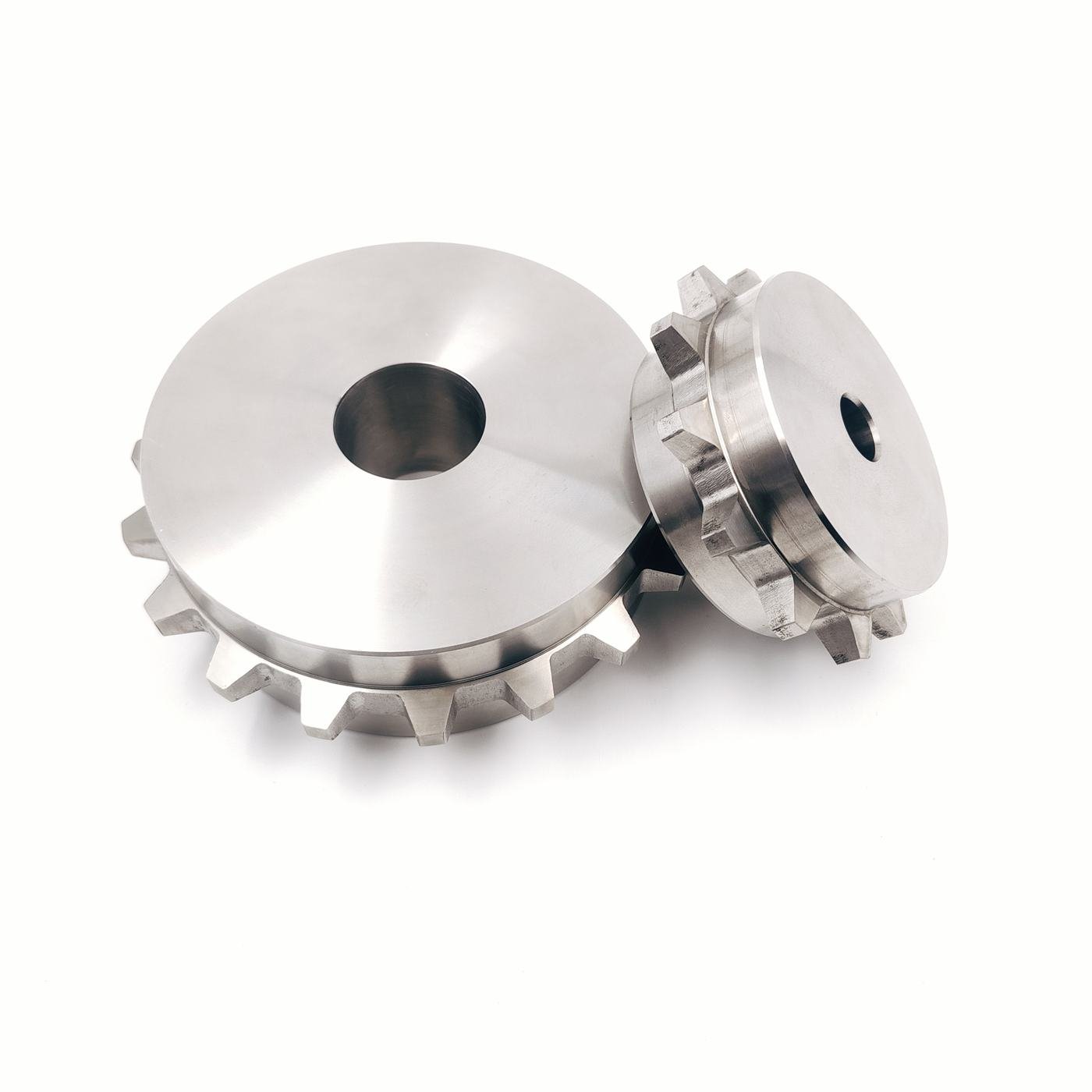
Custom bore, keyway, tooth count, and material routes can be reviewed when the conveyor frame or old sprocket is non-standard.
Check: bore / keyway / custom size / material
Drive Matching
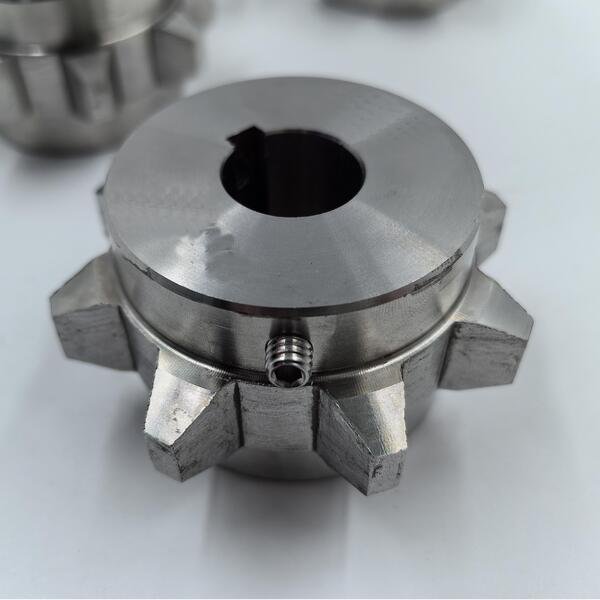
Used when food-contact, corrosion resistance, shaft fit, and exact tooth geometry must be reviewed together.
Check: tooth count / bore / keyway / set screw
Drive Matching
Useful for heavy-duty drive routes where tooth face, keyway, shaft locking, and drawing-controlled machining matter.
Check: tooth face / fastener / machining route
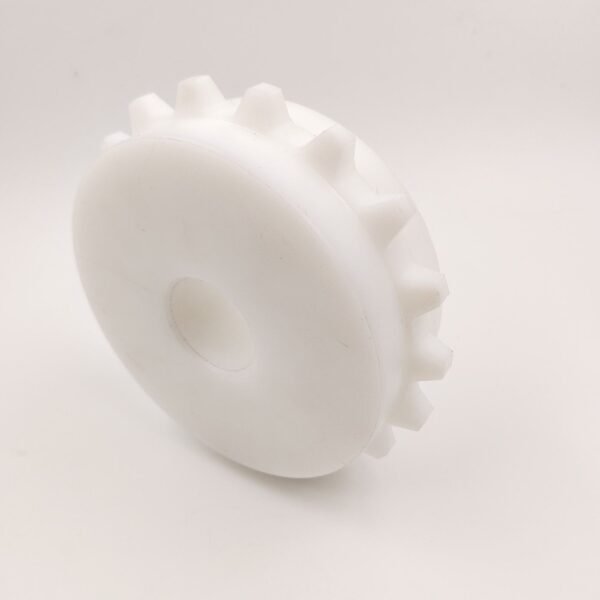
Drive Matching
Polymer sprockets can be reviewed for temperature, wear path, belt contact, and replacement fit.
Check: material / temperature / contact pressure
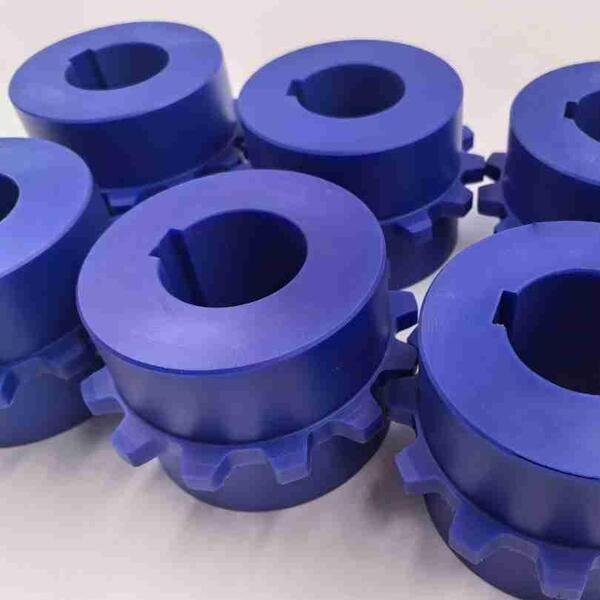
Drive Matching
Plastic sprockets can support lighter drive routes when material, tooth profile, and application load are confirmed.
Check: pitch / load / running environment
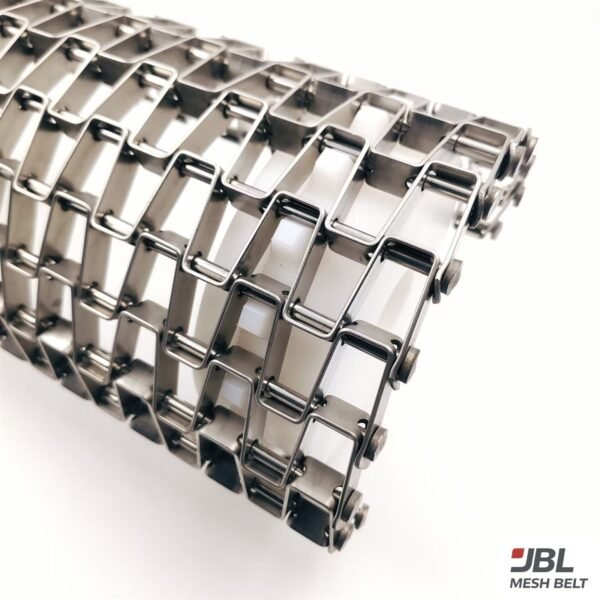
Drive Matching
Flat wire and honeycomb belts need tooth engagement, edge position, and pitch contact reviewed before release.
Check: pitch contact / edge route / tracking
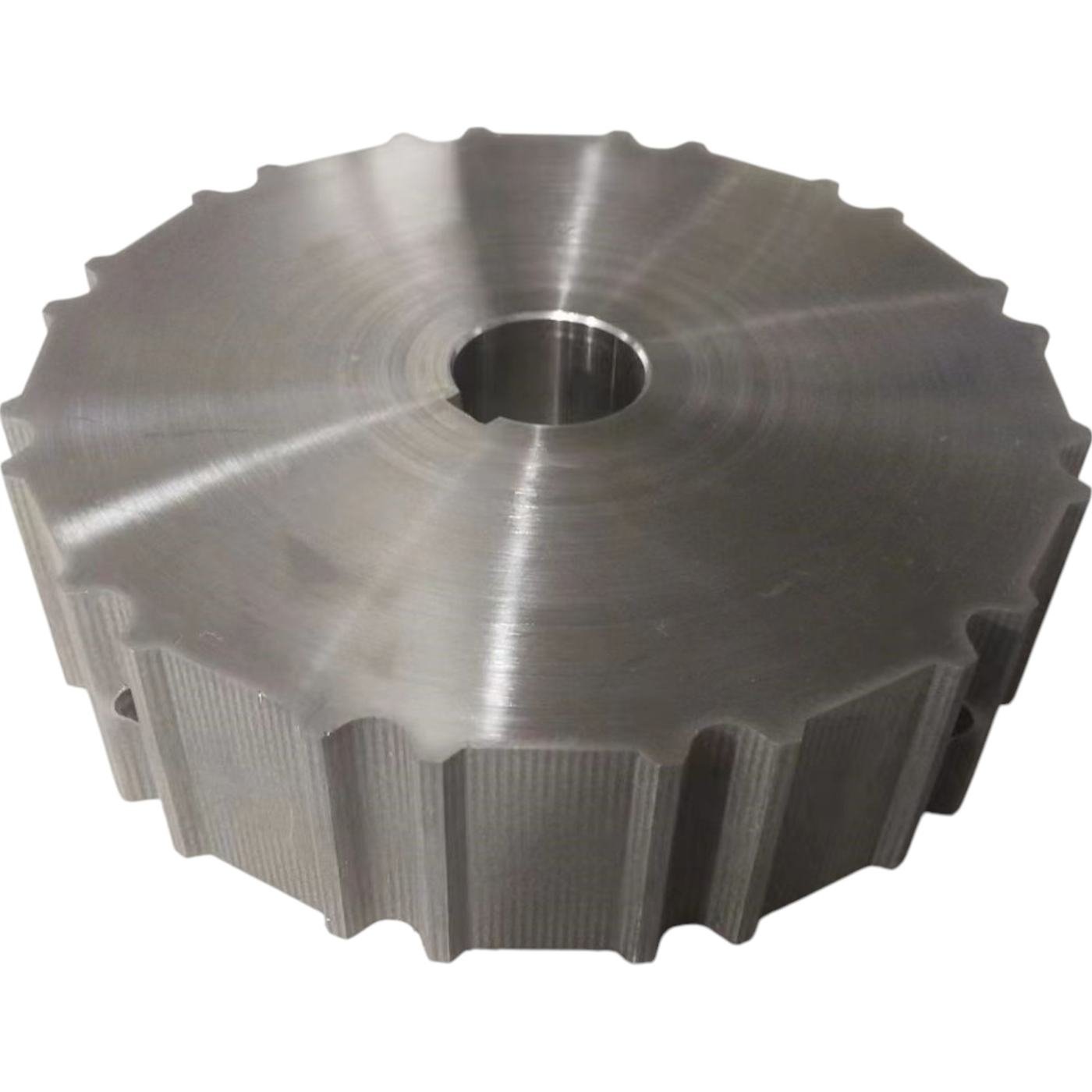
Drive Matching
Eye link belts often require sprocket matching by rod route, chain edge, width, and repeat-order measurement evidence.
Check: rod route / side chain / width evidence
engineering specification
These rows are intentionally practical: they turn buyer photos, old parts, and drawings into the minimum information needed before production release.
Missing some data? Send the drawing, old-part photos, and dimensions you have; JBL Mesh Belt will identify the remaining sprocket review points.
Start Sprocket Inquiryrunning video evidence
Video is useful when the buyer needs evidence of side-drive engagement, contact repeatability, tracking, and final release behavior before shipment.
Drive Evidence
Running evidence for side-drive engagement, smooth transmission, and belt stability.
Drive Evidence
Second running angle for speed control, low-friction drive, and tracking behavior.
Drive Evidence
Running evidence for pitch contact, sprocket engagement, and edge route.
Drive Evidence
Running evidence for eye link belt and sprocket contact before release.
Drive Evidence
Additional running angle for tooth engagement and tracking review.
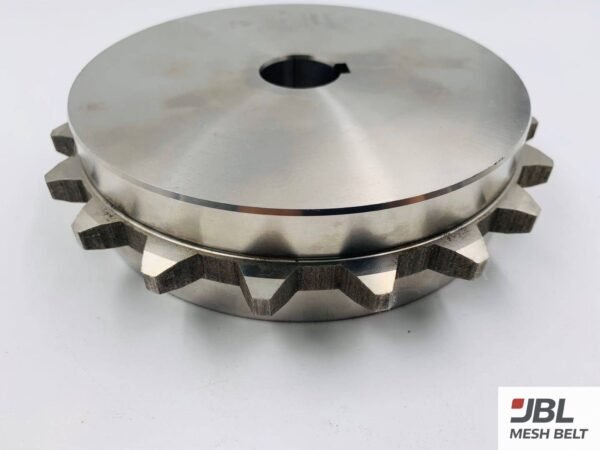
Drive Evidence
Spiral freezer belt drive-path and drum contact evidence.
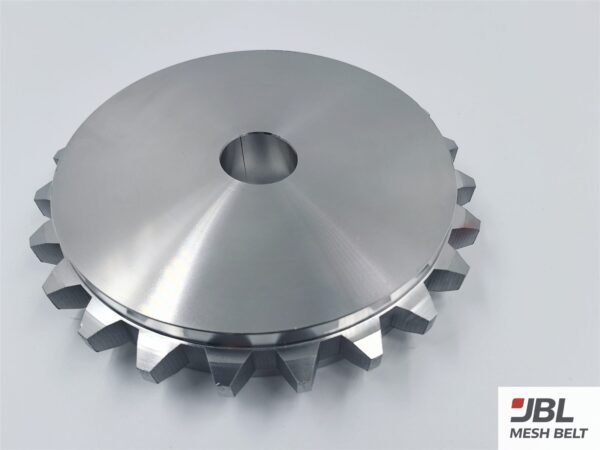
Drive Evidence
Chain pitch, roller contact, tooth route, and running-test evidence.
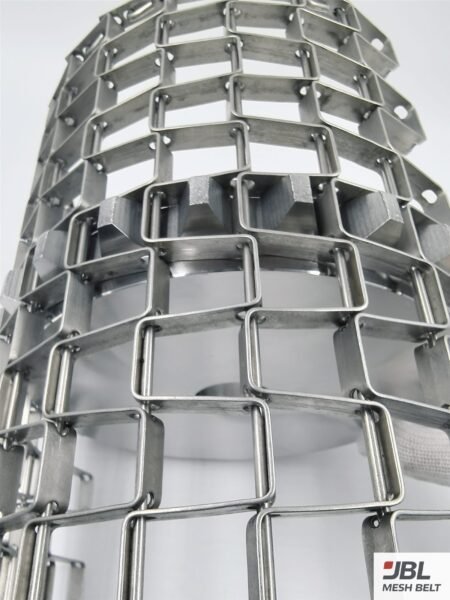
Drive Evidence
Final sprocket, spare rods, accessory list, packing, and shipment evidence.
risk review
Old sprocket wear, wrong pitch route, and shaft-side mismatch should be treated as evidence, not as after-sales guesswork.
Wrong Pitch
A pitch mismatch can create jumping, impact marks, abnormal noise, and early belt damage.
Worn Teeth
A new belt may fail early when it runs on an old sprocket with worn tooth faces.
Wrong Bore
Incorrect bore, keyway, or set screw position can delay installation even if tooth pitch is correct.
Wrong Material
POM, nylon, stainless steel, UHMWPE, and PEEK each fit different temperature, friction, cleaning, and load routes.
Tracking Drift
Uneven sprocket contact can pull the belt to one side and make the belt look wrong when the drive route is the issue.
Missing Accessories
Spare rods, pins, bars, and small components should be listed before packing so the project does not stop on site.
Evidence
Use sprocket images to confirm material route, pitch, bore, keyway, and belt-width fit.
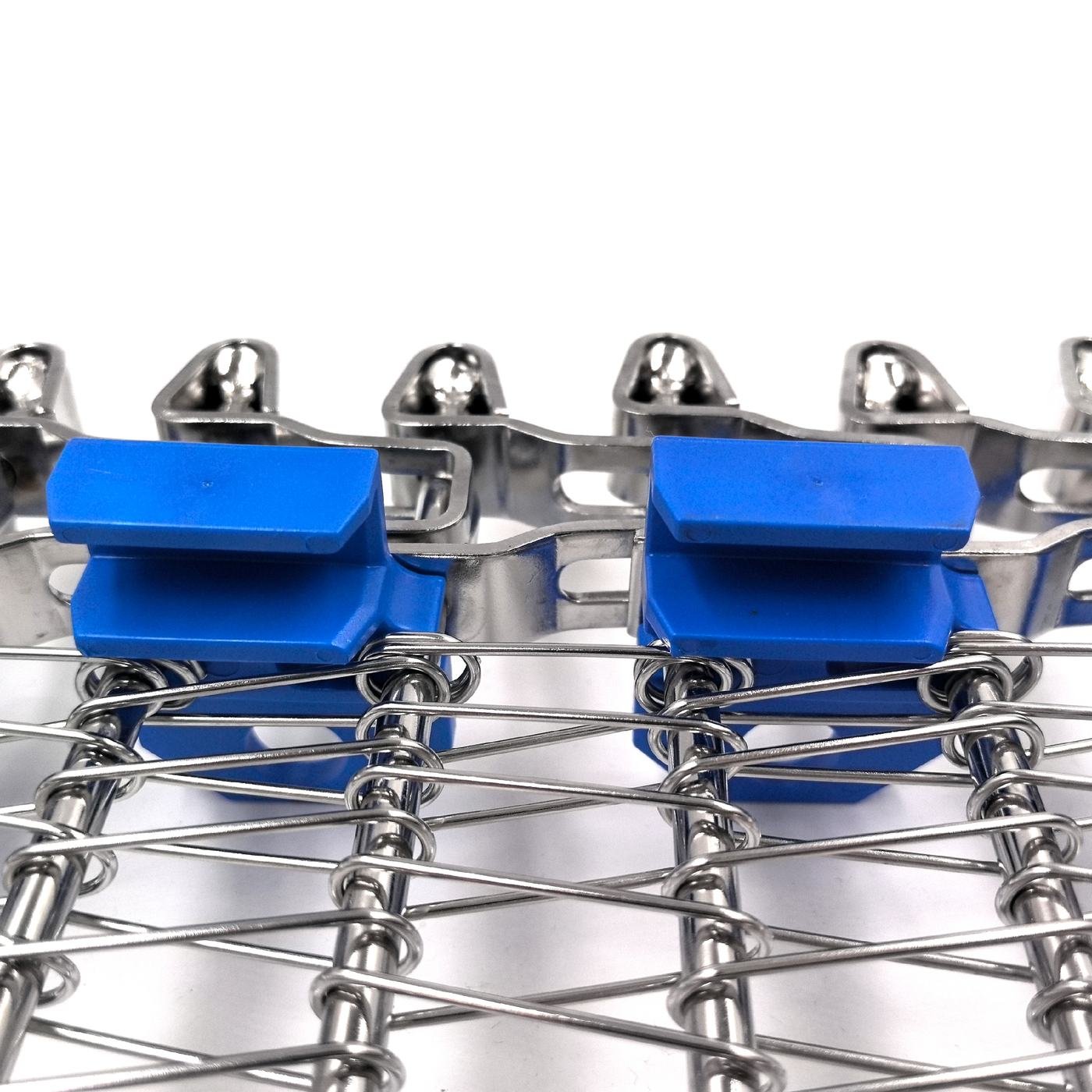
Evidence
Accessories and wear components should be listed before packing so the installation route is complete.
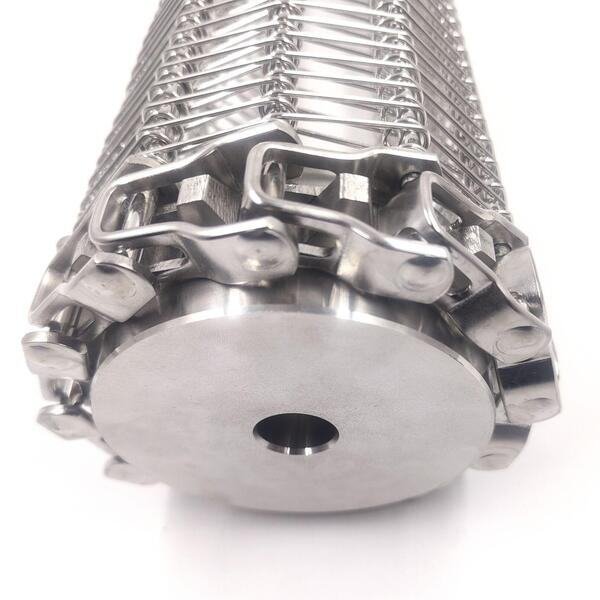
Evidence
Use this still image to review visible pitch contact and sprocket position. Powered movement requires separate video or test evidence.
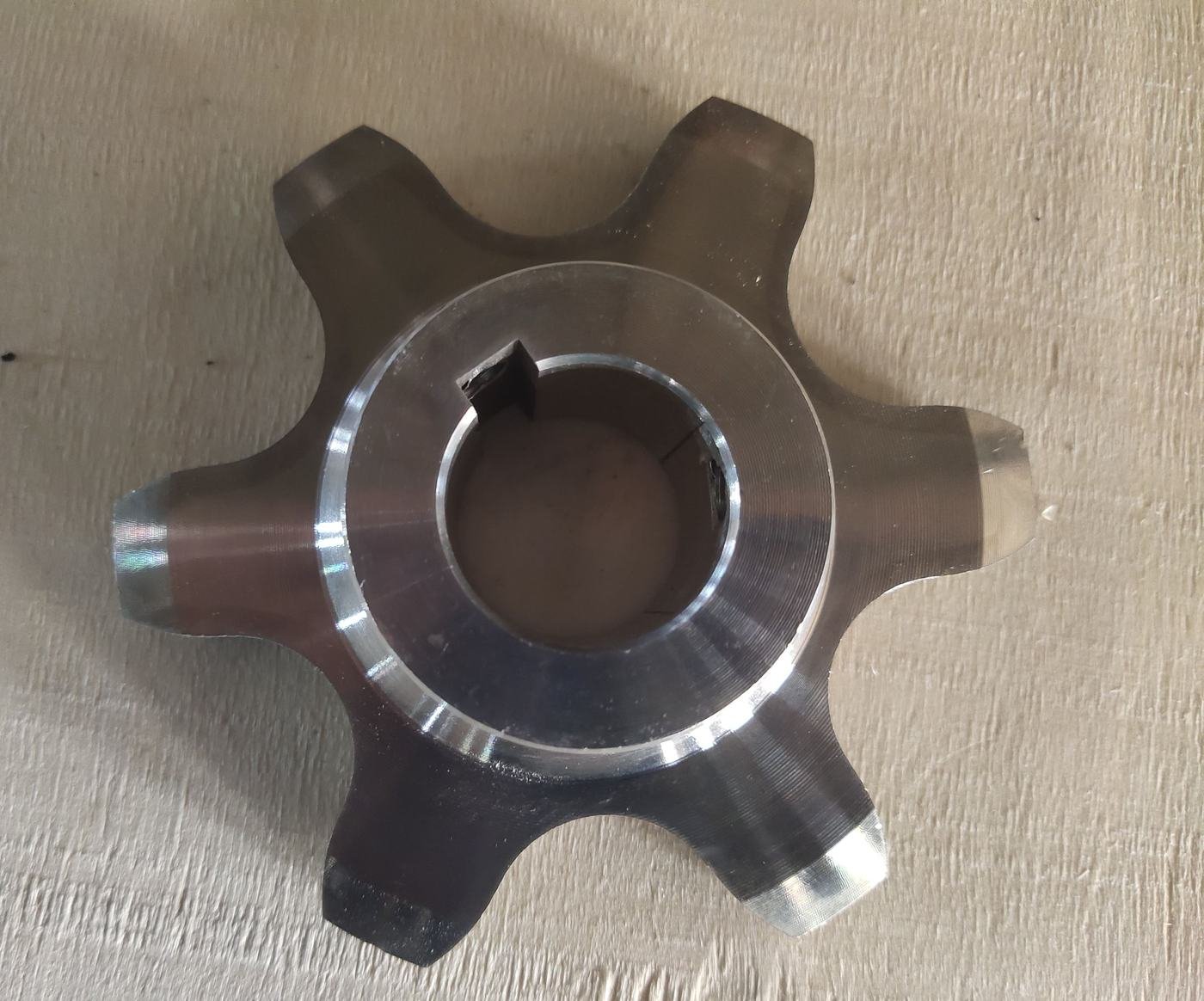
Evidence
Check chain pitch, roller position, and drive-side clearance together.
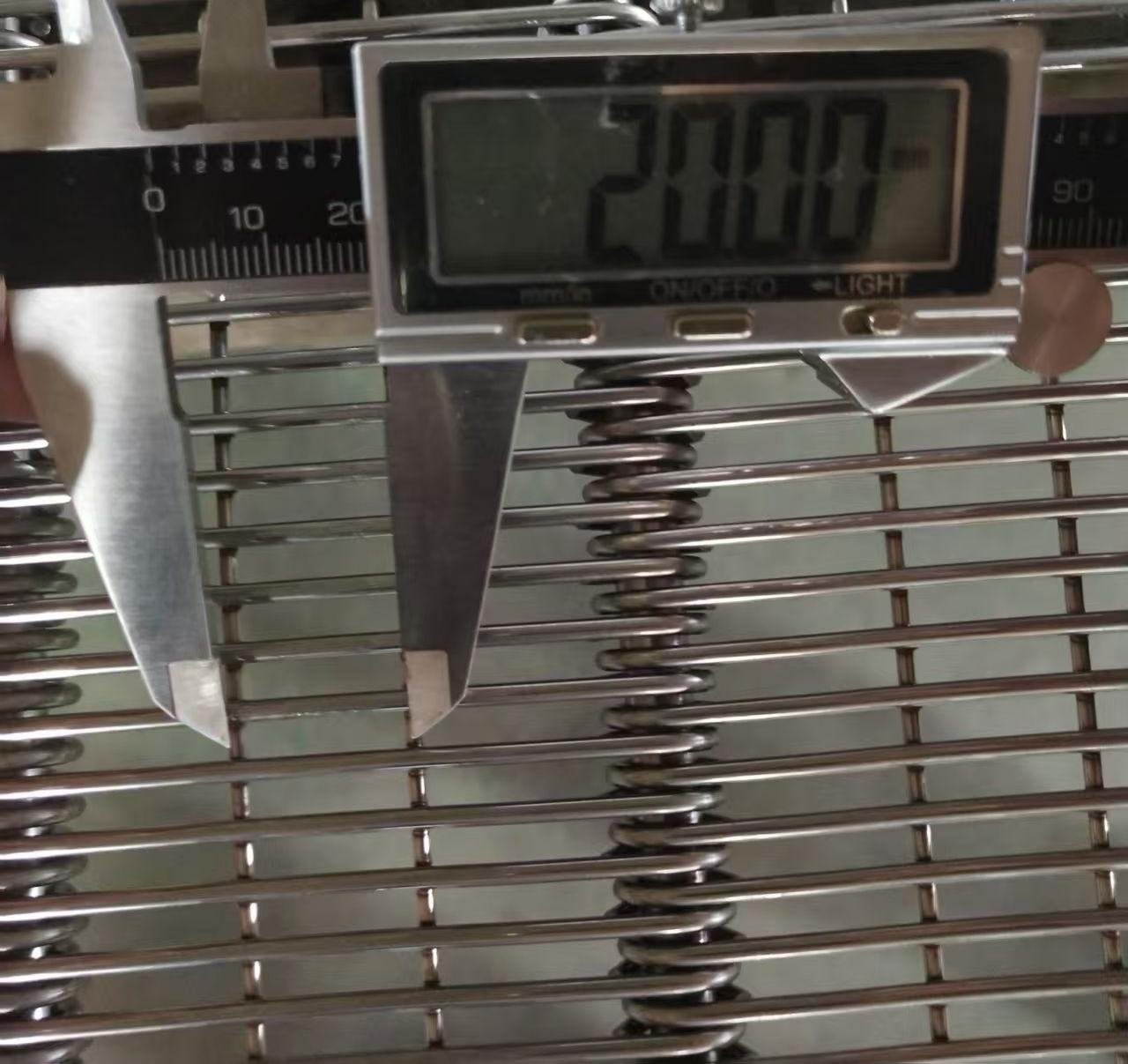
Evidence
Repeat-order measurement photos help confirm sprocket and belt interface data.
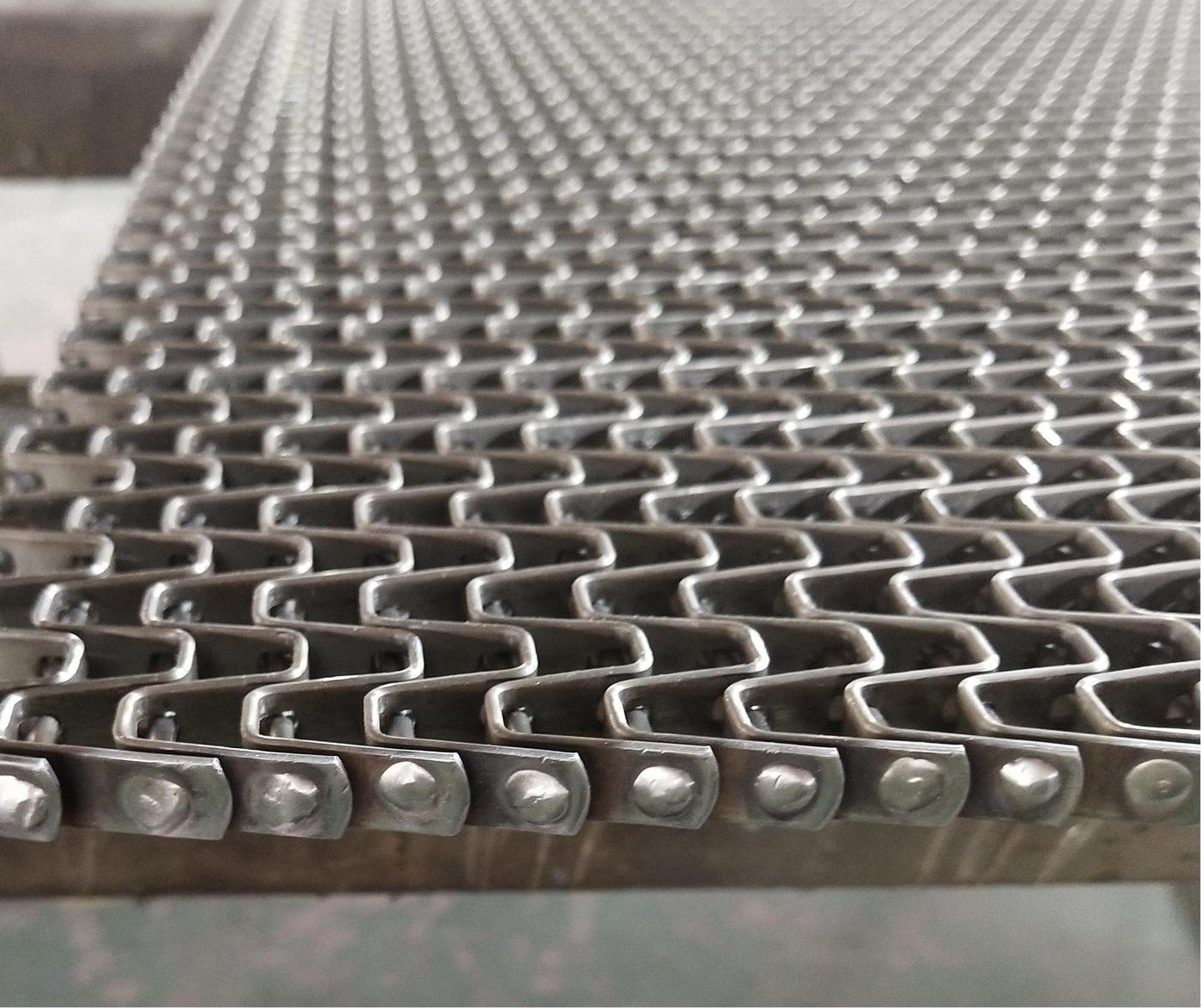
Evidence
Edge behavior and product-support surface are reviewed before release.
replacement inputs
A few practical photos and measurements usually reduce the most common drive-side mismatch risks.
Old sprocket photos from front, side, bore, keyway, and tooth-wear areas
Side driven belt pitch route: 31.75 mm, 34.00 mm, or custom pitch if different
Belt pitch, chain pitch, rod pitch, tooth count, and drive direction
Bore diameter, keyway size, set screw position, shaft notes, and material requirement
Wear strip or guide component material requirement: UHMWPE, PEEK, nylon, or composite
Installed-line photos or videos showing drive path, tracking, and current wear marks
Operating temperature, cleaning condition, product load, and belt family
Whether sprockets ship alone or together with belts, rods, pins, and accessories
release package
Sprockets, spare rods, pins, bars, and small components can be listed together.
No Chinese marks or internal promotional material when export projects require neutral presentation.
Waterproof protection and closed export plywood case can be prepared for long-distance shipment.
Photos and videos can document final components, packing list, and drive-test checkpoints.
FAQ
FAQ 01
Send the belt family, pitch, drive arrangement, load, speed, temperature and cleaning conditions. JBL Mesh Belt reviews the tooth route, material and shaft interface; the final sprocket configuration follows the project review and confirmed drawing.
FAQ 02
Share any known pitch, tooth count, outside and root diameters, thickness, bore, keyway and set-screw position. JBL Mesh Belt checks these dimensions with the belt and shaft data, and final values follow the confirmed drawing or old-part review.
FAQ 03
Provide belt pitch and edge details, sprocket photos, shaft position, drive direction and running evidence. JBL Mesh Belt reviews tooth profile, pitch contact and alignment as one drive interface before the project configuration is confirmed.
FAQ 04
Send front, side, bore, keyway and tooth-wear photos, the dimensions you can measure and an old part or belt sample when available. JBL Mesh Belt compares the worn part with the belt and shaft interface, then records the agreed replacement route in the confirmed drawing.
FAQ 05
Share shaft alignment, sprocket spacing, guide and wear-strip clearances, fastener route, temperature and wash conditions. JBL Mesh Belt reviews fit, contact and material compatibility; installation and cleaning details follow the confirmed project configuration.
FAQ 06
Send the belt type, pitch and drive data, available sprocket and shaft dimensions, material and operating conditions, quantity, whether parts ship with a belt, and required records. JBL Mesh Belt identifies missing points and quotes against the confirmed project scope.
All listed dimensions and configuration options can be customized for the project, subject to engineering review and the confirmed drawing.
Drive components are small compared with the belt, but they often decide whether installation succeeds. JBL Mesh Belt reviews sprockets, bore, keyway, material, wear strips, and packing as part of the same project route.
You do not need a complete specification to start. Send the available drawing, old belt photo, sprocket photo, system photo, or running video first. The JBL Mesh Belt team will reply with the missing review points.
These SOP points are converted from JBL Mesh Belt order-control, QC, packing, and delivery documents into buyer-facing checkpoints.
SUS304, UHMW PE, nylon, POM, PEEK, or guide material is confirmed by belt type, temperature, contact route, and cleaning condition.
Pitch, tooth count, outside diameter, bore diameter, keyway size, shaft notes, and set-screw route are reviewed from drawings or old sprocket photos.
SUS304 sprockets may need different finishing routes for spiral, chain-driven, or flat-wire applications. Tooth marks, burrs, and surface damage are checked before packing.
Each sprocket or small component can be packed separately to reduce scratches, impact marks, mixed quantities, or missing accessory risk during shipment.
Use the same drive-matching checkpoints for spiral, eye link, chain-driven, and side-driven projects because a mismatched interface can damage tracking, engagement, and service life.
Stainless sprockets are checked for burrs and polishing marks on the tooth tips and in the bore. UHMW-PE sprockets are checked for scratches and dirt, and each sprocket is wrapped separately. The photos below come from our own inspection training file.
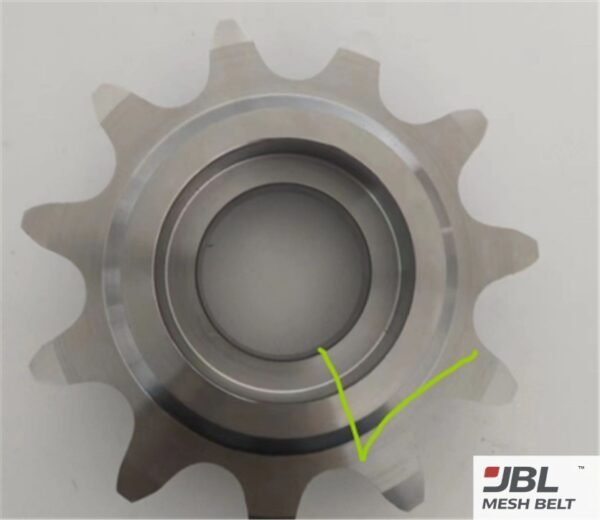
Clean tooth faces and a smooth bore.
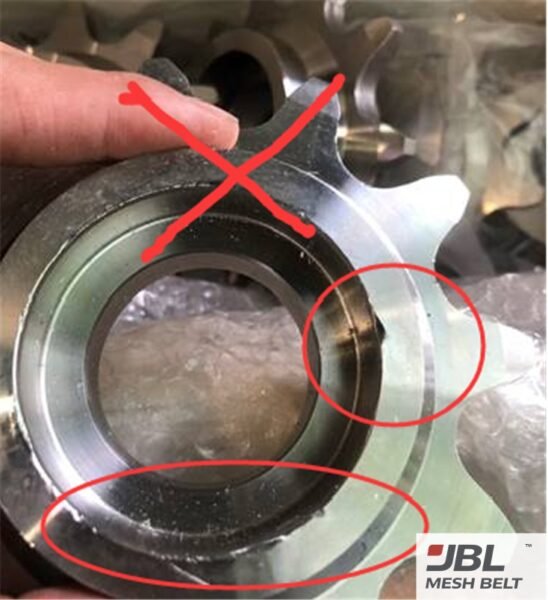
Burrs are removed and the sprocket is inspected again.
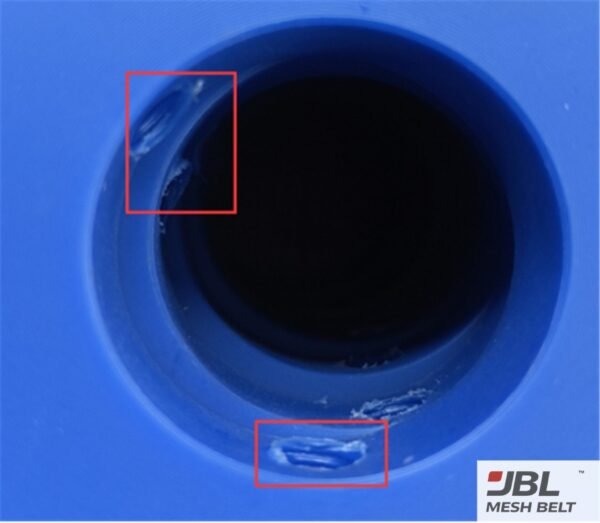
A scratched plastic bore cannot be repaired. The sprocket is replaced.
// belt and sprocket project review
Old sprocket photos, pitch data, bore and keyway dimensions, wear strip requirements, belt samples, and running videos are enough to start an engineering review.
Reference specifications
| Item | Reference options / confirmation |
|---|---|
| Metal materials | SUS304 / SUS316 / mild steel |
| Polymer materials | Nylon / UHMWPE / POM |
| Pitch and tooth profile | Matched to the selected belt or chain |
| Tooth count | Project-specific |
| Diameters | Outside, pitch and hub diameters follow the drawing |
| Bore | Round / square; fit and tolerances confirmed |
| Overall thickness | Project-specific, including the hub arrangement |
| Keyway / set screws | As required by the confirmed drawing |
| Drive configuration | Tooth rows, split form and mounting confirmed |
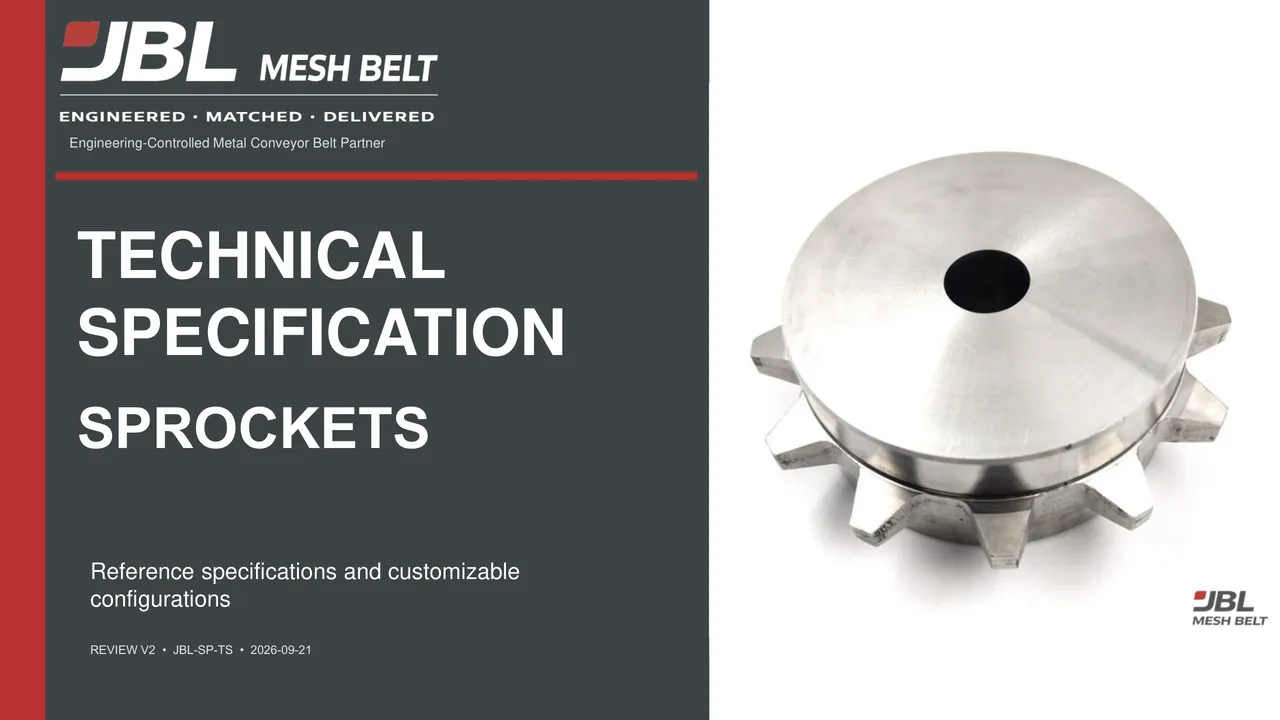
From the 2026-10-02 public specification, page 2. Options are structure-specific; reference examples do not establish interchangeable combinations. Source: Sprockets Technical Specification, page 2 ↗
Read the documents for this belt
Sprockets: specification, page by page
Opens in a new tab · no download · no sign-up
Document Library
Compare pitch, wire, edge, surface and sprocket options with your equipment before you send a drawing or old-belt photos. 13 technical specifications and 11 production and quality control documents for JBL metal conveyor belts and sprockets, page by page on your phone or computer.
Engineering review
Not sure which specification fits your line?
Send your drawing or old-belt photos on WhatsApp. We compare them with the specification and tell you what still needs to be measured.