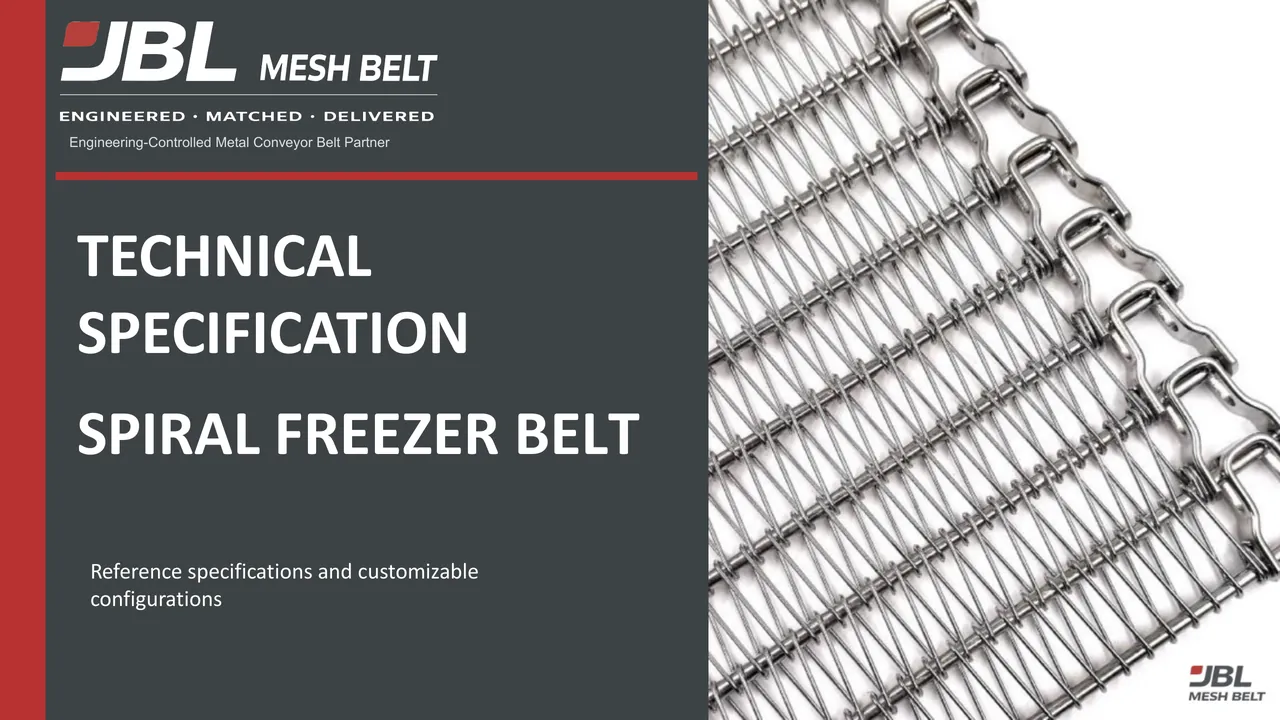
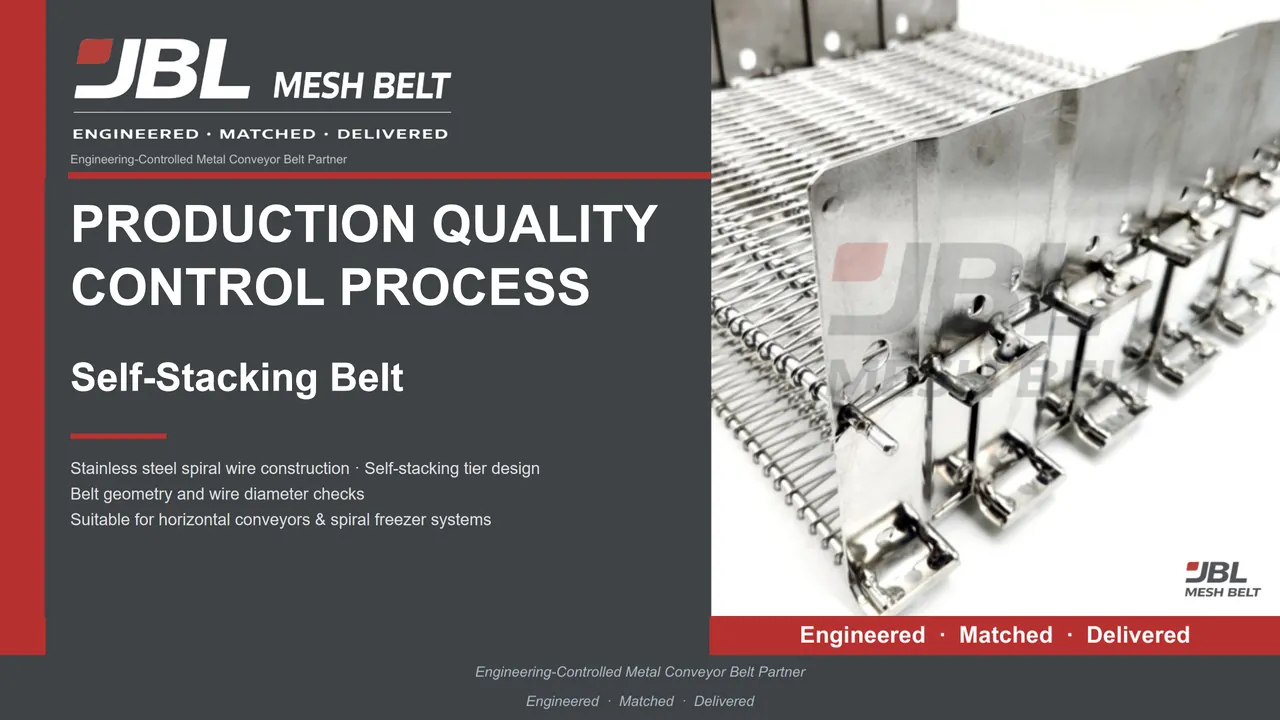
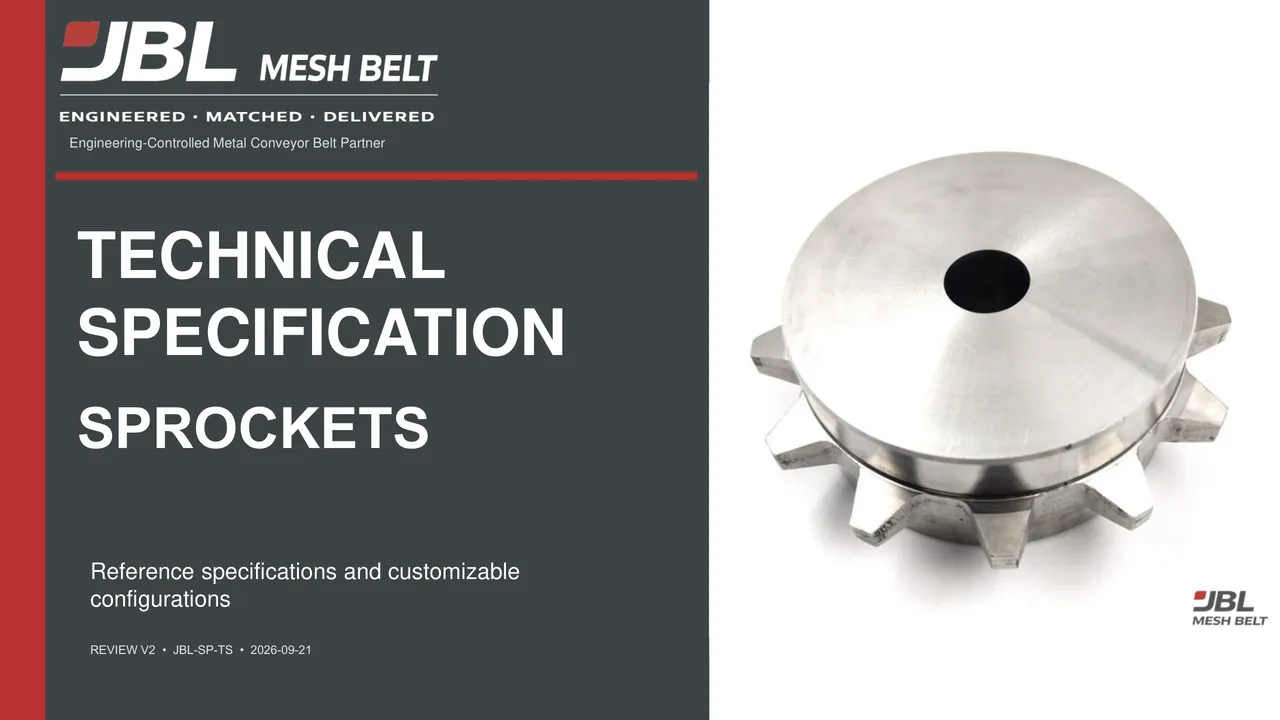
A replacement belt has one job: run on the machine you already have, with the drum, sprockets, guides and stacking you already have. You should not have to modify your line to fit a new supplier's belt. This is how we reduce that risk before you commit to a full order.

Pitch, rod, wire, links or side plates, and edge are read on your old belt or checked against your drawing.
A sample or trial run is set next to your original, or joined to it, and measured the same way. You see the photos and readings.
Spiral and self-stacking belts are laid out in a full circle; self-stacking belts are stacked tier on tier; sprockets are run on the new belt.
Before volume production.
| Project | What was checked before bulk | Full case |
|---|---|---|
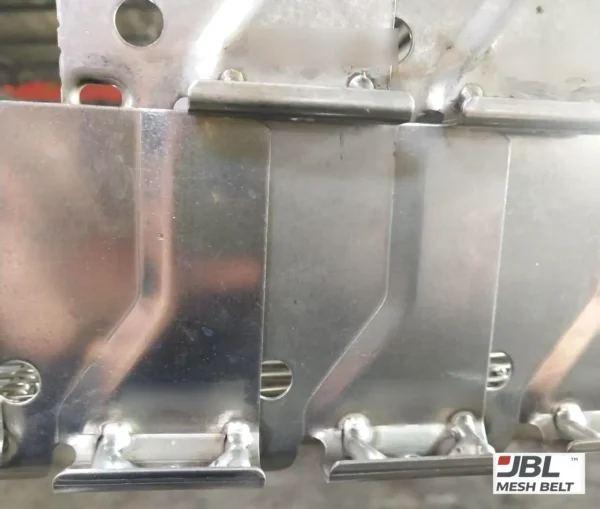
| Self-stacking freezer, meat processor, Brazil · 2025 | Joined to the original, stacking test; the customer ran about 50 m on the freezer before ordering 350 m | Brazil |
| OEM self-stacking belt, United Kingdom · 2026 | Sample compared with the original; full-circle turning test and stacking test before 450 m | UK |
| Waffle cooling spiral, belt and sprockets · 2026 | Trial run next to the original, approved from photos; sprockets run on the bulk belt | Waffle line |
| Small radius spiral belt, drawing confirmed before production, Malaysia · 2026 | Trial run measured and sampled; welds ground a second time; full-circle turn test | Malaysia |
No drawing? See Reverse Engineering. Want to see how a pre-shipment check works? See Spiral Freezer Belt Inspection.
Document Library
Compare pitch, wire, edge, surface and sprocket options with your equipment before you send a drawing or old-belt photos. 13 technical specifications and 11 production and quality control documents for JBL metal conveyor belts and sprockets, page by page on your phone or computer.
Engineering review
Not sure which specification fits your line?
Send your drawing or old-belt photos on WhatsApp. We compare them with the specification and tell you what still needs to be measured.