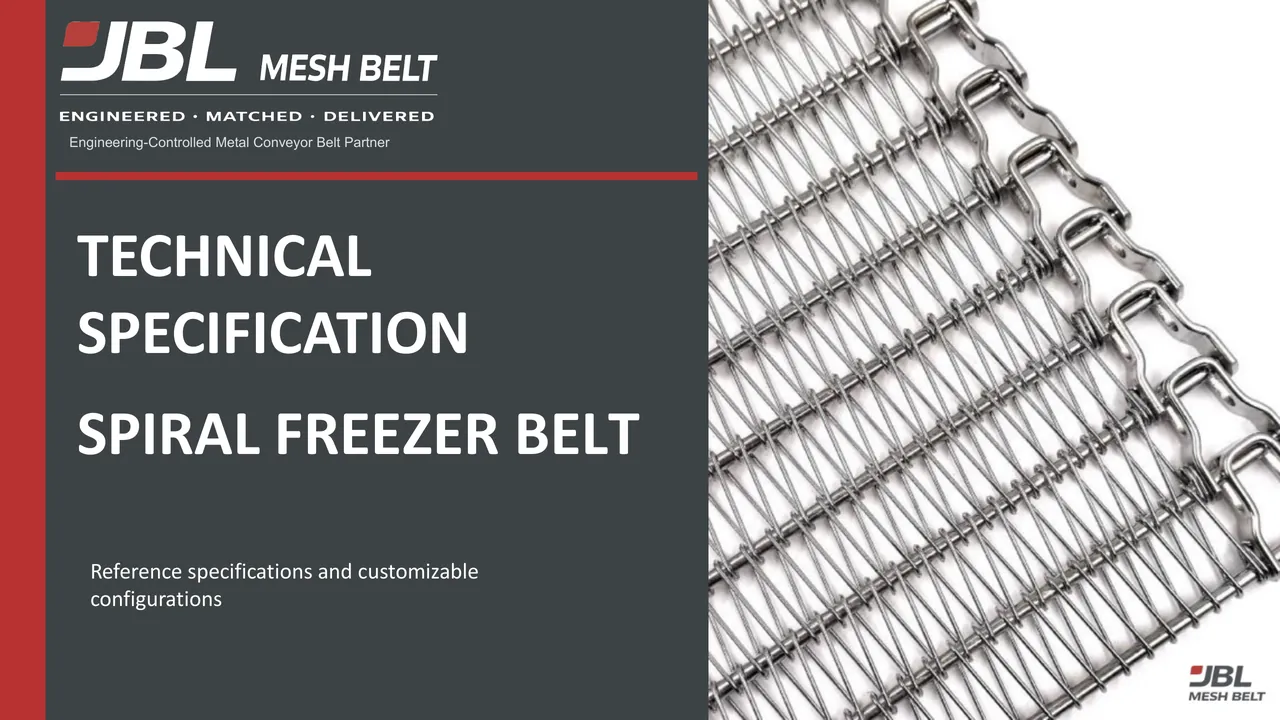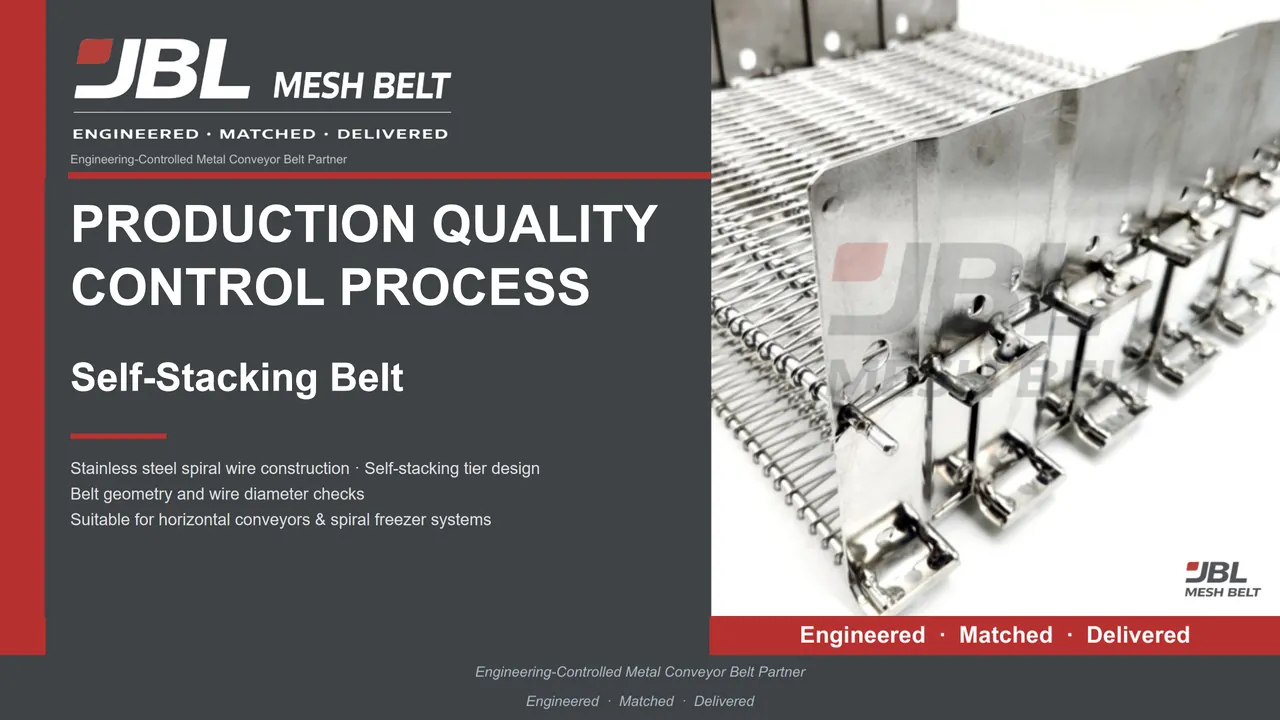
A spiral freezer belt runs for thousands of hours in the cold, under tension, around a drum. Most problems that stop a spiral line early — a weld that cracks at the edge, a rod that is not straight, a belt that wanders on the drum — can be seen on the belt before it is packed. The question is whether anyone looks.
If you buy spiral freezer belts for your own equipment or as replacements, these are the six checks worth asking your supplier about, and what a pass and a reject look like.
Our Spiral Freezer Belts are produced by qualified production partners to the drawing you approve; JBL Mesh Belt does the engineering review and the pre-shipment inspection.
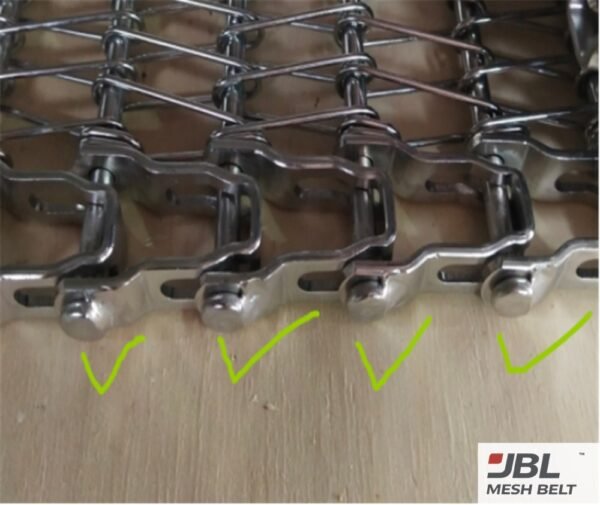
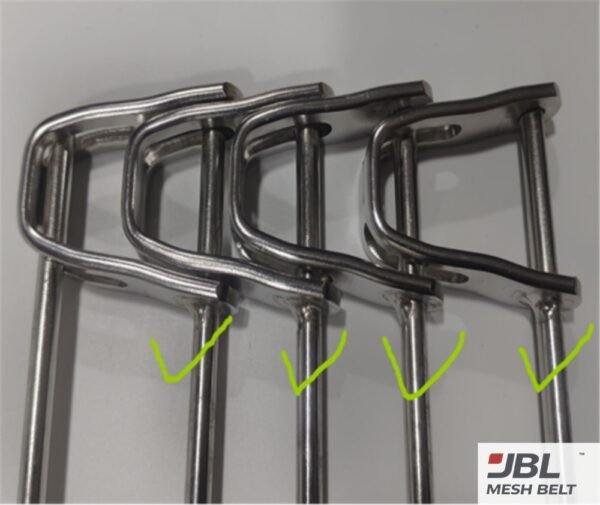
Why it matters: the edge carries the belt tension around the drum. A weld that stands proud of the link catches, wears and can crack under repeated load.
What we check: weld position and finish against the approved drawing; a raised weld bump is rejected and reworked.
What you can ask for: inspection photos of the edge welds on your rolls. Where your project needs it, a weld-strength check on sample sections, with the method agreed before production.
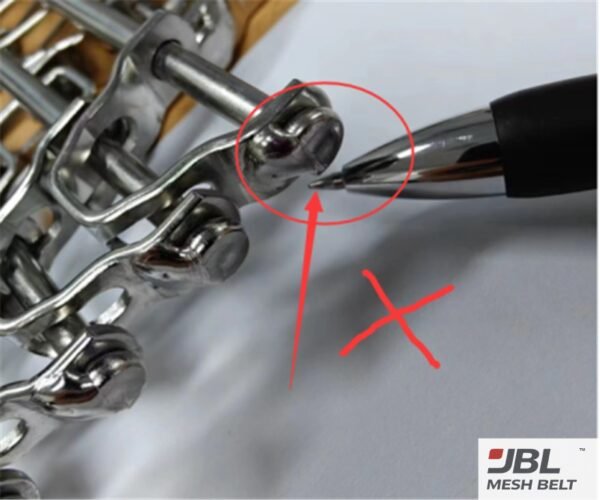
For food lines, weld burrs are also a contamination risk — see spiral freezer belt weld burrs and IQF contamination.
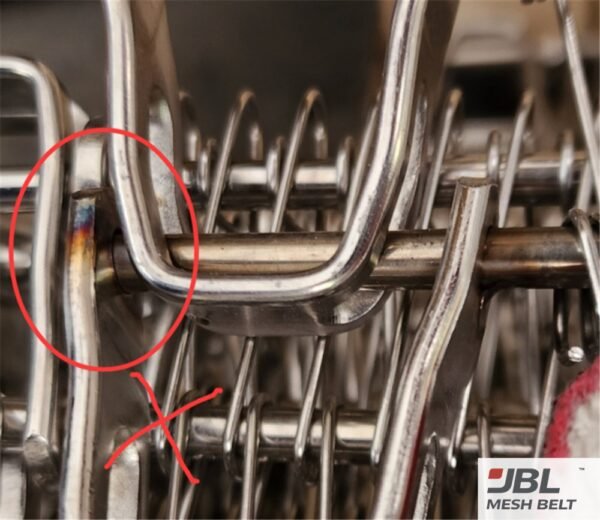
Why it matters: an arc burn or a heavy grinding mark at a rod joint weakens the area and leaves a rough surface where product and debris can catch.
What we check: rod joints and centre-link welds are inspected for arc burns and grinding marks; affected sections are rejected.
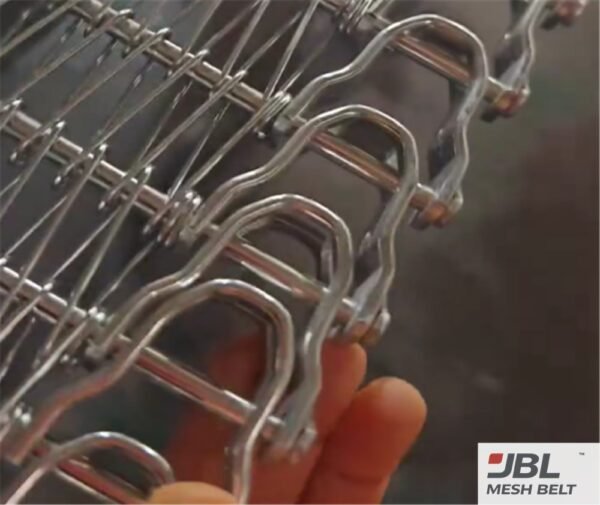
Why it matters: a bent rod lifts the mesh, changes how the belt sits on the drum and spreads uneven load to the links beside it.
What we check: rods are checked for straightness on sample sections; rod and spiral wire fit follow the approved drawing.
Why it matters: if pitch drifts or edge links are out of line, the belt engages the drive unevenly and starts to wander or climb.
What we check: pitch is measured at several points along each roll and compared with the drawing; edge links and rods are checked for alignment.
What you can ask for: the pitch readings for your rolls.
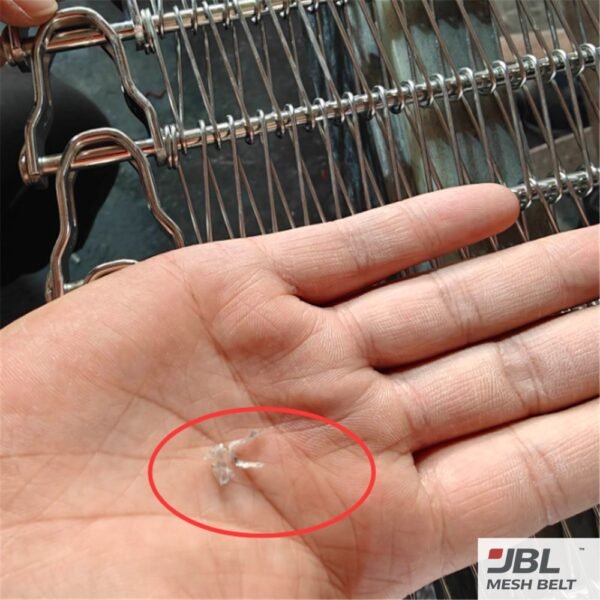
Why it matters: oil residue or a loose particle on a new belt ends up in the product on the first run.
What we check: the mesh is inspected for oil residue and foreign particles before packing; a belt that fails is cleaned and rechecked.
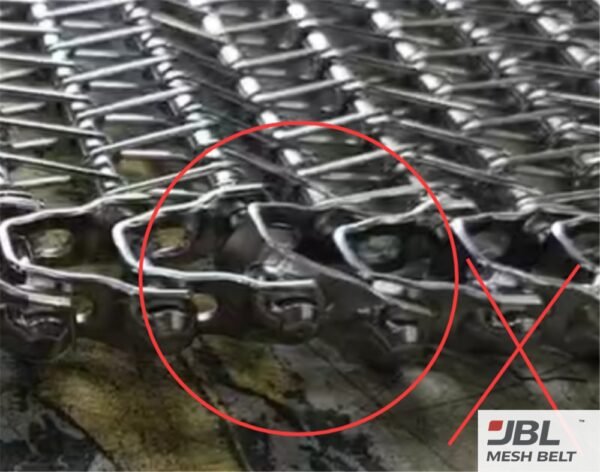
Why it matters: stains or uneven colour after pickling can point to a surface that was not fully treated.
What we check: surface colour and stains after pickling, section by section.
The belt’s collapse around the drum has to match your spiral. We review it against your drum or cage at the drawing stage and confirm the value with you in writing — it follows your equipment, not a catalogue figure. Further reading: spiral belt turn ratio, load, tracking and service life.
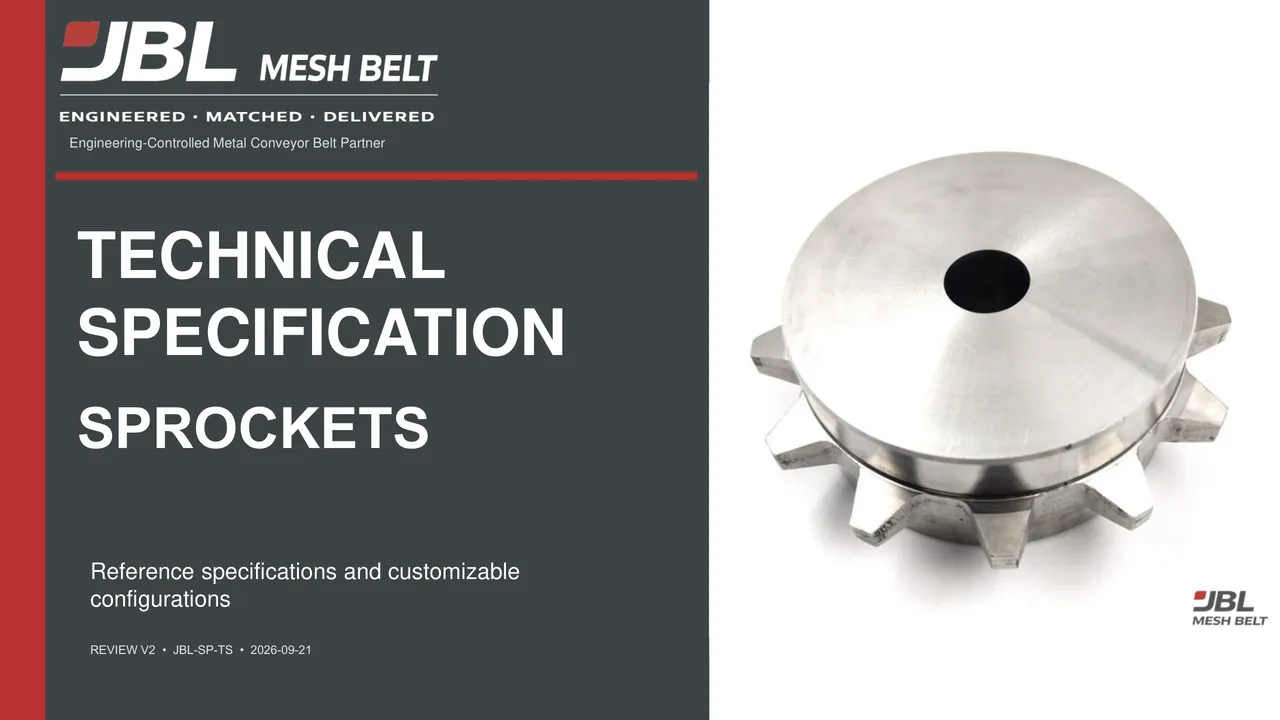
Same width and pitch do not confirm a fit. Drive type, edge design, turn ratio and the condition of your sprockets all decide whether the new belt runs. Send photos of the old belt’s edge and drive side, its width and length, and your drum details. See also: spiral freezer belt replacement compatibility guide.
Yes. Every roll is checked against the approved drawing before packing, and the agreed records go to you before shipment.
Yes. You receive inspection photos and the agreed check results for your order before shipment.
Where your project calls for it, a weld-strength check on sample sections is agreed before production, with the method written down.
It follows your drum or cage and the belt design. We confirm it with you in writing at the drawing stage rather than quote a standard value.
They depend on size, material and quantity and are confirmed in writing in each quotation.
Send a photo of your current belt’s edge and drive side, or your drawing.
Document Library
Compare pitch, wire, edge, surface and sprocket options with your equipment before you send a drawing or old-belt photos. 13 technical specifications and 11 production and quality control documents for JBL metal conveyor belts and sprockets, page by page on your phone or computer.
Engineering review
Not sure which specification fits your line?
Send your drawing or old-belt photos on WhatsApp. We compare them with the specification and tell you what still needs to be measured.