Choose a metal conveyor belt when the line runs hot (ovens, fryers, dryers), runs cold with strong airflow (spiral and tunnel freezers), carries heavy or sharp-edged products, or has to follow a turning or self-stacking spiral path. A plastic modular belt is often chosen for ambient or chilled conveying of lighter packaged products, and for lines whose frame, supports and sprockets were designed for plastic modules from the start.
In most projects the machine has already made the decision. Changing belt type is only worth considering when the drive, supports and take-up on that machine are designed for the new belt.
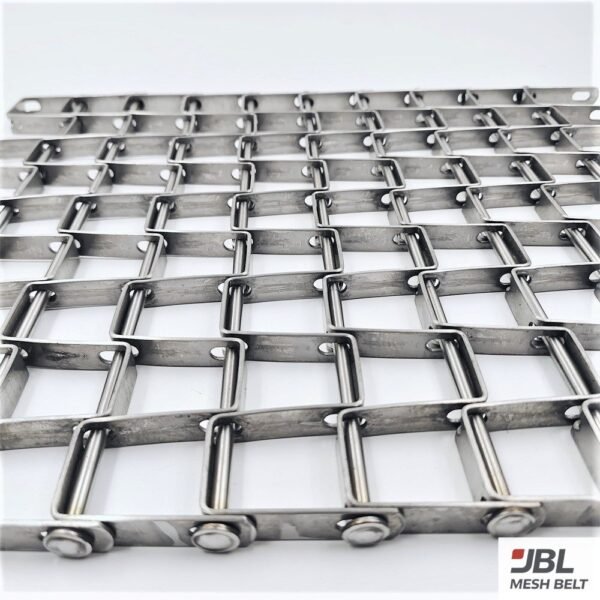
| Question | Metal belt | Plastic modular belt |
|---|---|---|
| How hot or cold is the process? | Used in baking, frying, drying and freezing lines; the wire material is chosen for the temperature range | Each resin has its own rated range — check the belt maker’s data before running hot or very cold |
| Does air or heat need to pass through? | Open mesh lets air, steam and oil pass; open area is set by pitch and wire size | Open area depends on the module design; many designs are more closed |
| How heavy is the product? | Suits heavy, dense or sharp-edged loads when wire, rod and edge are sized for them | Suits lighter loads within the module’s rated strength |
| Does the belt turn or stack? | Spiral, turning and self-stacking belts are built for this path | Turning plastic belts exist, but the machine must be designed for them |
| How is it cleaned? | Open structure is easy to inspect; stainless grade is chosen for the cleaning chemicals | Hinge and pin areas need attention during cleaning |
| How is it driven? | Sprockets, drums or chain edges matched to the belt pitch | Plastic sprockets matched to the module pitch |
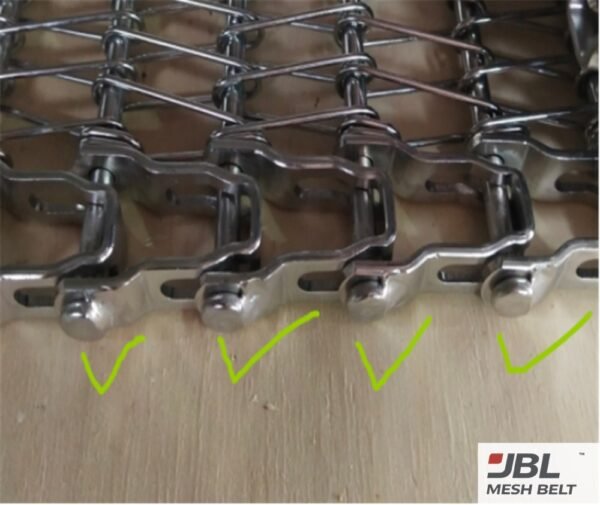
| How is damage repaired? | Damaged sections can be cut out and a matched section joined in | Damaged modules are replaced |
Food applications are possible with both types. An application name is not a food-contact approval: material, cleaning method and the end user’s requirements still have to be checked for each project.
If you are replacing a worn belt, the safest path is usually the same belt type, matched to the existing drive and frame. Switching from plastic to metal, or the other way round, can mean new sprockets, new supports, a different tension set-up and a new check of the turning path. That is an engineering change, not a simple swap.
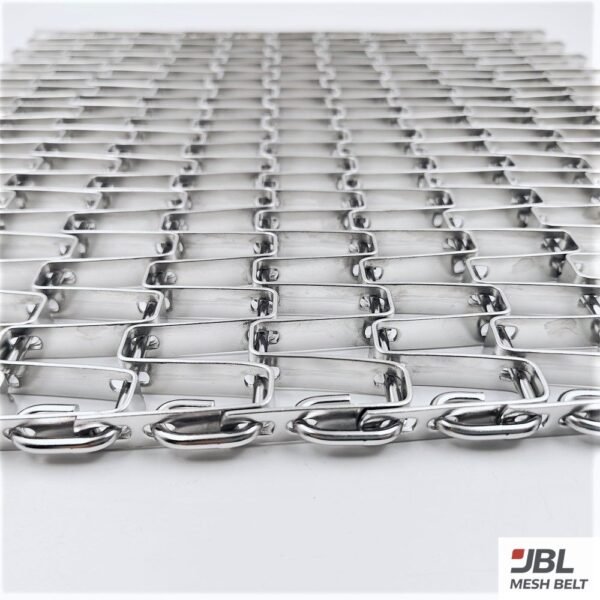
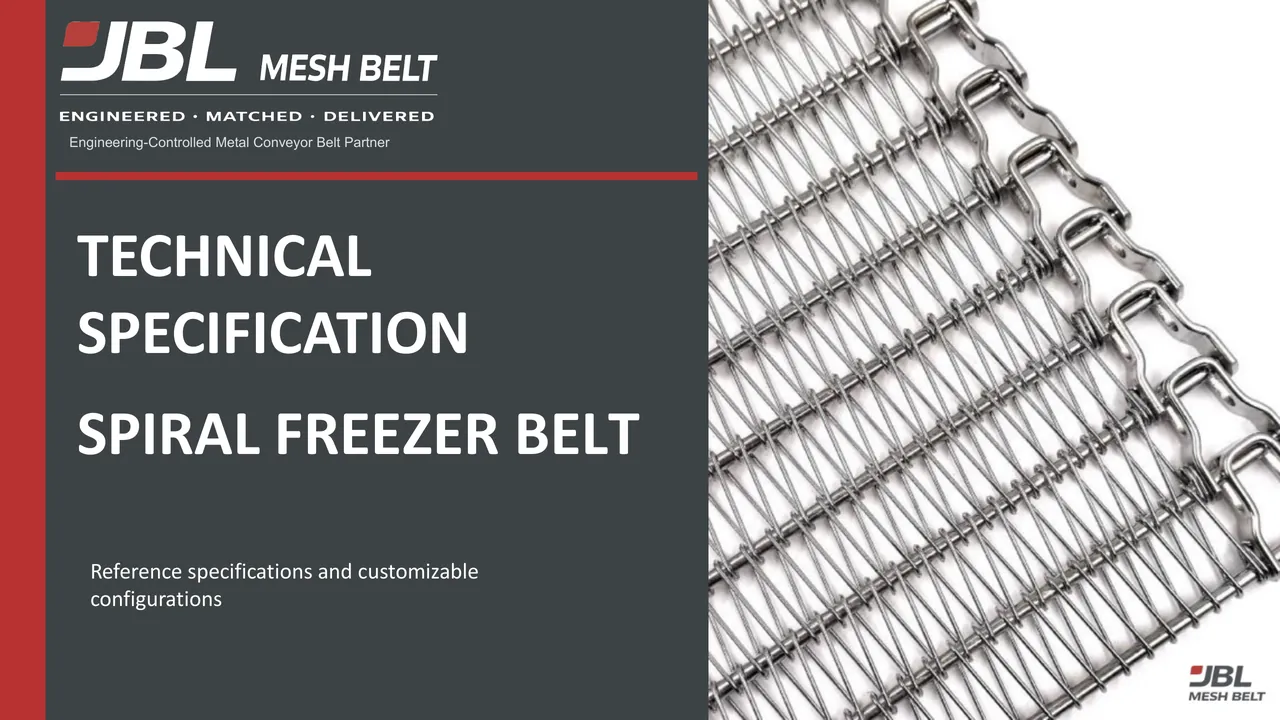
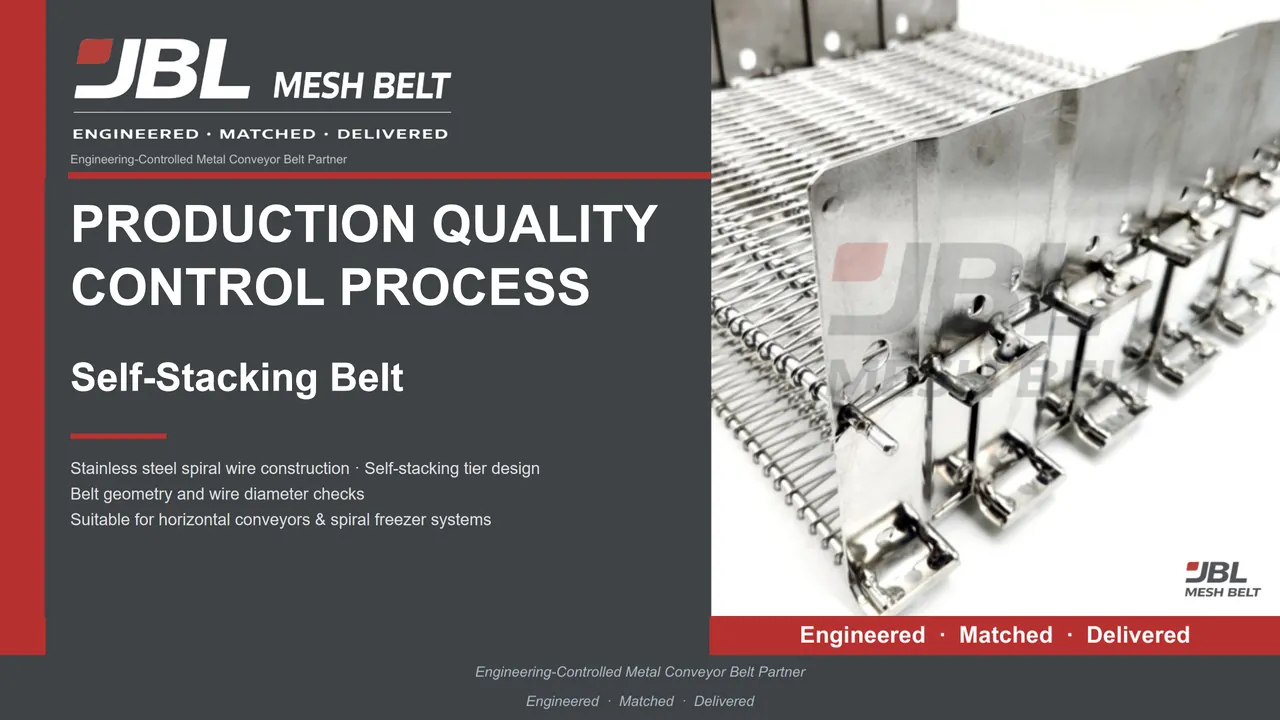
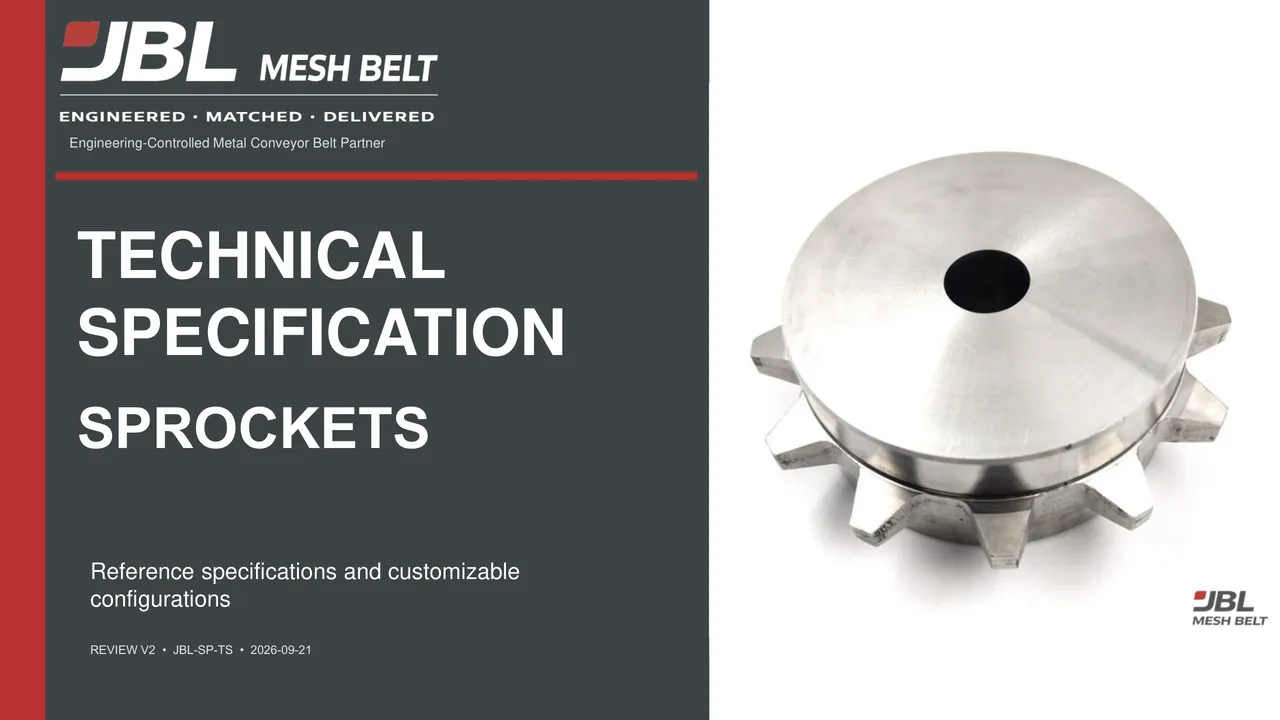
JBL Mesh Belt works on metal conveyor belts and sprockets: Spiral Freezer Belt, Self-Stacking Belt, Flat Wire Belt, Eye Link Belt, chain-driven, balanced weave, Z-type ladder, side-driven, plate link, biscuit and compound weave belts, and Sprockets. If your line is designed for a plastic modular belt and should stay that way, we will tell you so rather than push a metal belt onto it.
Missing some of these? Send what you have — we will tell you exactly what else is needed.
Sometimes. It depends on whether the sprockets, supports and take-up can carry a metal belt and whether the turning path suits it. Send photos of the drive and the frame and we will check it before any quotation.
Not automatically. The right material depends on the temperature, the product and the cleaning chemicals. A food application does not by itself mean a food-contact approval for every material or belt.
Open metal mesh is easy to see through and inspect. Plastic modular belts need attention at the hinges and pins. In both cases the cleaning method should be part of the belt review.
Usually yes. The sprocket must match the belt pitch and engagement, so a change of belt type normally means a change of drive components.
It depends on the belt type, size, material and quantity. Price, quantity and lead time are confirmed in writing in each quotation.
Send your belt details — a photo of the old belt is enough to start.
Document Library
Compare pitch, wire, edge, surface and sprocket options with your equipment before you send a drawing or old-belt photos. 13 technical specifications and 11 production and quality control documents for JBL metal conveyor belts and sprockets, page by page on your phone or computer.
Engineering review
Not sure which specification fits your line?
Send your drawing or old-belt photos on WhatsApp. We compare them with the specification and tell you what still needs to be measured.