How Should You Approve a Trial Sample Before Bulk Production of a Metal Conveyor Belt?
A trial sample protects you only if you can check it. Here is what I send with every sample, with readings from four real projects.
Quick answer
Approve a sample only when it comes with caliper readings of every fit dimension, a side-by-side or joined comparison with your original, the drawing revision it was checked against, and a turning, stacking or sprocket test where one applies.
Spring Liu
Sales Director, JBL Mesh Belt · 16 years in metal conveyor belts
At a glance
The five checks before you say yes
Checkpoint
What you should receive
Real project
1. Readings
Caliper reading of every fit dimension, original vs sample
Drawing revision, readings and photos kept for repeat orders
All four projects
A metal conveyor belt is a set of dimensions that work together: pitch, rod, link, wire and edge. One of them a fraction off can pass a drawing review and still fail on your drum or sprockets. A short trial section lets you find that on one metre instead of the whole belt. Production is carried out by our qualified production partners to the approved drawing; I and our engineers review the sample and inspect before shipment.
Checkpoint 1 of 5
What readings should a trial sample come with?
Not a photo and the words "as per drawing". A number for every dimension that decides fit, taken the same way on your original and on the sample.
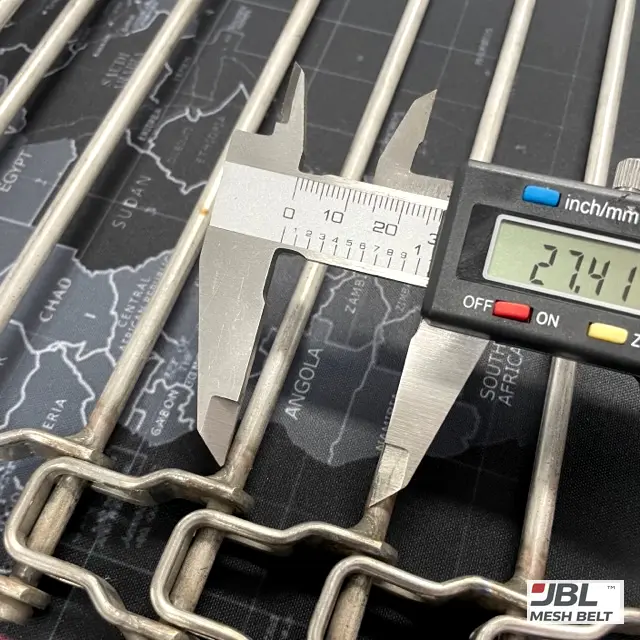
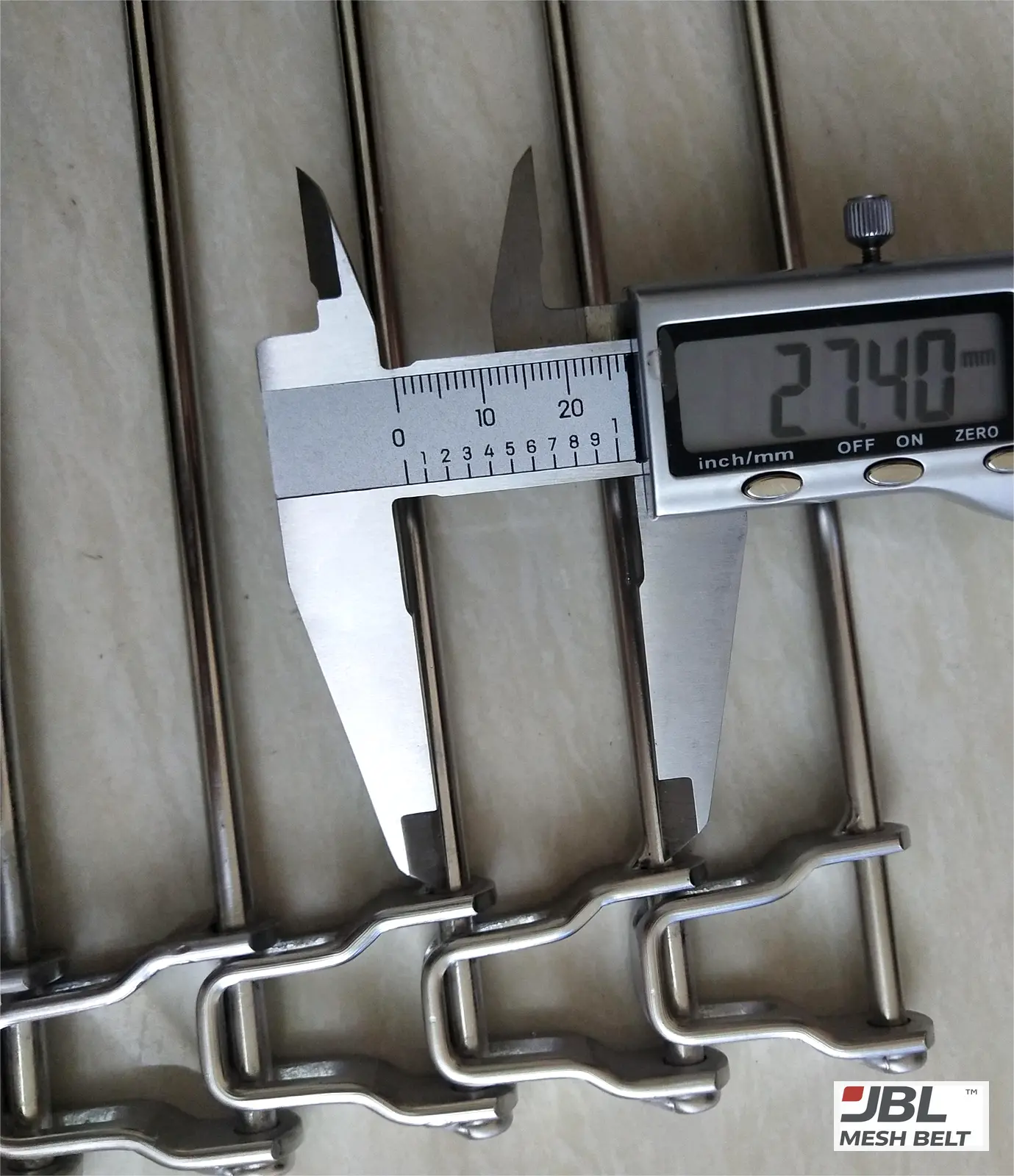
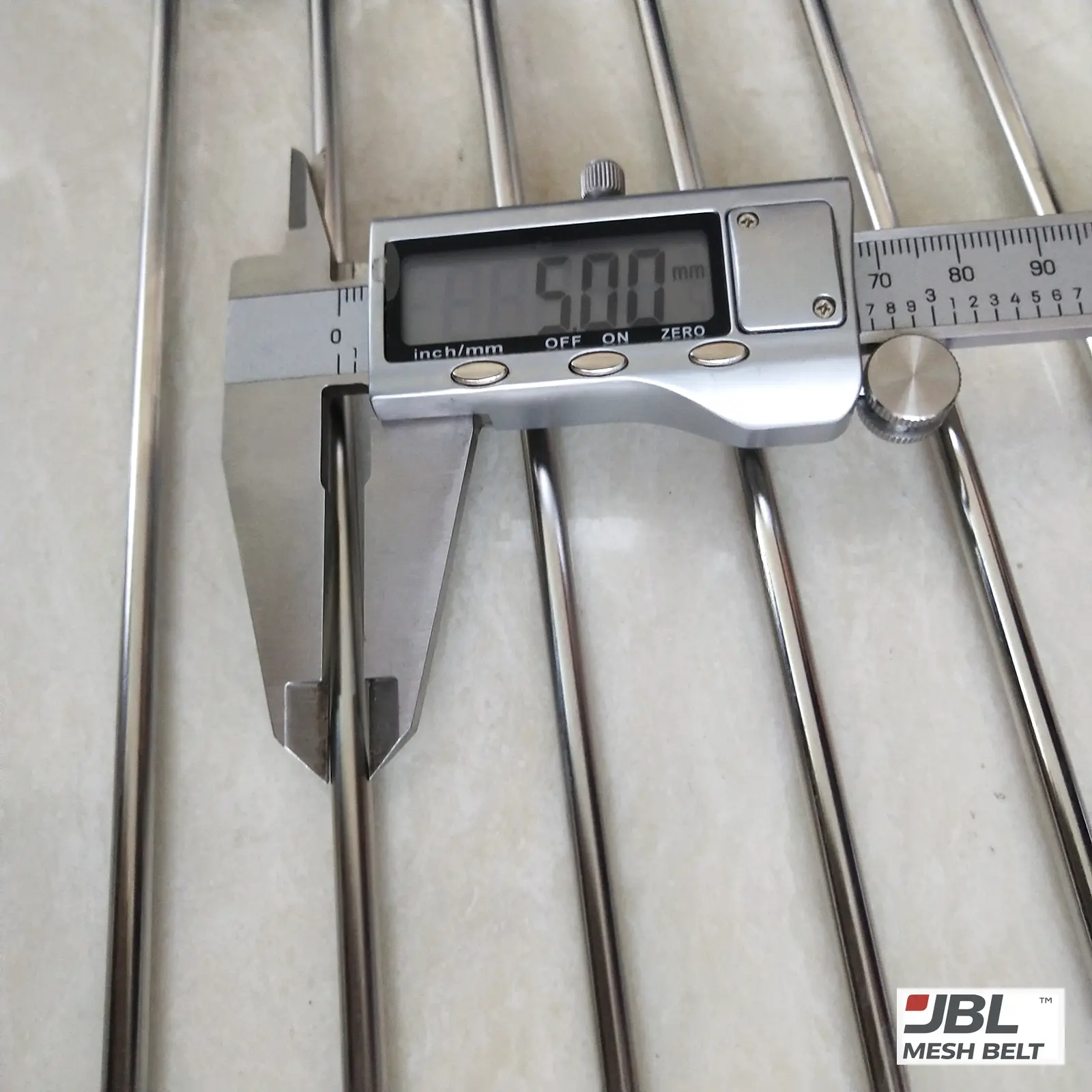
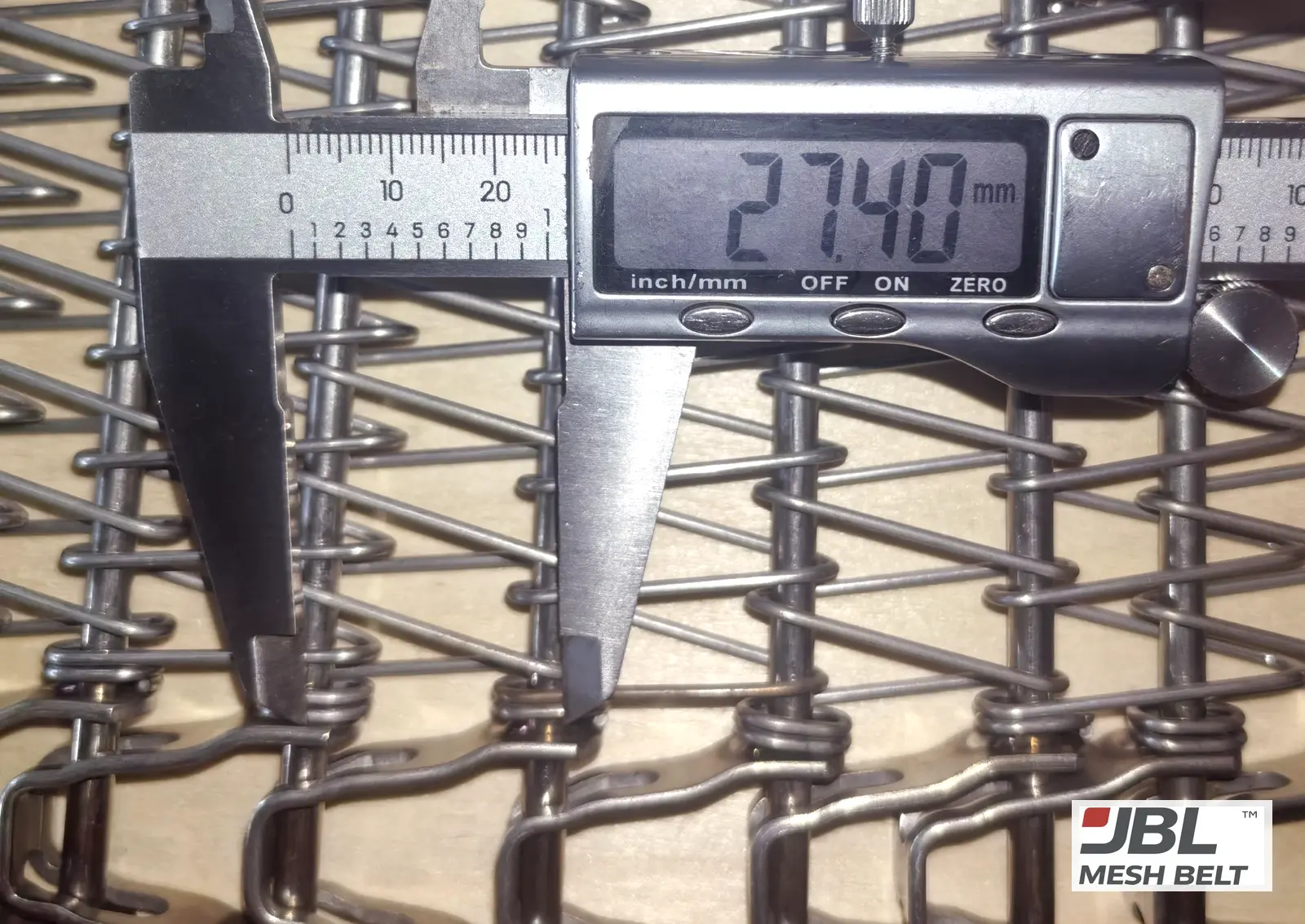
Ask for a caliper reading of every fit dimension, on your original and on the sample, with the same tool. For a Melbourne bakery I read pitch 27.41 mm on the original and 27.40 mm on the new sample.
Pitch on the original: 27.41 mmPitch on the new sample: 27.40 mmRod on the new sample: 5.00 mm
Original vs sample, read the same way
Dimension
Original belt
New sample
Pitch
27.41 mm
27.40 mm
Rod diameter
5.03 mm
5.00 mm
Link thickness
2.70 mm
2.70 mm
The bakery had no drawing, only a worn section of its old spiral cooling belt. Reading both belts with the same caliper turned "I think it will fit" into numbers the buyer could check. The photo shows the instrument and the reading; nothing is retyped.
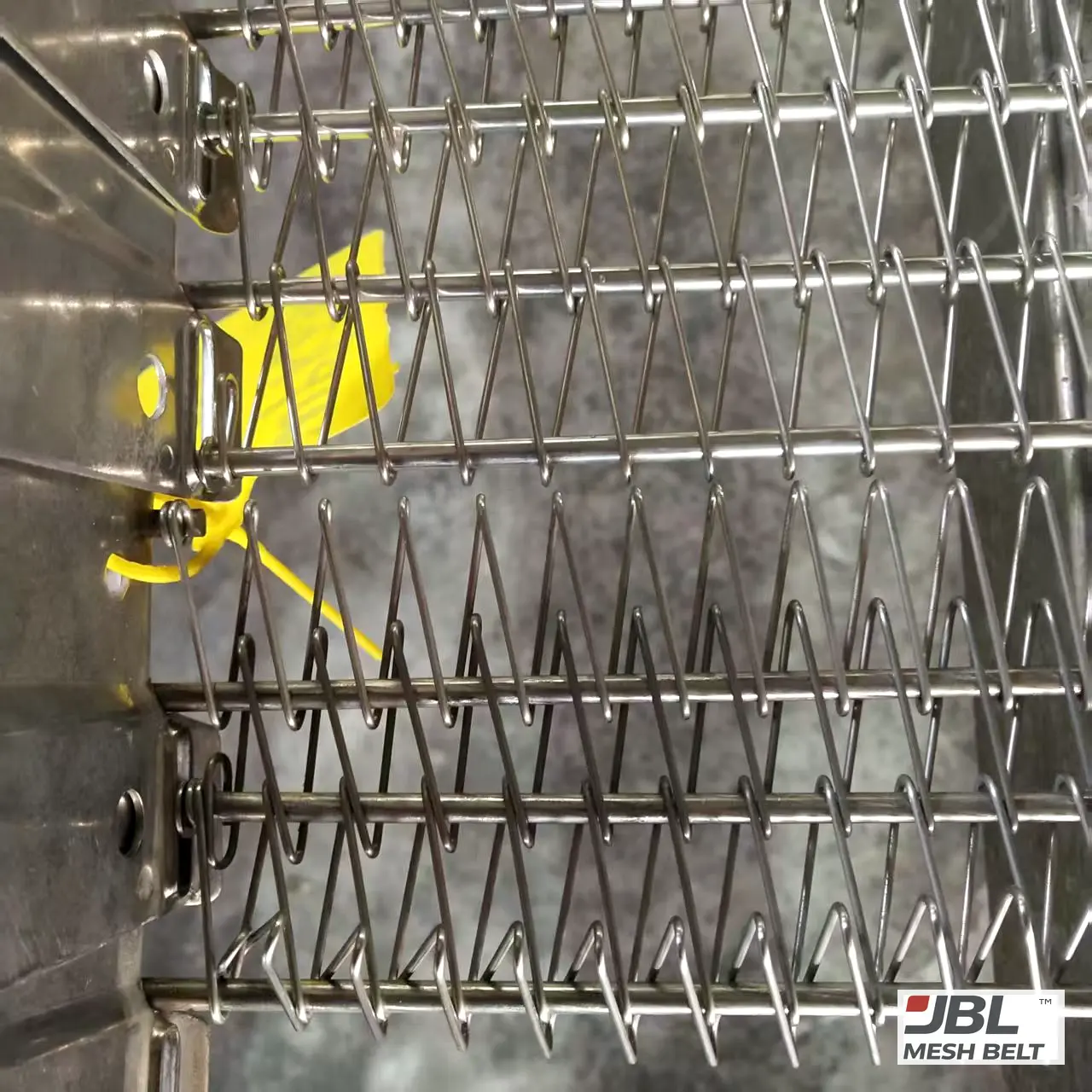
For a spiral belt, the fit dimensions are usually pitch, rod diameter, link thickness, link height and link opening, plus the edge detail. For a self-stacking belt add side plate height and thickness. For a chain-edge belt add chain pitch and sprocket data.
Checkpoint 2 of 5
Should a worn original be copied exactly?
No. An old belt is a good sample but not a perfect master. Some dimensions change in service and must be corrected, not copied.
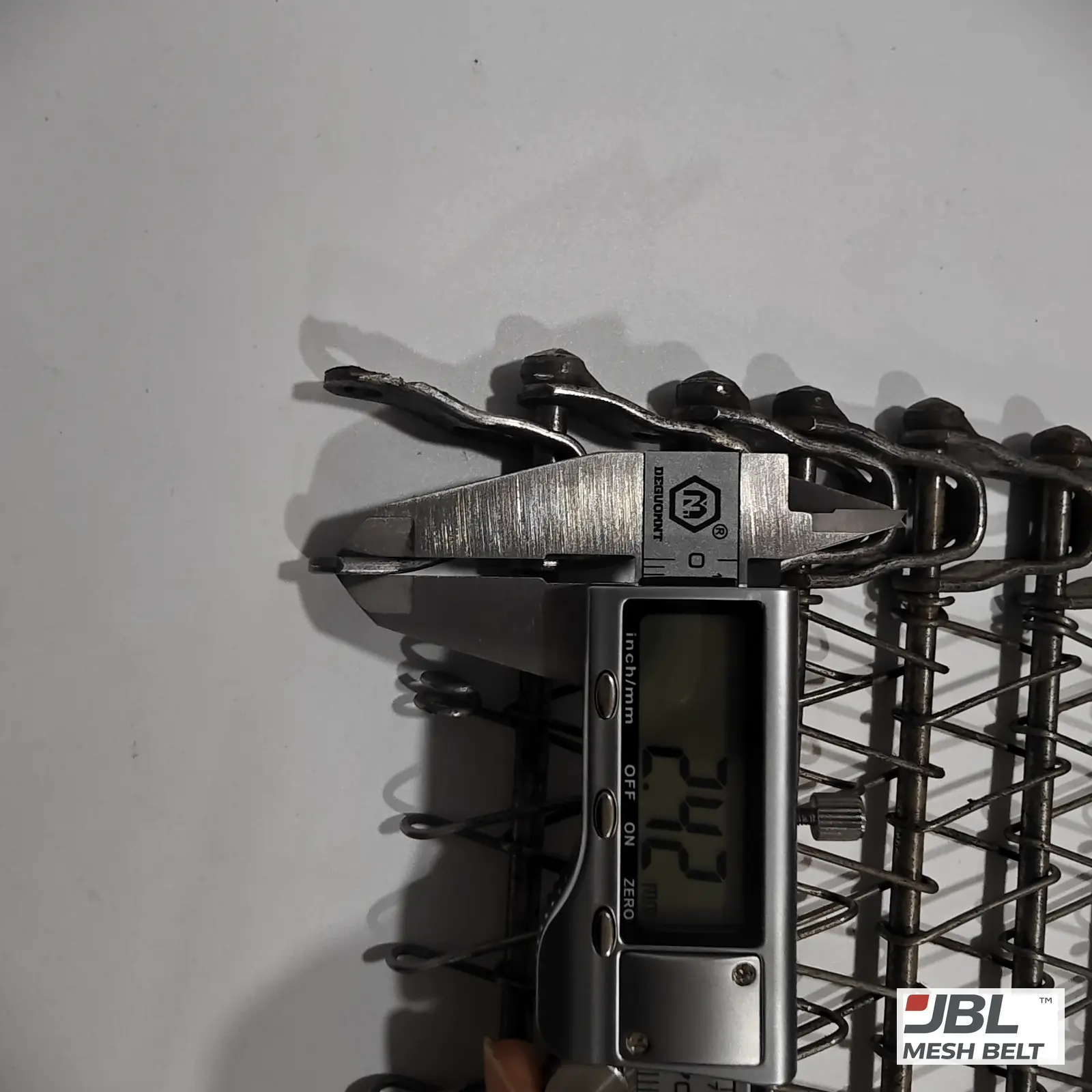
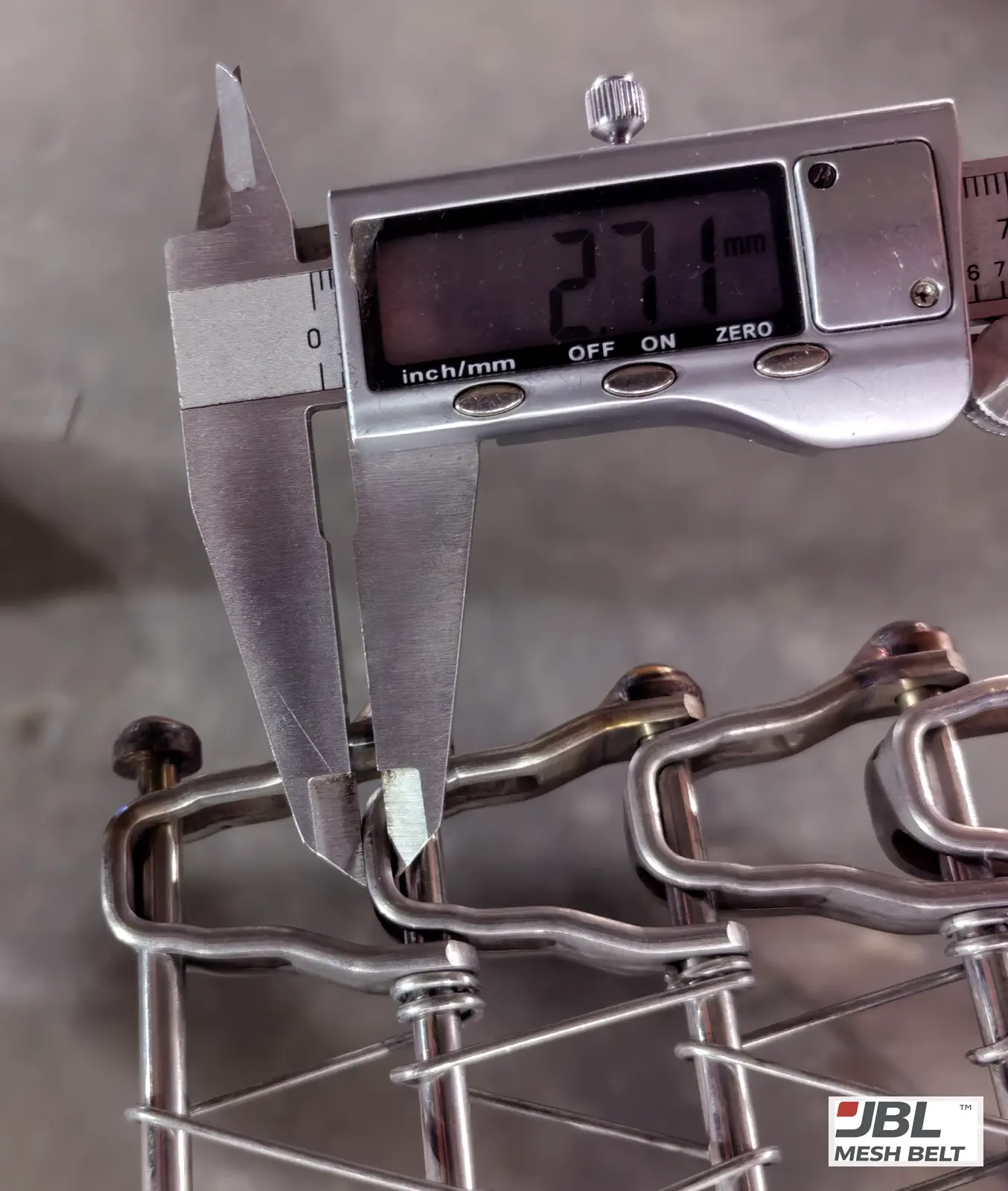
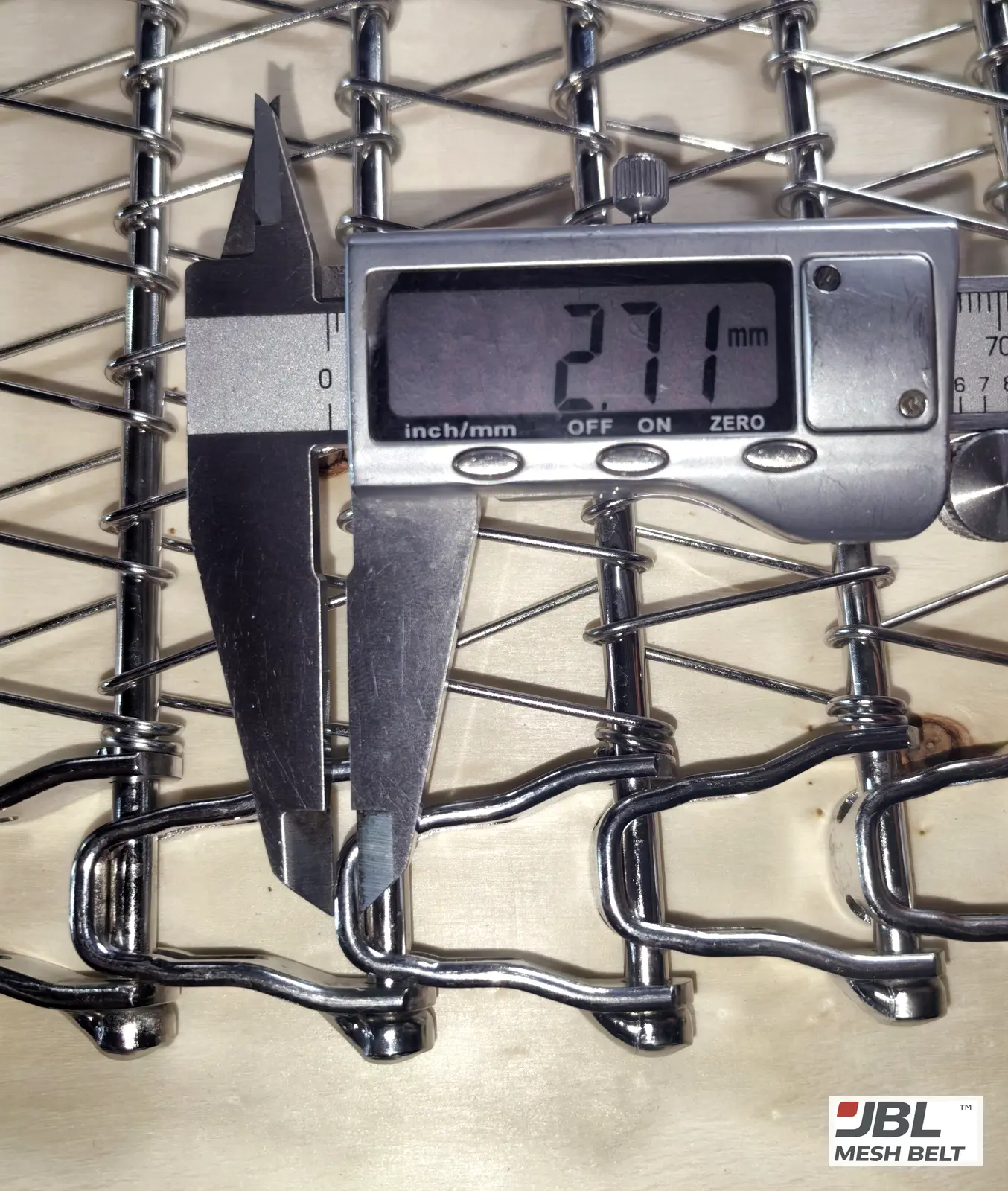
Measure the worn original, identify which readings are wear, and correct them to new on the drawing. On a waffle cooling spiral the link read 2.42 mm after years of wear; the trial run and the bulk belt read 2.71 mm.
Worn original link: 2.42 mmTrial run link: 2.71 mmBulk belt link: 2.71 mm
What was kept and what was corrected
Dimension
Worn original
Trial and bulk
Link thickness
2.42 mm (worn)
2.71 mm (new)
Rod
4.99 mm
Matched to the original
Sprockets
Worn teeth
Remade and run on the bulk belt
If I had copied 2.42 mm, the new belt would have started life already worn. The trial run showed the corrected link before bulk, and the same reading was taken again on the bulk belt before packing.
Checkpoint 3 of 5
Why join the trial section to your original belt?
Because a join shows pitch and link fit directly. No drawing, no photo of a single link, shows it as clearly.
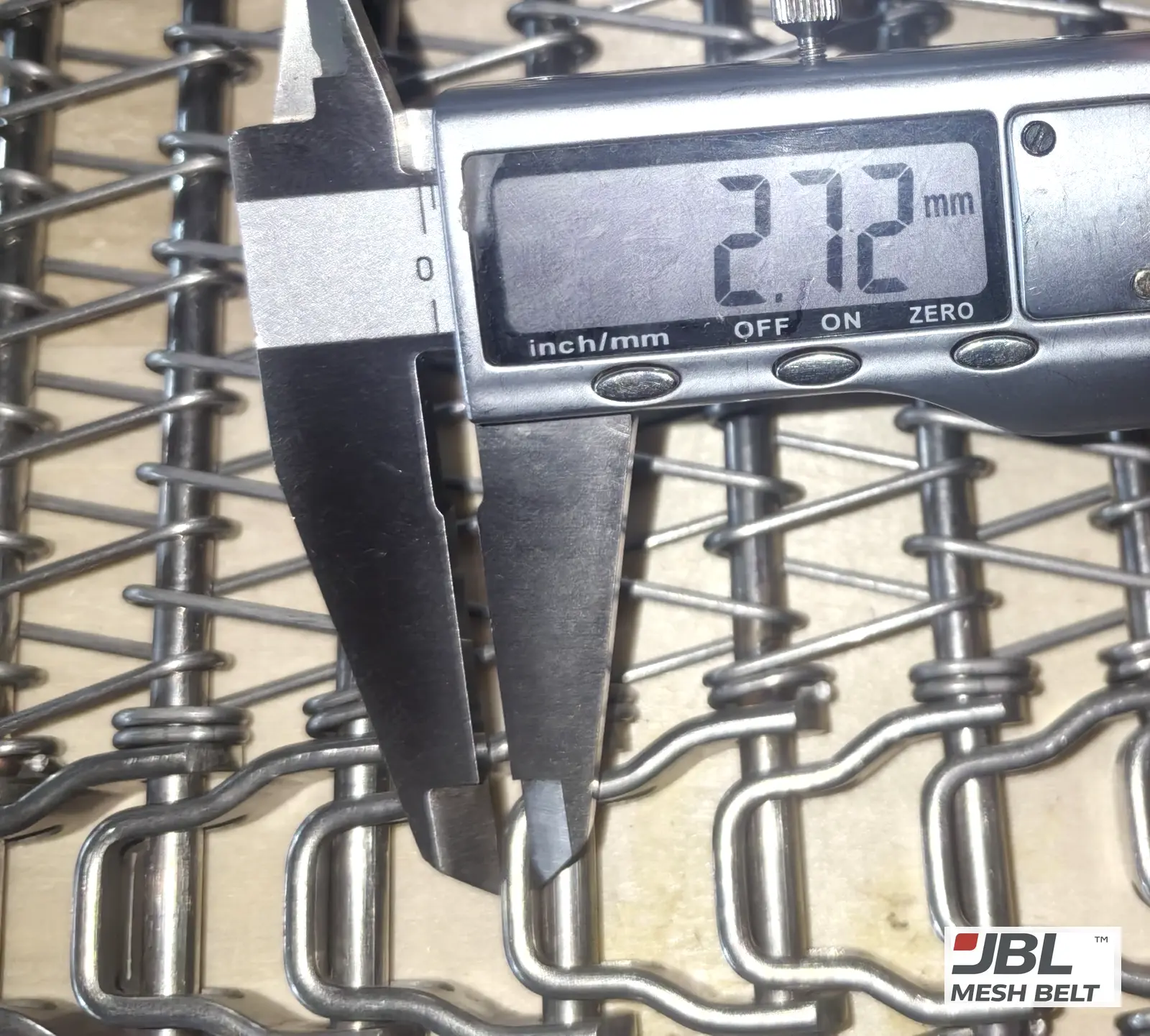
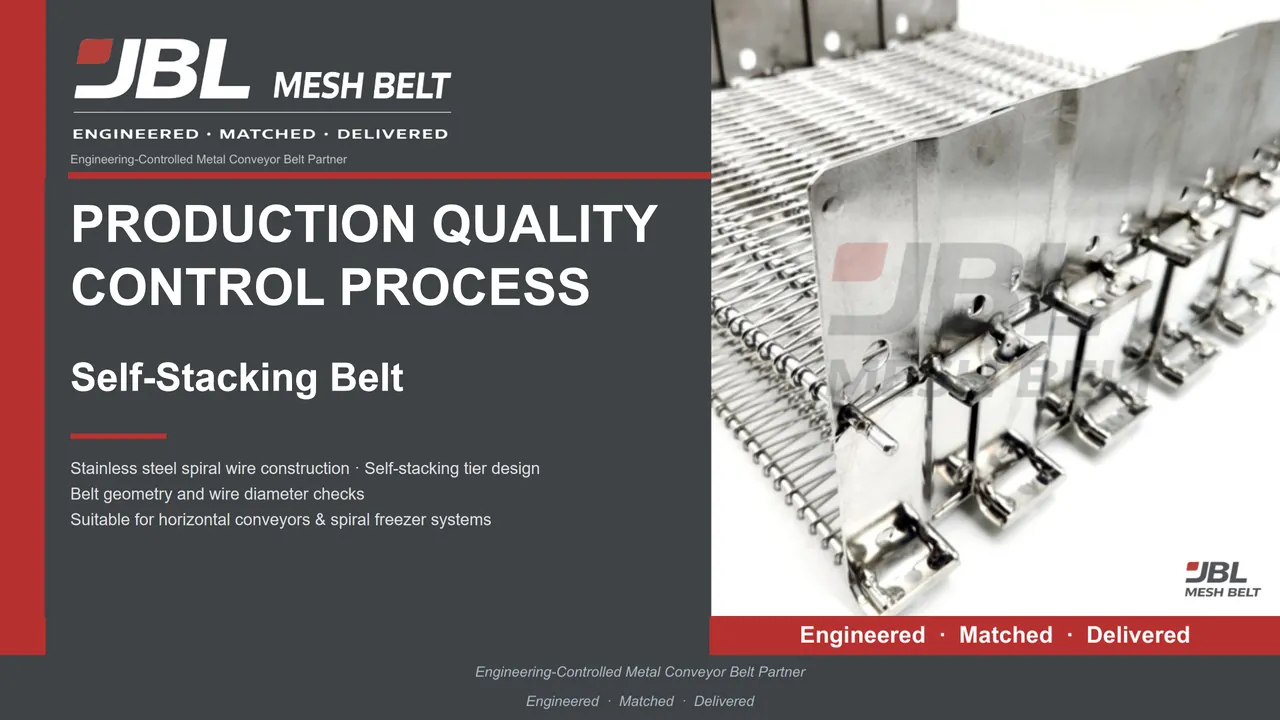
Link the trial section into a piece of your original belt. If pitch, links and edge line up across the join, the fit is shown, not promised. I did this on a spiral belt for Malaysia and on a self-stacking belt for Brazil.
Trial run linked to the original sectionTrial run and original, side by sideNew self-stacking belt joined to the original
What a joined comparison shows
Check across the join
Spiral belt (Malaysia)
Self-stacking belt (Brazil)
Pitch
27.40 mm on the trial run
Matched across the join
Links / side plates
Link thickness 2.72 mm
Side plate 80 mm × 1.5 mm
Rod pitch
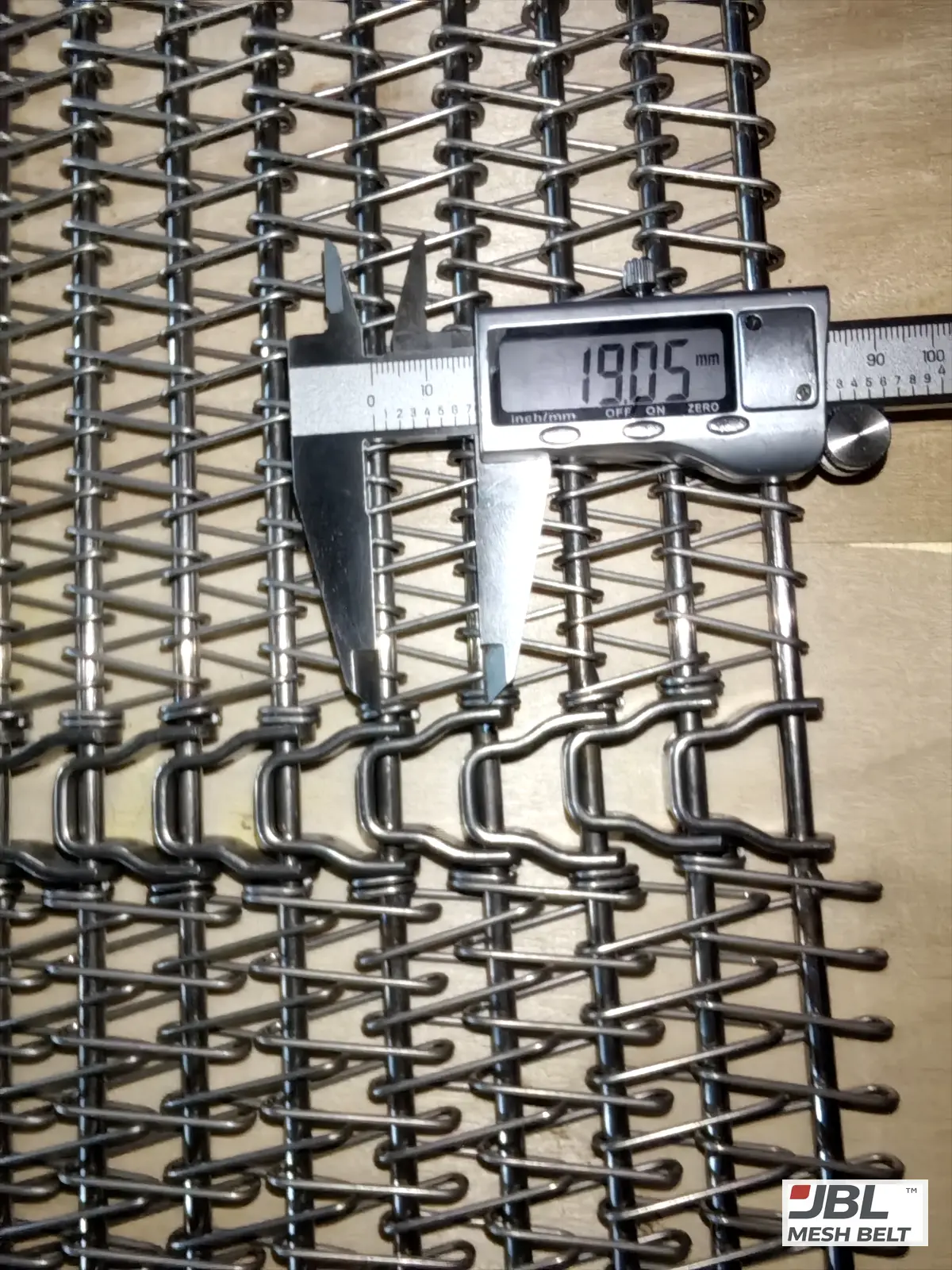
19.05 mm
30 mm
In Malaysia the customer approved the trial run from photos of exactly this join, plus the readings. In Brazil the join was the first step; the next one happened on the customer's own freezer.
Checkpoint 4 of 5
Which function test should the sample pass?
It depends on the belt. A dimension check is always done; a function test is agreed when the belt's job needs one.
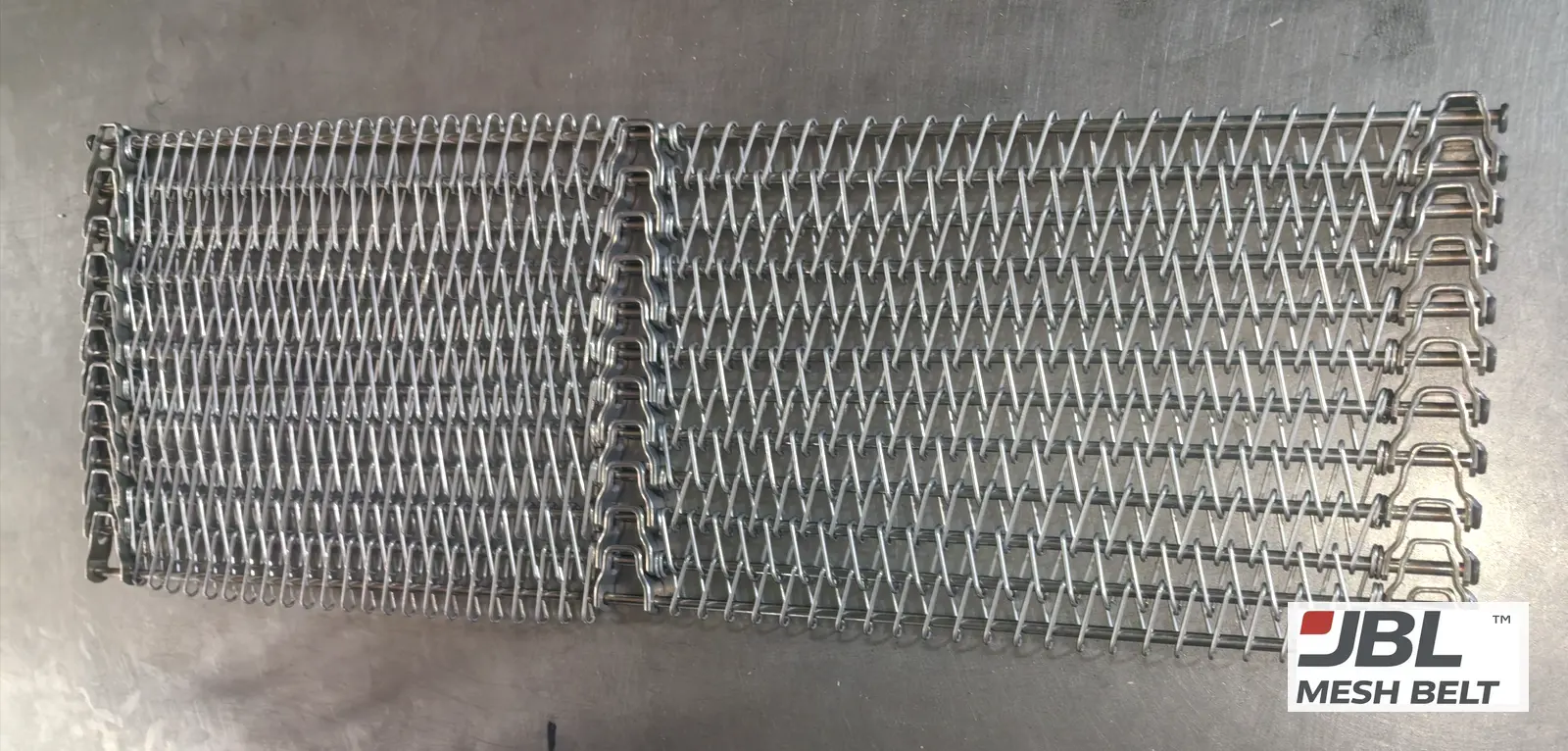
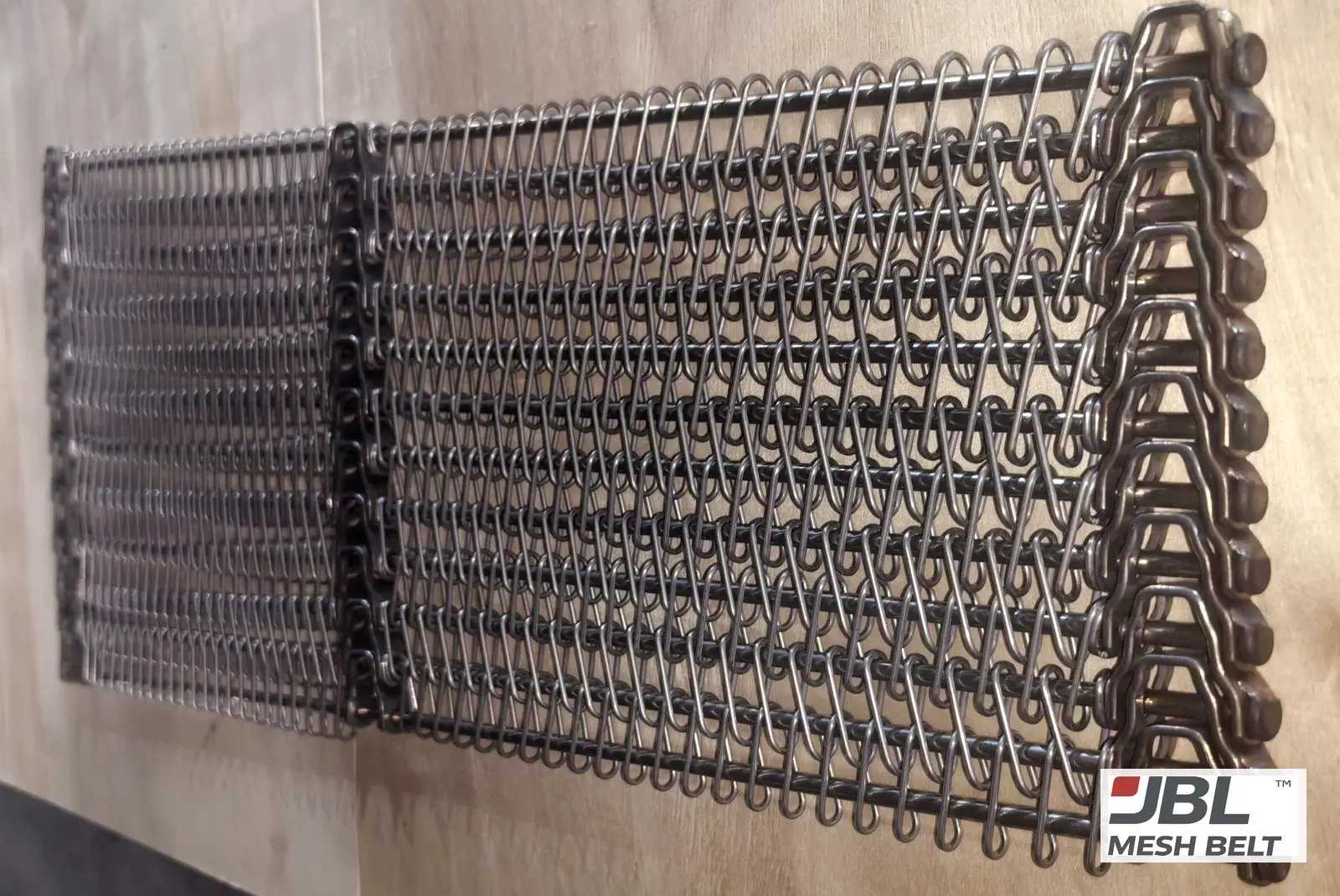
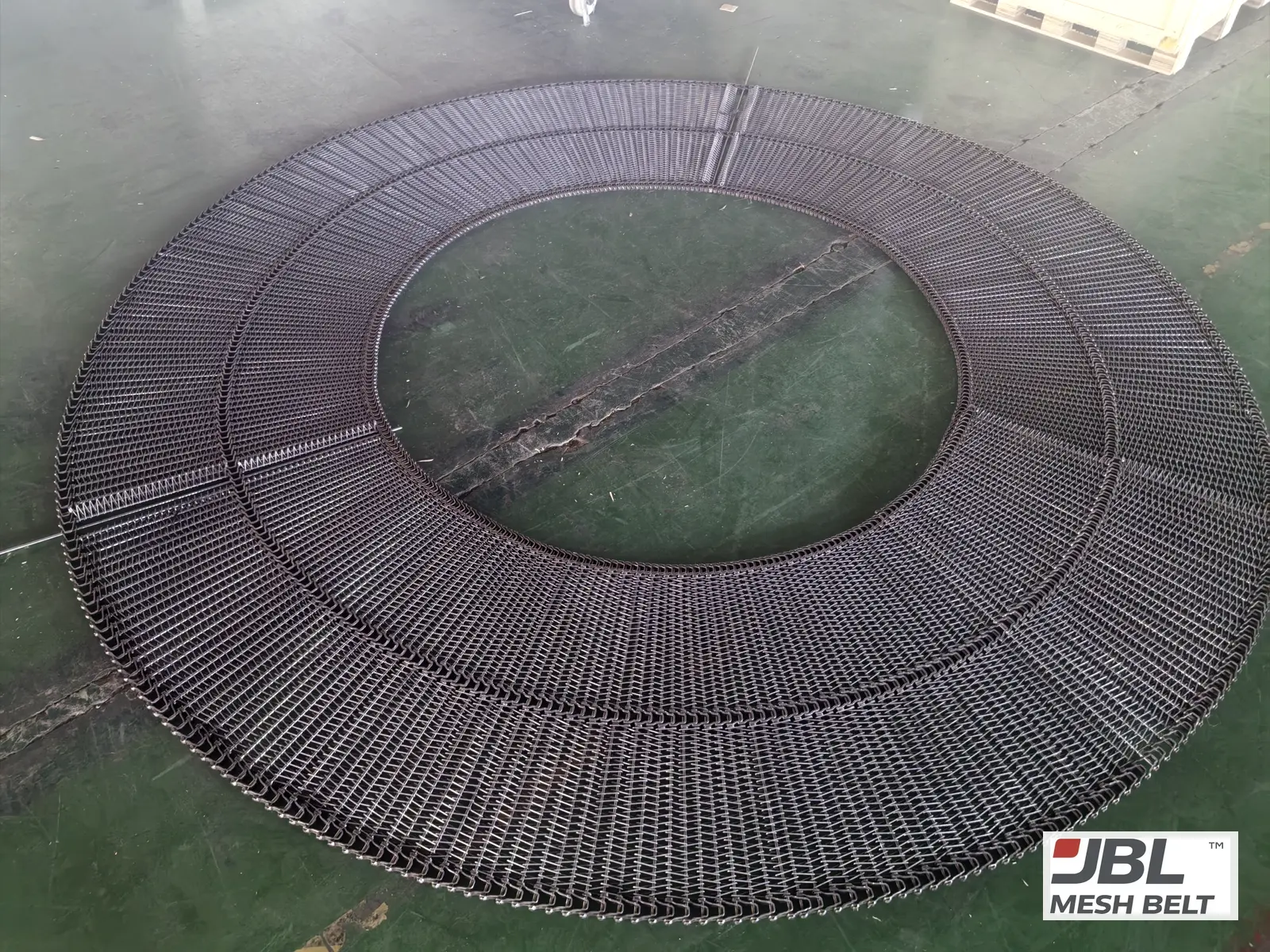
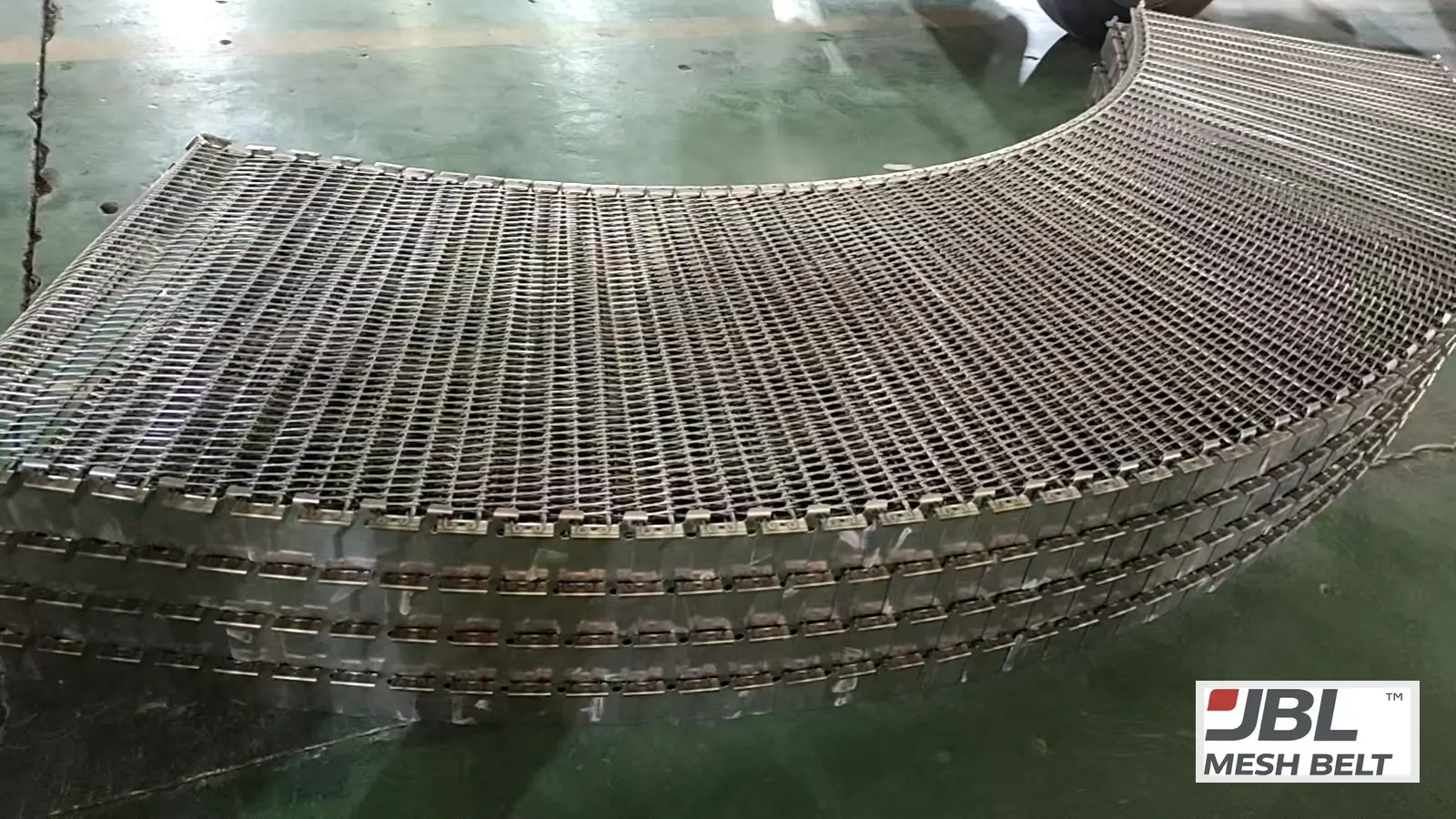
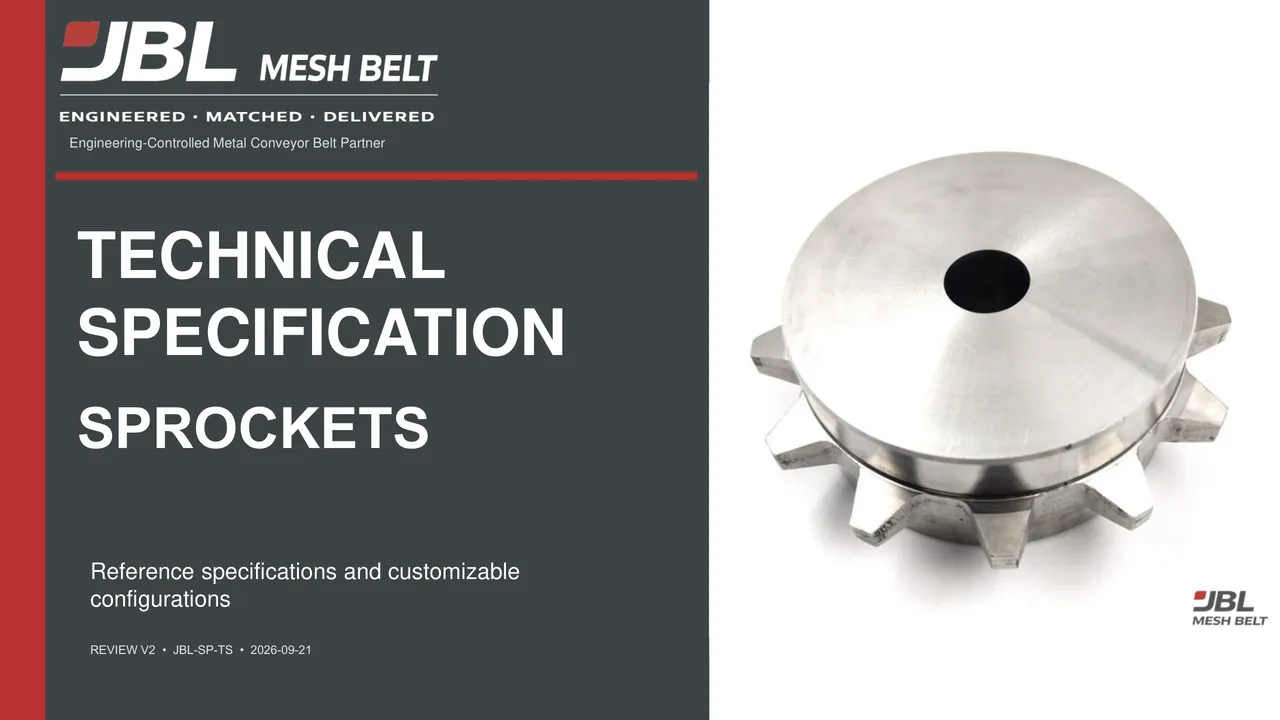
Agree the test before the sample is made: a full-circle turn test for spiral belts, a stacking test for self-stacking belts, a sprocket running check for chain-driven or sprocket-driven belts. Where possible, run a short length on your own machine.
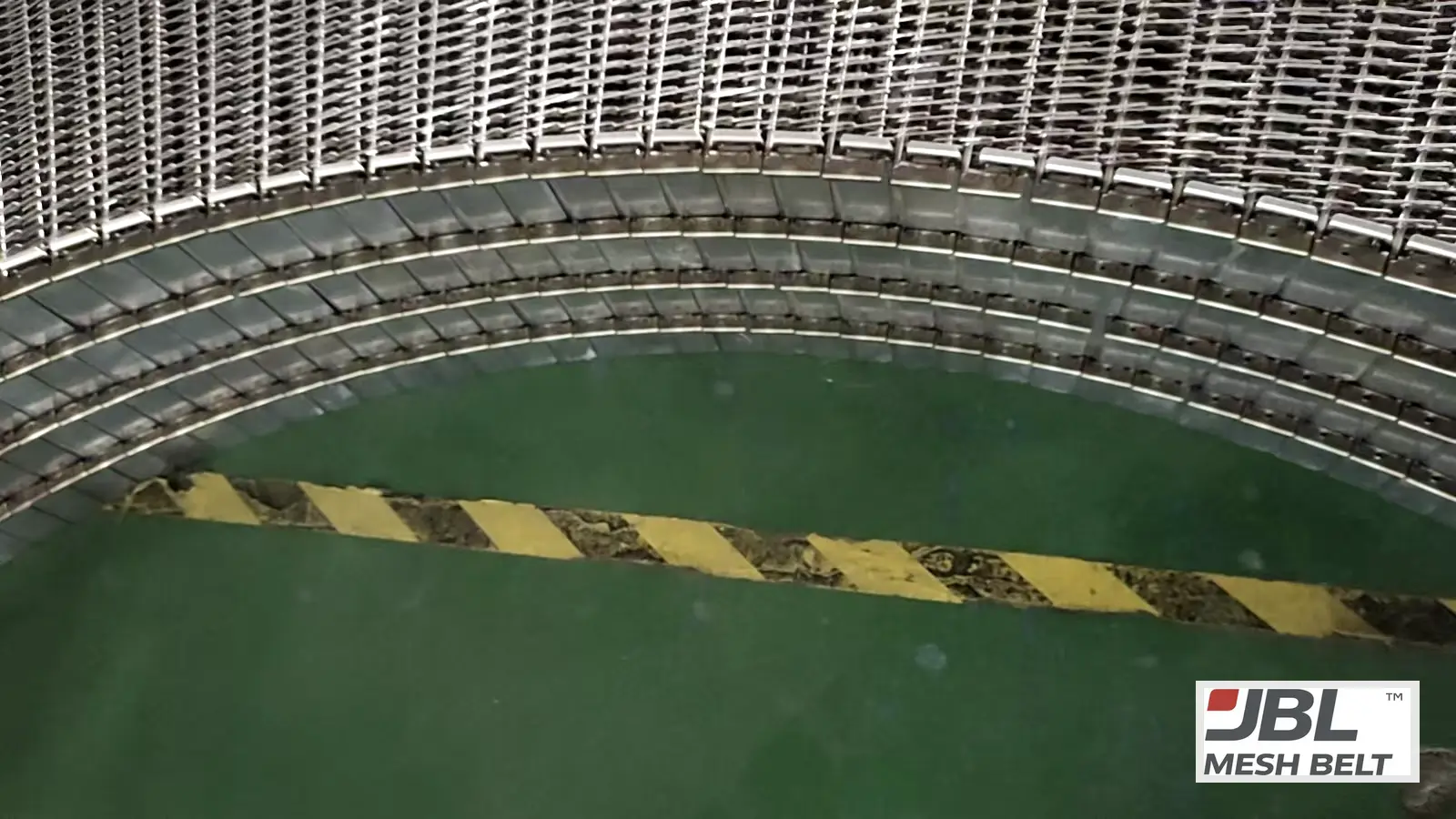
Spiral belt laid out in a full-circle turn testSelf-stacking belt: four tiers stacked on a curveStacking test seen from above
Which test fits which belt
Belt type
Test
What it shows
Spiral belt
Full-circle turn test
Mesh stays flat and even in the turn
Self-stacking belt
Stacking on a curve
Side plates sit and turn tier on tier
Chain or sprocket drive
Sprocket running check
Tooth engagement on the new belt
Any belt, where possible
Short length on your machine
It runs on the real equipment
The strongest test is your own line. The Brazilian meat plant ran about 50 m on its freezer before ordering the main length. That run answered the one question no drawing can: does it stack and run on this machine?
Checkpoint 5 of 5
What happens after you approve the sample?
Bulk production follows the approved sample and the drawing revision on the record. The record is kept for your next order.
After approval, bulk follows the approved sample and drawing revision, and is checked against the same dimensions before shipment. The record stays on file, so a repeat order starts from it. In Brazil, a 50 m trial led to 350 m and then a repeat 350 m.
Approved trial run: link thickness 2.72 mmApproved trial run: pitch 27.40 mmApproved trial run: rod pitch 19.05 mm
The approval record
Item on the record
Why it matters
Drawing and revision
Bulk is made to the version you approved
Readings with photos
The same dimensions are checked before shipment
Comparison or join photos
Shows what "matches" meant for this belt
Test photos or video
Shows the function check you agreed
Changes after approval
Re-confirmed in writing before production, including any cost or timing effect
If a detail changes after approval, I re-confirm it with you in writing before production continues. Price, quantity and delivery are confirmed in writing in your quotation.
When a sample is not needed
For a repeat order of a belt you have already approved, the approval record is usually enough. A new sample makes sense again if the drawing changes, the machine changes, or a long time has passed since the last order.
What I have learned
Buyers worry most at the start, before they have seen anything. In every project above, what made the go-ahead easy was the same: the trial next to the original, measured and photographed. Not a promise from me.
No. For a repeat order of a belt you already approved, the approved record is usually enough. For a new design, a supplier change or a belt without a drawing, I recommend a sample.
Can you make a sample without the original drawing?
Yes. A section of your old belt, or photos with caliper readings, is enough to start. I measure it, prepare the drawing for you to confirm, and check the sample against it.
Should the new belt copy my worn belt exactly?
No. Worn dimensions are found and corrected to new. On a waffle cooling spiral the old link read 2.42 mm after years of wear; the new link is 2.71 mm.
Can I test a short length on my own machine first?
Where the project allows it, yes. A meat plant in Brazil ran about 50 m on its freezer before ordering 350 m.
What do I receive with the sample?
Caliper readings for every fit dimension, photos of both edges, a comparison with your original, the drawing revision it was checked against, and test photos or video where a test applies.
A trial sample is worth what you can check on it: readings, a join to your original, the right test and a record. Ask for all four before bulk.
Download
Spiral Freezer Belt specification and inquiry form
Reference dimensions and options, plus a Word form to send with your photos or drawing.
I read your old belt or drawing, tell you what fits and what is missing, and show you a sample measured against your own belt before you order the full length. Send your drawing or old-belt photos on WhatsApp.
References: ISO 2768-1, General tolerances for linear and angular dimensions · ISO 1101, Geometrical product specifications — tolerances of form, orientation, location and run-out.
Approval-to-Production Control Flow
01
Confirm drawings, critical dimensions, material route, and old sample references before trial production
02
Approve by physical sample delivery or a documented comparison with the buyer's original sample when required
03
Record the buyer-approved sample reference in the project file before production release
04
Move into customized production only after the applicable approval basis is clear to both sides
Why Buyers Should Care
Prevents customized mass production from drifting away from the buyer-approved reference
Improves repeatability for OEM, replacement, and multi-line projects
Reduces rework risk caused by unclear handoff between engineering and production
Creates an approval record for future repeat orders and replacement support
Document Library
Check the specification before you order or replace a belt
Compare pitch, wire, edge, surface and sprocket options with your equipment before you send a drawing or old-belt photos. 13 technical specifications and 11 production and quality control documents for JBL metal conveyor belts and sprockets, page by page on your phone or computer.
Hi, I'm Spring Liu, Sales Director at JBL Mesh Belt. I help spiral freezer and food processing equipment builders match, retrofit and replace metal conveyor belts.
Send me a photo or drawing of your belt. I'll review it against your equipment and tell you what fits and what is still needed.
No forms, no waiting for email. Just a direct answer.
Start WhatsApp Chat
Your photos and drawings are used only for this review.