JBL Mesh Belt JBL MESH BELT Request a Quote
Resource · Plate Link Belt

Plate Link Belt for Heavy Loads: What to Confirm Before You Order

A plate link belt is chosen when the product needs a solid, stable carrying surface. But a thicker plate alone does not make a belt fit a heavy route. Plate, holes, chain, drive and side guards have to work as one system.

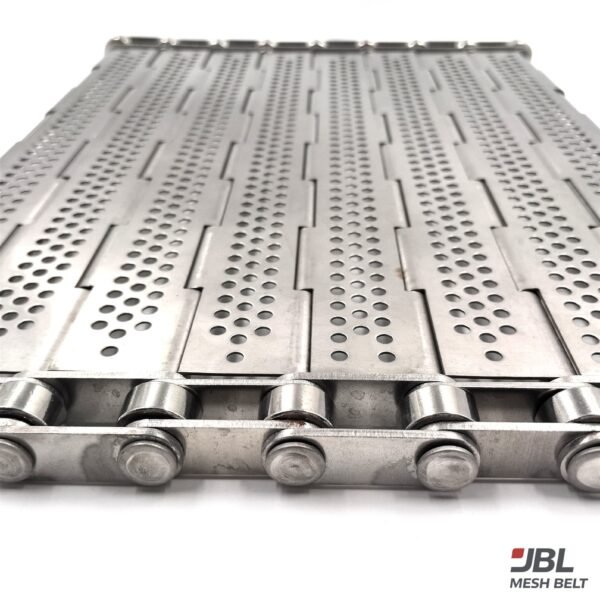
Plate link belt closed plate carrying surface

Four things to confirm

01

The load

Product weight, impact at loading, and the support span between rails.

02

The plate and holes

Plate thickness, hole layout and opening for drainage or airflow. The reference hole diameter is 5–8 mm; other layouts are confirmed by drawing.

03

The chain and drive

Chain pitch, rollers and sprockets reviewed with the plate, not separately.

04

Side guards and flights

If the product must be held or lifted.

Plate link belt roller chain and plate assembly
Roller chain and plate assembly.
Plate link belt roller chain drive edge
Roller chain drive edge.

Where plate link belts are used

  • ›Food processing: continuous conveying that needs stable product support, with the material chosen for the project.
  • ›Industrial conveying: plate-link conveying matched to the equipment design, drive requirements and product load.

How a heavy-load enquiry is reviewed

01

Drawing or photos reviewed

Plate, holes, chain and edge are read from what you send.

02

Load and support span checked

Against the product weight and how it is loaded.

03

Chain and sprockets matched

As one drive with the plate.

04

Sample first for a new design

A trial run or sample is made and approved before volume production.

What to send

  • ›A drawing, or photos of the current belt: plate surface, holes and chain edge.
  • ›Product weight and how it is loaded.
  • ›Drive and sprocket details.
  • ›The application: product, temperature and cleaning.

Common mistakes

  • ›Choosing the plate thickness before the load and support span are known.
  • ›Replacing the plate but keeping a worn chain or sprocket.
  • ›Assuming one hole layout suits every product.

Application suitability depends on belt configuration, materials and operating conditions. See the Plate Link Belt page for reference options.

Before you ask for a quote

The more we know about the load and the drive, the fewer questions come back. A drawing or a few clear photos of the plate, holes and chain edge are the best start.

Frequently Asked Questions

What hole sizes are available?

The reference hole diameter is 5–8 mm. Other layouts are reviewed against your drawing.

Can side guards be added?

Side guards and flights are confirmed per project with the drawing.

Do you supply the sprockets too?

Yes. Sprockets are reviewed with the chain and plate as one drive.

Planning a plate link belt?

Send the load, the drive and photos or a drawing. Spring Liu, Sales Director, will reply with the points to confirm.

Document Library

Check the specification before you order or replace a belt

Compare pitch, wire, edge, surface and sprocket options with your equipment before you send a drawing or old-belt photos. 13 technical specifications and 11 production and quality control documents for JBL metal conveyor belts and sprockets, page by page on your phone or computer.

Engineering review

Not sure which specification fits your line?

Send your drawing or old-belt photos on WhatsApp. We compare them with the specification and tell you what still needs to be measured.