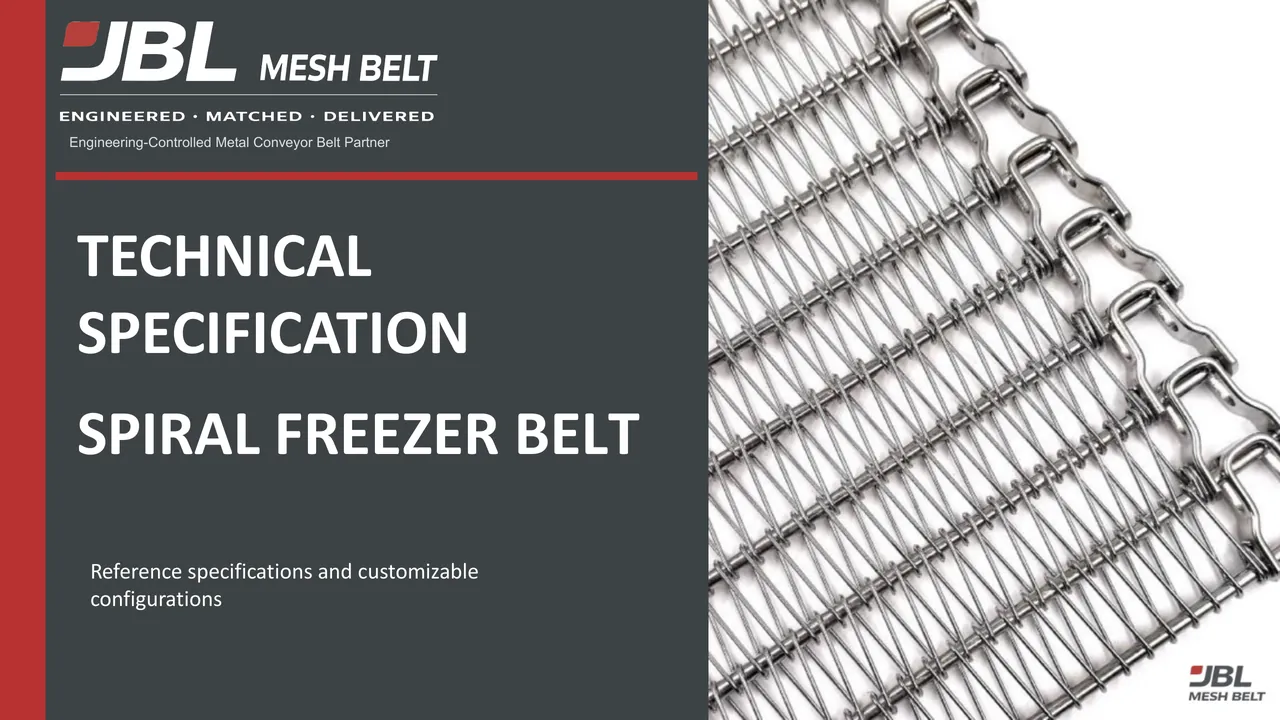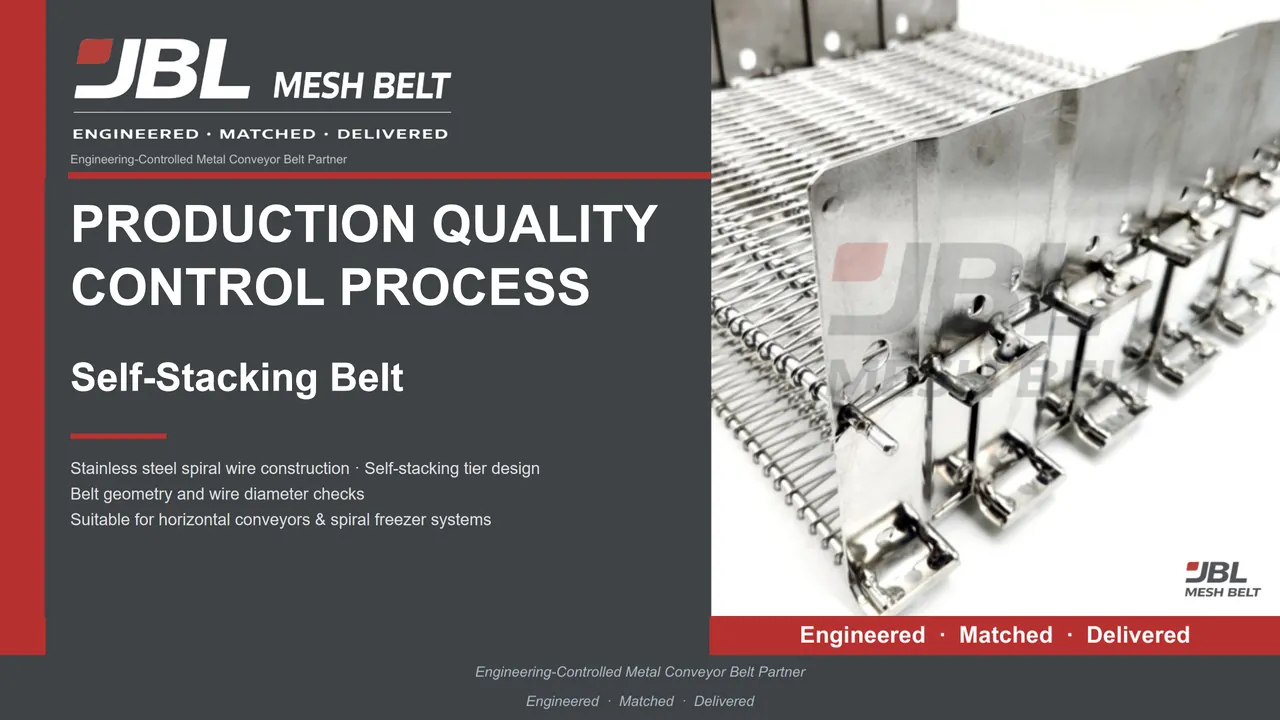
A self-stacking belt carries its own tiers through the spiral: the side plates of each tier sit on the tier below, so there are no support rails to hide small errors. A belt that looks right in photos can still stack unevenly, bind on the drum or wear its side plates early if pitch, welds or fit are off.
If you build spiral freezers or replace belts on existing self-stacking freezers, these are the six checks worth asking any supplier about — before the belt leaves the supplier, not after it is on your machine.
Our Self-Stacking Belts are produced by qualified production partners to the drawing you approve; JBL Mesh Belt does the engineering review and the pre-shipment inspection.
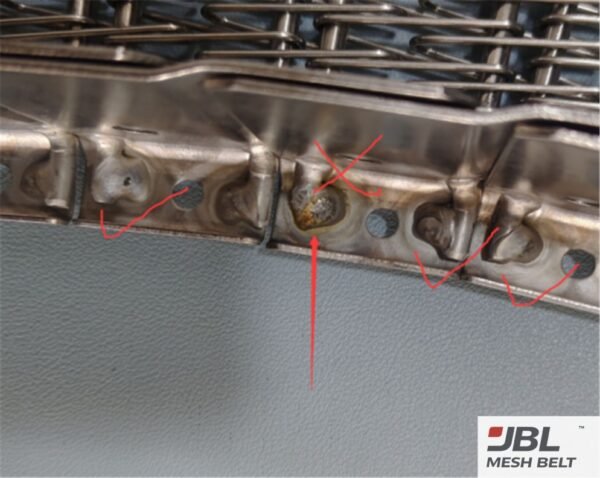
Why it matters: stacking load runs through the side plates and their welds. A weld in the wrong place or a rough bead changes how the tiers sit and how the plates wear.
What we check: weld position and appearance against the approved drawing, on every roll.
What you can ask for: inspection photos of the side plates; where your project needs it, a weld-strength check on sample sections, with the method agreed before production.
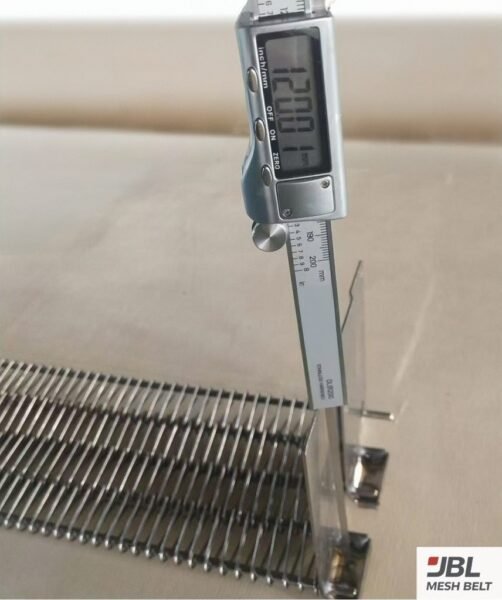
Why it matters: if pitch drifts along the belt, tiers stop lining up and the belt can creep or twist after some days of running.
What we check: pitch measured at several points along each roll and compared with the drawing.
What you can ask for: the pitch readings for your rolls.
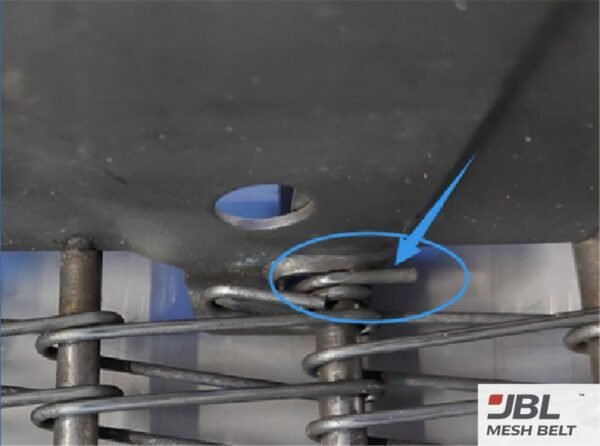
Why it matters: a rod that binds in its slot, or one that is too loose, makes the tier unstable — and the error repeats across hundreds of rods.
What we check: rod straightness and rod-to-link fit on sample sections; lubrication of key sections where the drawing calls for it.
What you can ask for: photos of the fit check.
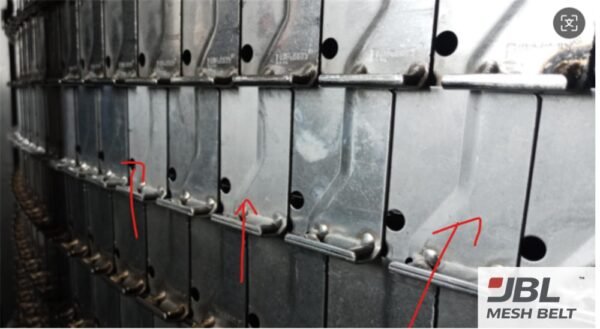
Why it matters: a wave across the width or side plates out of line puts uneven force on the tier below.
What we check: sections laid flat for warping, edge twist and side plate alignment; where agreed in advance, a stacking check on sample sections.
What you can ask for: the stacking check result if it is part of your project. For tier clearance and side plate height in detail, see self-stacking belt side plate height and tier clearance.
Why it matters: if the belt’s collapse around the drum does not match your layout, it binds or resists rotation.
What we check: the turn ratio is reviewed against your drum or cage diameter at the drawing stage — the value follows your equipment, not a catalogue figure. Where agreed, a sample section is checked for even turning.
What you can ask for: the agreed turn check. Further reading: turning and stacking tests before shipment.
Why it matters: uneven tension across the width makes the belt wander on the drum and needs constant operator correction.
What we check: tension and tracking requirements are written into the approved drawing; the finished belt is checked for straightness and even edges before shipment.
Looks are not enough. Stacking engagement, clearances, running direction, side plate configuration and critical dimensions decide whether the new belt runs in your system. Send photos of the stacking area and the side plates, a sample or a drawing, and tell us the running direction. If the order is large, a trial length first can reduce the risk — see trial length before a full order.
Often yes, starting from photos, a sample section and your equipment data. We confirm the critical dimensions with you in writing before production.
Where your project calls for it, a stacking check on sample sections is agreed in advance and done before shipment.
It follows your drum or cage diameter and the belt design. We confirm it with you at the drawing stage rather than quote a standard value.
Inspection photos and the agreed check results for your order. Your drawing and any change are confirmed in writing, and every order ships with a material certificate.
They depend on size, material and quantity and are confirmed in writing in each quotation.
Send photos of your current belt’s side plates and stacking area, or your drawing.
Document Library
Compare pitch, wire, edge, surface and sprocket options with your equipment before you send a drawing or old-belt photos. 13 technical specifications and 11 production and quality control documents for JBL metal conveyor belts and sprockets, page by page on your phone or computer.
Engineering review
Not sure which specification fits your line?
Send your drawing or old-belt photos on WhatsApp. We compare them with the specification and tell you what still needs to be measured.