Choose the sprocket material from the belt it drives, the working temperature, the cleaning method and the bore. Stainless steel (SUS304 or SUS316) is the usual choice for spiral, flat wire and chain-driven belts; UHMW-PE is common on side-driven, Z-type ladder and some eye link belts. Nylon and POM are used on selected projects, and ordinary POM is not suited to freezing.
Buyers often ask me which is better, stainless steel or plastic. There is no better in general. A sprocket is part of the drive system, so the material follows the belt it drives, the temperature it runs at, how the line is cleaned and how it sits on the shaft.
Our sprockets are produced by qualified production partners to the drawing you approve; JBL Mesh Belt does the engineering review and the pre-shipment inspection. Our public specification lists SUS304, SUS316 and mild steel, and nylon, UHMW-PE and POM, with the grade confirmed for each project.
Which materials were used on real sprocket orders?
| Belt it drives | Material | Matching pitch | Teeth | Bore |
|---|---|---|---|---|
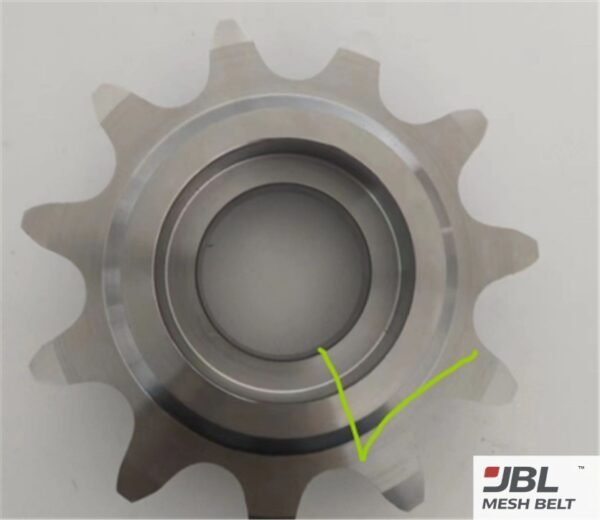
| Chain-driven belt (C2052 chain) | SUS304 | 31.75 mm | 11 | 30 mm round |
| Spiral freezer belt | SUS304 | 38.1 mm U-link · 6 mm rod | 16 | Round with keyway |
| Spiral freezer belt | POM | 27.4 mm U-link · 5 mm rod | 14 | Round with keyway |
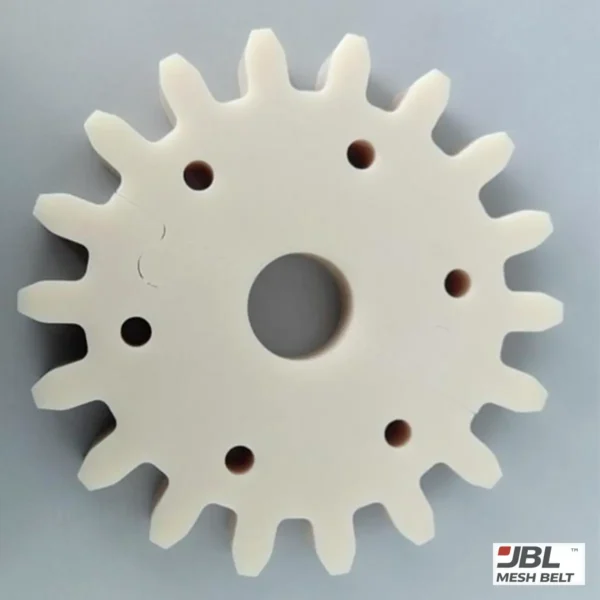
| Z-type ladder belt | UHMW-PE, white | 12.7 mm · 1.8 mm wire | 25 | 38.3 × 38.3 mm square |
| Eye link belt | SUS304 | 25.4 mm chain pitch | 13 | 40 mm round |
| Balanced weave belt | Nylon, black | Matched to the customer’s sample | 5 rows × 29 | 30 mm with keyway |
Selected dimensions from separate order records, as published in our sprocket specification. They are not complete manufacturing drawings; every new sprocket is confirmed against your belt and drawing.
Which belt does the sprocket drive?
The belt decides the pitch, the tooth form and the load on each tooth. A sprocket for a 31.75 mm chain and one for a 12.7 mm Z-type ladder belt are different parts, whatever the material.
The belt type and its pitch, rod or wire size, and whether the sprocket drives a chain edge, the rods or the side links.
What temperature does the line run at?
Plastics behave differently in the cold. Ordinary POM is not suited to freezing; on a freezing line a low-temperature grade or another material is chosen and confirmed in writing.
The working temperature range — on the sprocket drawing, not only on the belt drawing.
How is the line cleaned?
Stainless sprockets are finished so the tooth tips leave no dark marks on the belt; plastic sprockets are checked for scratches and soiling that hold dirt. The cleaning chemicals decide which stainless grade or plastic is suitable.
The cleaning method and chemicals. A food application on its own is not a food-contact approval; material and cleaning are checked for each project.
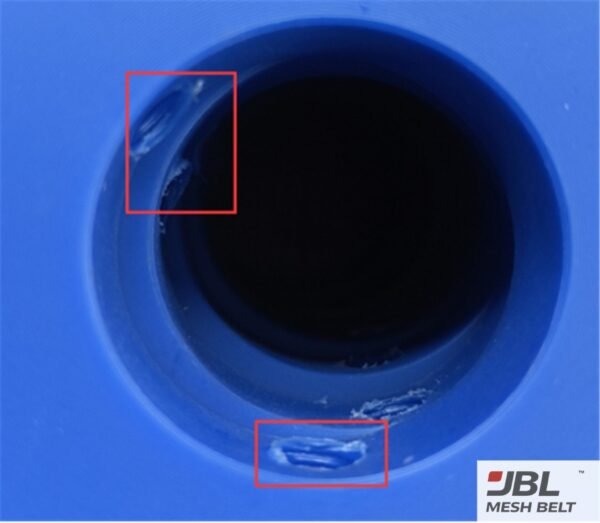 Rejected
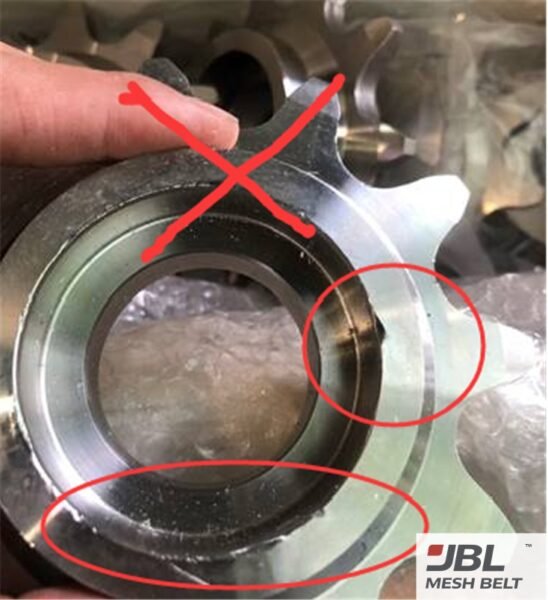 Rejected
How does it sit on the shaft?
Round bores usually carry a keyway and set screws; several of our polymer examples use a square bore with no keyway. Keyway width and depth are two separate values and both must be on the drawing.
Bore shape and size, keyway width and depth, set screws, and the overall thickness.
When is stainless steel the usual choice?
On spiral, flat wire and chain-driven belts, most of our sprockets are SUS304, with SUS316 where the project calls for it. In the order records above, the chain-driven, spiral and eye link examples are all SUS304. What we confirm: tooth surface finish, so the sprocket does not leave dark marks on the belt, and a clean bore.
When is UHMW-PE the usual choice?
UHMW-PE is common on side-driven belts and Z-type ladder belts, and on some eye link belts — the Z-type example above is white UHMW-PE with a square bore. What we confirm: clean tooth edges and bore, no excess burrs, and clean set-screw holes where there are any.
What about nylon and POM?
Nylon is used on bakery cooling spirals and similar lines; on the Melbourne bakery cooling project, a nylon sprocket was run on the new belt to check tooth engagement before packing. POM is used on selected spiral and side-driven projects, like the 14-tooth spiral example above — with the temperature confirmed first, because ordinary POM is not suited to freezing.
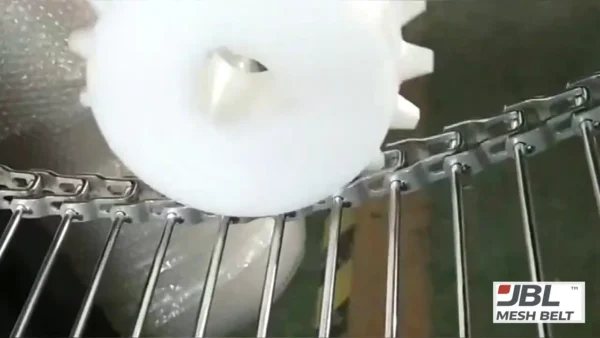
Related: what is checked before a sprocket ships · spiral belt drive engagement for OEM designers · Melbourne case.
Sprocket material: FAQ
Is a stainless steel sprocket always better than a plastic one?
No. The right material follows the belt, the temperature, the cleaning method and the shaft. Plastic sprockets are the usual choice on several belt types.
Can I use a POM sprocket in a spiral freezer?
Not an ordinary grade. For freezing, a low-temperature grade or another material is chosen for your working temperature and confirmed in writing before production.
Can you match the material of my original sprocket?
Yes, if you tell us or send the original. If the original material caused wear or marks, we will say so and suggest an alternative for you to approve.
What do you need to choose the material?
The belt it drives, the working temperature, the cleaning method, the bore and keyway, and a drawing or photos of the original sprocket.
How do price and lead time work?
They depend on size, material and quantity and are confirmed in writing in each quotation.
Not sure which material?
Send a photo of your sprocket and tell me the belt and the working temperature. Send your drawing or old-belt photos on WhatsApp. No sales calls.