
Before a conveyor sprocket ships, six things should be checked: clean tooth tips and tooth faces, a bore and keyway free of burrs and measured against the drawing, scratch-free surfaces on plastic sprockets, the right pitch and tooth count for the belt it drives, engagement on the new belt where possible, and a clean finish with secure packing.
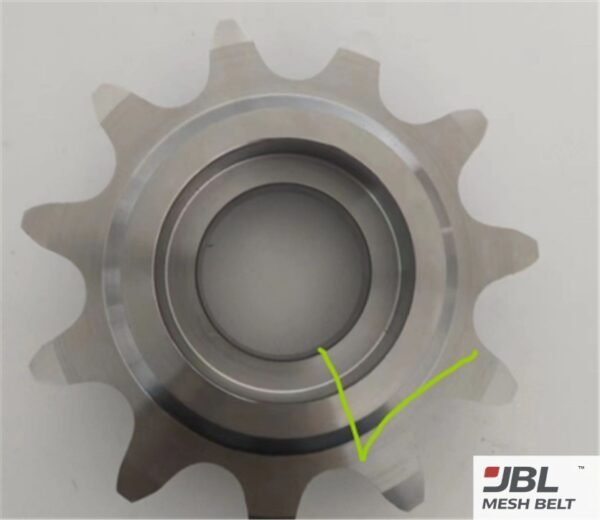 Accepted
A new belt on a badly made sprocket wears out early. A burr on a tooth tip marks the belt, a burr in the bore stops the sprocket sliding onto the shaft, and a keyway cut to the wrong depth leaves the sprocket loose. All of these can be seen on the sprocket before it is packed.
I treat a sprocket as part of the drive system, not as a separate part: it is checked against the belt it drives, the shaft it sits on and the drawing you approved. Our sprockets are produced by qualified production partners to that drawing; JBL Mesh Belt does the engineering review and the pre-shipment inspection. These are the six checks I ask for on every sprocket order.
What do sprocket records look like on real projects?
| Project | Sprocket | Reading on record |
|---|---|---|
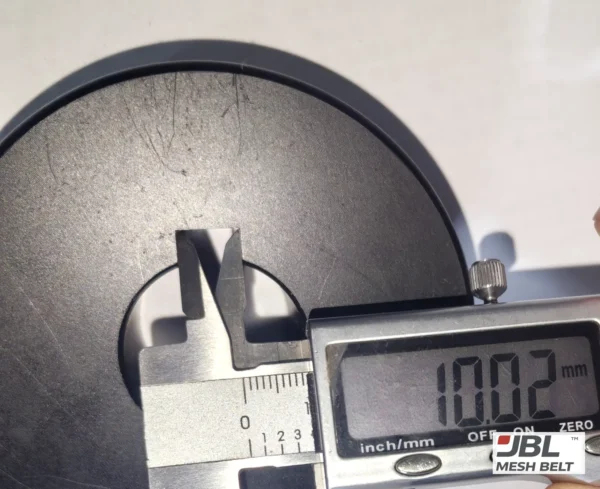
| Waffle cooling spiral · sprockets remade from the customer’s originals | Keyway on the new sprocket | 10.02 mm |
| Eye link belt replacement, Australia · 2020 | Sprocket bore | 60.05 mm |
| Spiral belt, stainless steel sprocket | Teeth · link pitch · rod | 16 teeth · 38.1 mm · 6 mm rods |
| Spiral belt, POM sprocket | Teeth · link pitch · rod | 14 teeth · 27.4 mm · 5 mm rods |
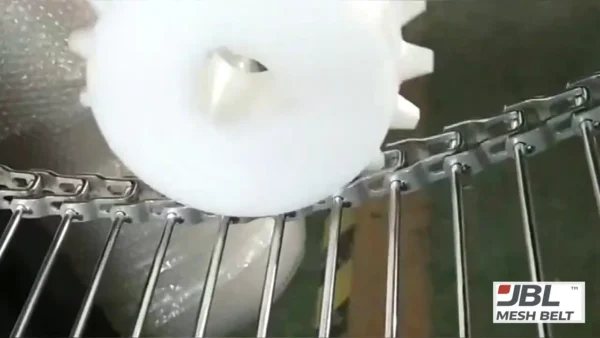
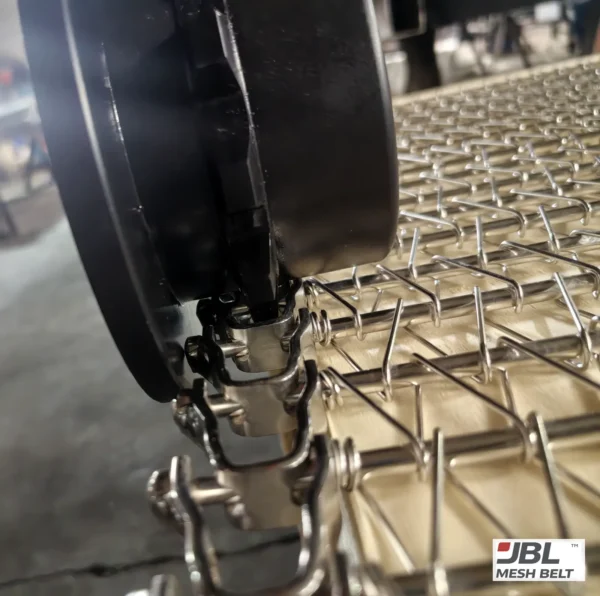
| Bakery cooling spiral, Melbourne · 2023–2024 | Nylon sprocket | Run on the new belt to check tooth engagement before packing |
Readings belong to the named projects and show how a record is kept, not universal values. Full cases: waffle cooling spiral · Melbourne · eye link belt checkpoints.
What should the tooth tips and tooth faces look like?
The teeth touch the belt on every turn. A burr or a rough edge on a tooth wears the rods and links and can leave dark marks on the belt.
Tooth tips and tooth faces are inspected for burrs and marks. On stainless sprockets for spiral and flat wire belts, the tooth tips should be smooth with no dark marks left.
Close-up photos of the teeth on your sprockets before packing.
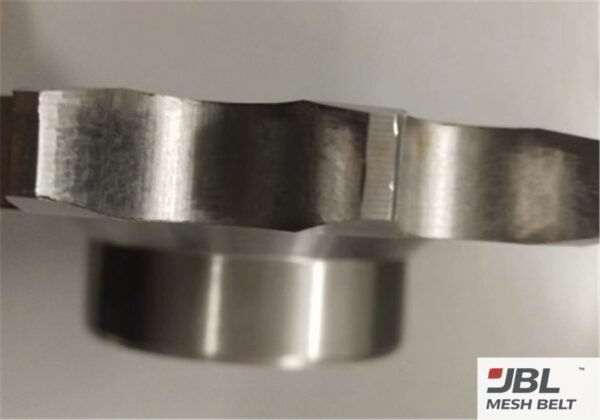 Accepted
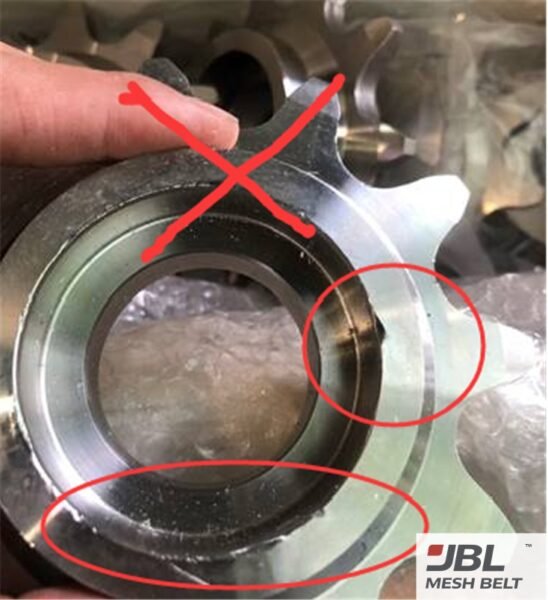 Rejected
How are the bore and keyway checked?
A burr in the bore stops the sprocket sliding onto the shaft. A keyway cut to the wrong width or depth leaves the sprocket loose or out of line.
The bore is checked for burrs and measured against the drawing. Keyway width and keyway depth are confirmed separately — the most common incomplete field on a sprocket drawing.
The bore and keyway readings for your sprockets, kept on record so the next order is made to the same numbers.
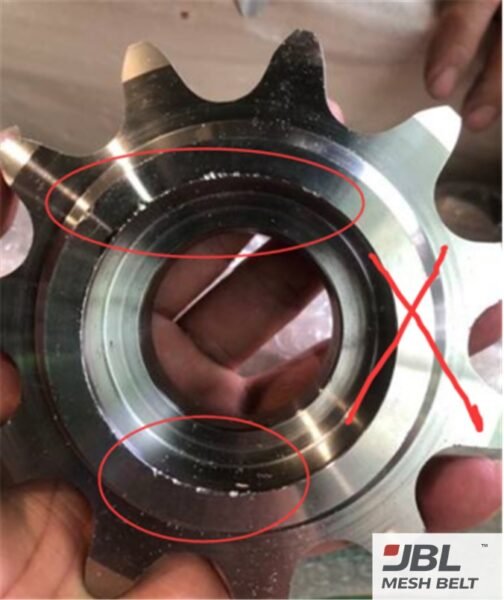 Rejected
What is checked on a plastic sprocket?
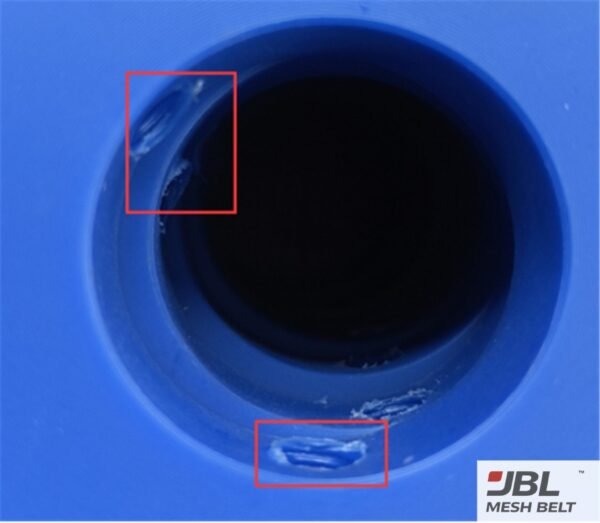
UHMW-PE and other plastic sprockets scratch and pick up dirt easily. A scratched bore or a burr at a set-screw hole affects the fit on the shaft.
Surfaces are checked for scratches and dark soiling; tooth edges and set-screw holes are checked for burrs.
Photos of the bore and the set-screw holes.
 Rejected
How do you know the sprocket matches the belt?
A sprocket is made for one belt. If the pitch or tooth form does not match, the teeth meet the rods out of step and the belt rides up or jumps.
Pitch, tooth count, tooth profile, bore and keyway are confirmed against the belt it drives and your drawing before production. Two spiral examples from our records: a stainless steel sprocket with 16 teeth for a 38.1 mm link pitch on 6 mm rods, and a POM sprocket with 14 teeth for a 27.4 mm link pitch on 5 mm rods.
A sprocket drawing confirmed in writing before production, listing the belt it is made for.
Is the sprocket run on the new belt before shipment?
Engagement is easiest to judge with the belt and the sprocket together. A static check cannot show a tooth that climbs or a rod that does not seat.
Where we supply the belt and the sprockets together, a sprocket is run on the new belt to check tooth engagement before the crates are closed, as on the Melbourne and waffle cooling spiral projects.
A photo or short video of the running check.
How should sprockets be finished and packed?
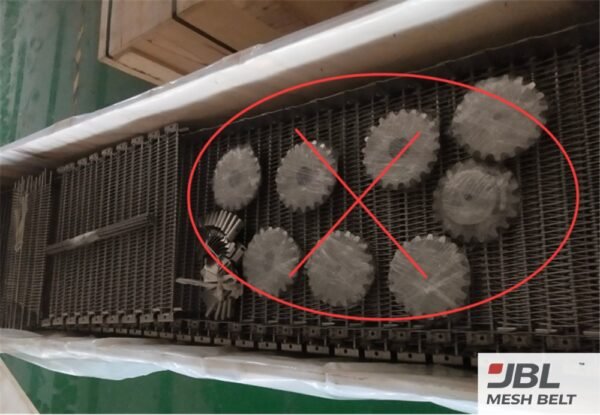
A sprocket that moves in the crate arrives with damaged teeth or a scratched bore, however well it was made.
The finished sprocket is checked for a clean surface, and packing is checked so sprockets cannot move during transport; a crate where they can is repacked.
Packing photos before the crate is closed.
 Rejected
Stainless steel or plastic?
The material follows the belt, the working temperature and the cleaning method. If your line runs below zero, put the working temperature on the sprocket drawing, not only on the belt drawing — ordinary POM is not suited to freezing, so a low-temperature grade or another material is chosen and confirmed in writing. For the full design checklist, see spiral belt drive engagement: what OEM designers should check.
Further reading: why a new spiral belt can fail on worn sprockets · how to measure sprocket wear.
Sprocket inspection: FAQ
Can you make sprockets without the original drawing?
Yes, from your original sprocket. Tooth, hub, bore, keyway and thickness are measured with a caliper, and the readings are confirmed with you before production.
What do you need to quote a sprocket?
The belt or chain it drives, the pitch, the tooth count, the bore and the keyway width and depth, the material, and a drawing or photos of the original if you have them.
Should I replace the sprockets when I replace the belt?
Often yes. A new belt on worn sprockets can jump or wear early. Send photos of the sprocket teeth and we will tell you what we see.
Do you supply sprockets on their own?
Yes, matched to your belt. We still ask which belt they drive, because a sprocket is checked against the belt, not on its own.
How do price and lead time work?
They depend on size, material and quantity and are confirmed in writing in each quotation.
Send a photo of your sprocket
A photo of the teeth and the bore, or your drawing, is enough to start. Send your drawing or old-belt photos on WhatsApp. No sales calls.