The original supplier is gone, the drawing was never handed over, or the equipment maker charges too much for a replacement. If you still have a section of the old belt, or even clear photos, the belt can usually be rebuilt. The goal is not a copy that looks right. It is a belt that fits your line.

Ideally with the edge, and a sprocket if it is worn too. Photos with a ruler help us start before the sample arrives.
Pitch, rod, wire or flat strip, links or chain, and the edge.
You check it and confirm in writing before anything is made.
Measured the same way, before bulk production.
Before it is packed.
Worn, stretched or repaired belts do not always show the original design size. Where a reading may be worn, we tell you and agree the value with you.
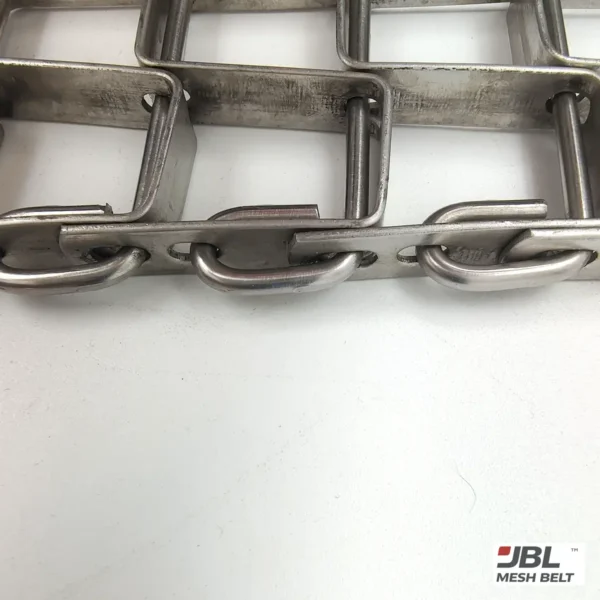
Only a sample, no drawing. Pitch, rod and flat strip were read on the sample and the clenched edge was matched. The rod was read again on the bulk belt.
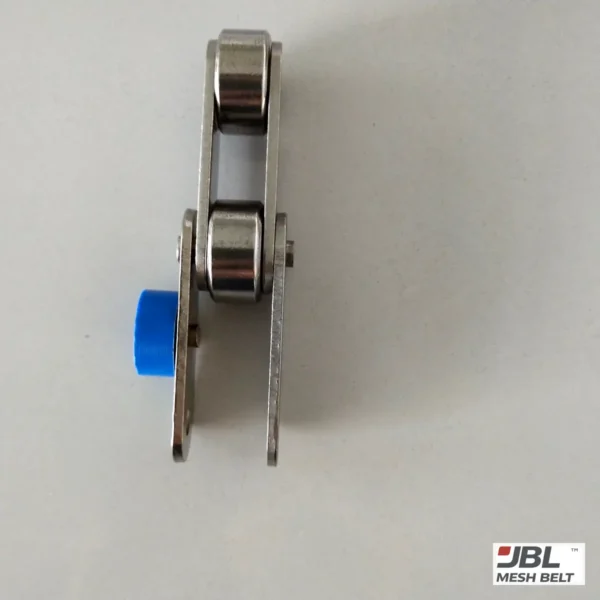
The chain was not an off-the-shelf part, so a trial chain with the same rollers and guide rollers was made first and checked against the sample. Then the belt followed.
The original sample was measured and drawn. A trial length was compared with the original before 50 m was made.
Built from a worn section with no drawing. The sample read 27.40 mm pitch against 27.41 mm on the original.
If the sample is badly worn or a key part, such as a custom chain or clip, is missing, we will say so and suggest a trial part first, as in the steam oven project. We do not quote on a guessed dimension.
See also Replacement Engineering for how a replacement is proven on your line.
Document Library
Compare pitch, wire, edge, surface and sprocket options with your equipment before you send a drawing or old-belt photos. 13 technical specifications and 11 production and quality control documents for JBL metal conveyor belts and sprockets, page by page on your phone or computer.
Engineering review
Not sure which specification fits your line?
Send your drawing or old-belt photos on WhatsApp. We compare them with the specification and tell you what still needs to be measured.